REVIEW · BRUSSELS
Brussels: The comic book walls walking tour
Book on GetYourGuide →Operated by Curiositas Mundus · Bookable on GetYourGuide
Comics in Brussels are living on walls, and this 150-minute walk turns them into a story map. I especially love tracking the first comic wall from 1991 and spotting Tintin’s house before the Moulinsart castle legend takes over. One possible drawback: the tour packs in a lot of facts, so if you prefer lighter storytelling, the time can feel long.
You’ll also get a clear sense of how French-Belgian comics connect to real neighborhoods, not just the postcard center. The experience runs in Spanish-only on Thursdays and Sundays, with a group capped at 25, plus multimedia context in an app so you can follow along without getting lost.
In This Review
- Key highlights worth your attention
- Starting at Rue du Marché au Charbon and getting your comic bearings
- The first comic wall in Brussels (1991): the origin story on brick and paint
- Tintin’s house before Moulinsart: seeing the legend’s earlier chapter
- French-Belgian comic techniques: how style becomes meaning on the walls
- Smurfs and the comic-famous center: famous characters meet real geography
- Walking beyond the center: why the route feels more local than tourist
- Multimedia in your pocket: using the app without losing the story
- Learning where to get comics in your language
- Who this tour is best for (and who might not love it)
- Price, value, and the math of a 150-minute mural tour
- Should you book the Brussels comic book walls walking tour?
Key highlights worth your attention
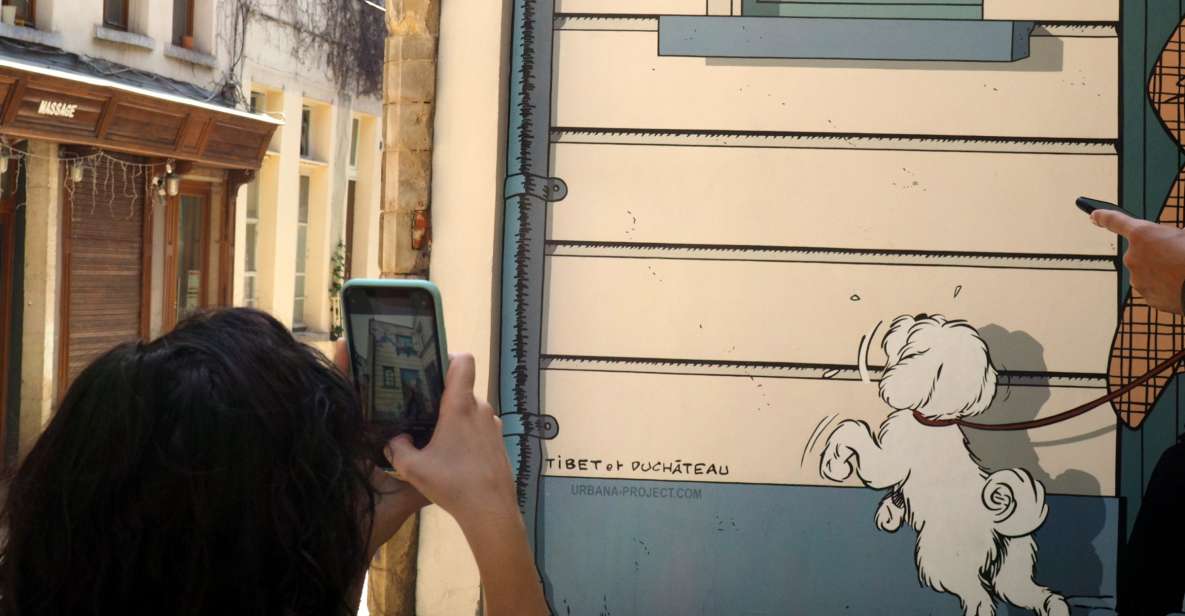
- Tintin’s house: you’ll see where he lived before the Moulinsart castle story.
- Brussels’ first comic wall (1991): one landmark that sets the whole street-art tradition in motion.
- French-Belgian comic techniques: the guide explains the main visual approaches behind the genre.
- Comic neighborhoods beyond the center: you’ll walk farther than the usual tourist loop.
- Over 80 comic murals in Brussels: you’ll get a reality-check on just how wall-sized this culture is.
- Free for kids 0–10: easy family math with 0€ for younger children.
Starting at Rue du Marché au Charbon and getting your comic bearings
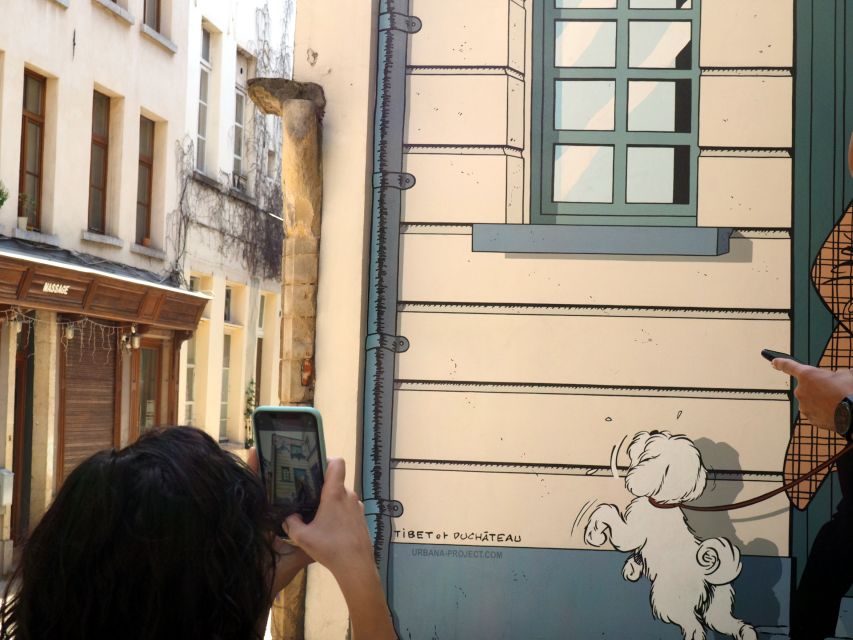
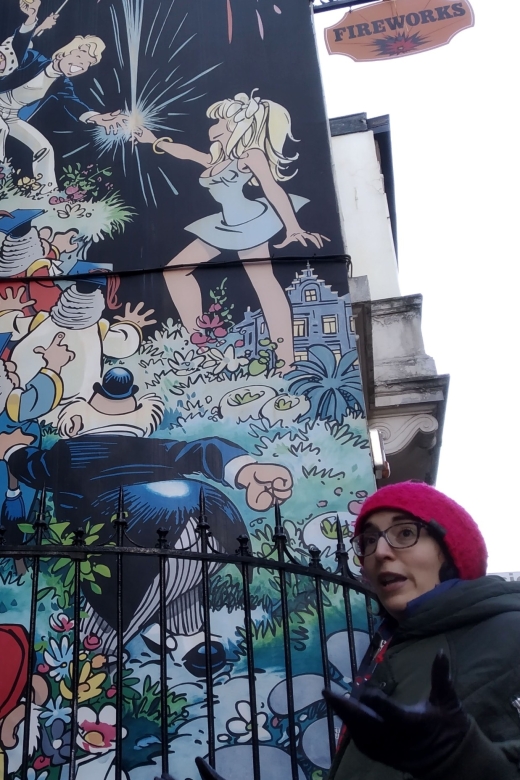
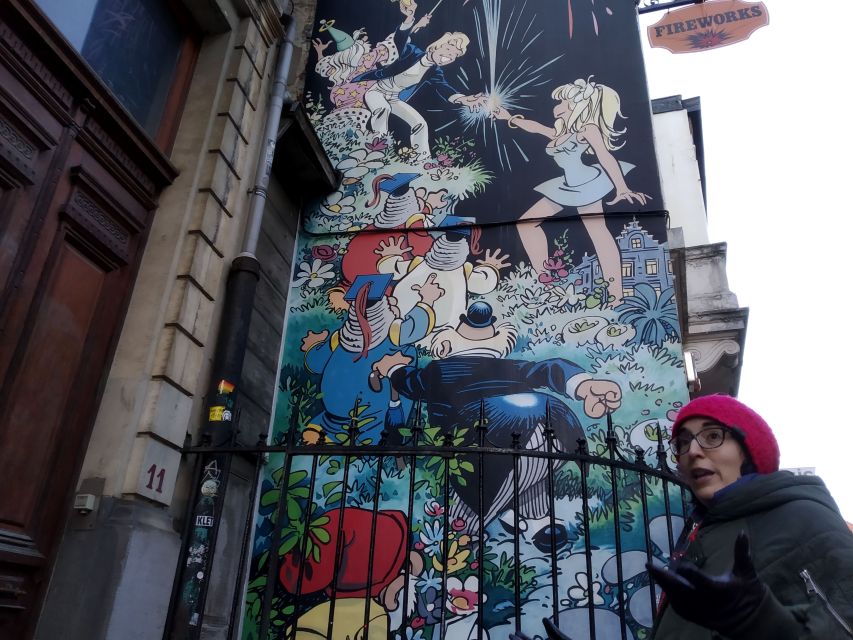
The tour begins at Rue du Marché au Charbon, 40, right by the mural of Brousaille. That matters more than it sounds, because Brussels has a way of looking similar block after block. Having a fixed visual anchor at the start helps you get your bearings fast, and once the tour is moving, you’ll notice how quickly the city turns into panels and punchlines.
Right away, you’re set up to think like a reader. Not just, here’s a picture on a wall, but why this image is here, what it connects to, and which comic tradition it belongs to. The guide from Curiositas Mundus carries a distinctive sign, so you can find the group without a half-hour game of hide-and-seek.
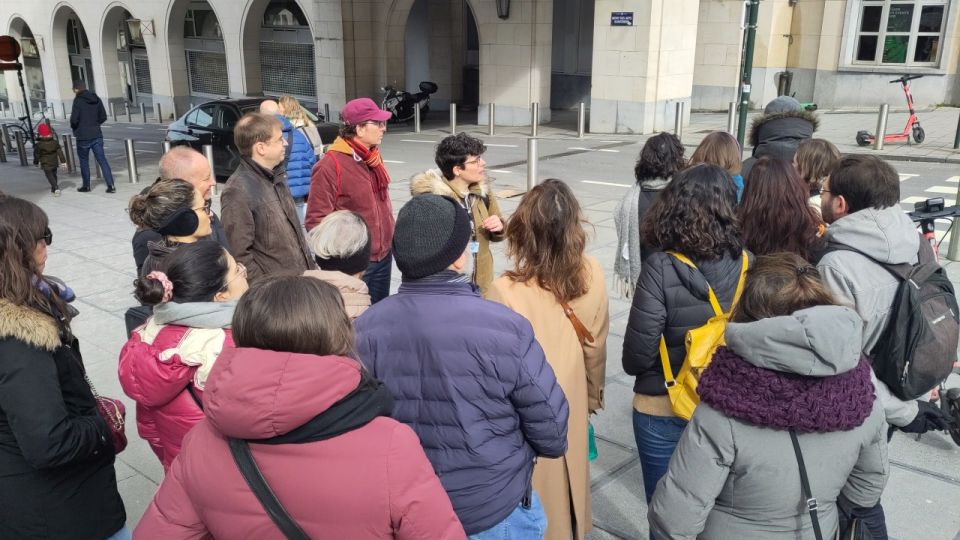
With a maximum group size of 25, you don’t feel like you’re getting steamrolled by a big pack. It stays talkable. That’s important on a tour like this, because a lot of the fun is in answering questions and hearing why certain authors or schools shaped the visual language.
One note: this one is Spanish (Thursdays and Sundays). If your Spanish is shaky, pick the day that matches your comfort level, since the tour language is not bilingual on the spot.
You can also read our reviews of more walking tours in Brussels
The first comic wall in Brussels (1991): the origin story on brick and paint
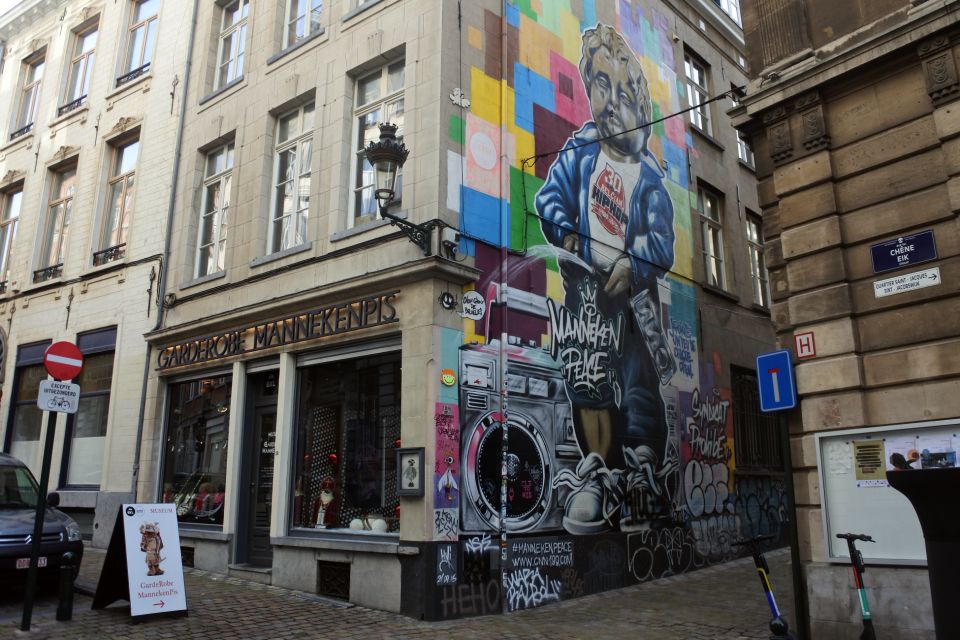
This is the kind of “origin” stop that makes the rest of the walk click. The tour points you toward the first comic wall created in Brussels in 1991. That one detail is useful because it turns today’s comic murals from random street decoration into a timeline.
Instead of treating the walls as separate artworks, you start looking for continuity: What changed over time? What stayed recognizable? Which visual choices became signatures of the French-Belgian comics tradition?
Even if you only know a few characters, the 1991 reference helps you place Brussels’ comic wall movement in context. You learn that this city didn’t just stumble into a few murals. It developed a tradition, and the tour helps you spot the “why” behind that development.
Practical tip: bring a phone or small camera, but don’t spend the whole time shooting. Listen first, then photograph. The guide’s explanations make your photos mean more later.
Tintin’s house before Moulinsart: seeing the legend’s earlier chapter
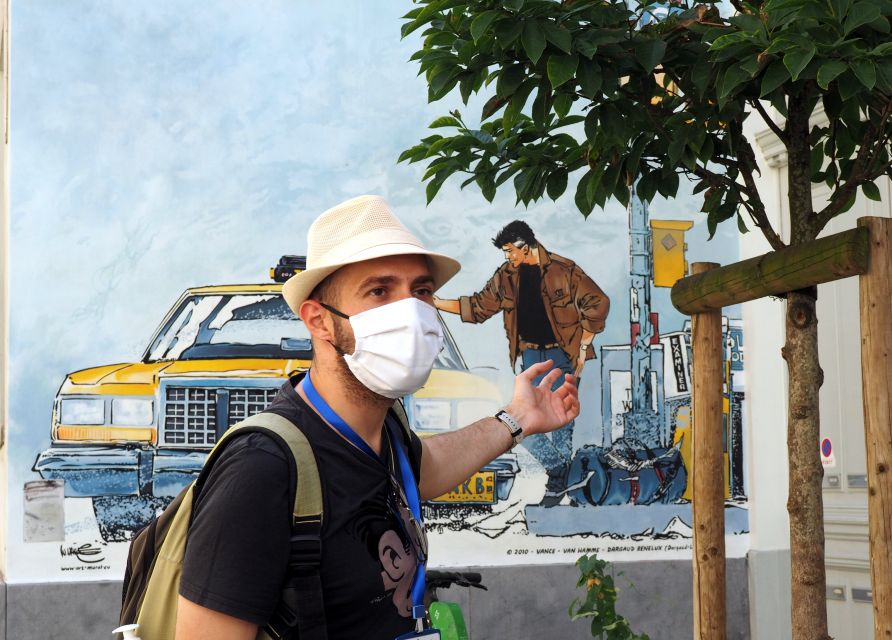
Next comes one of the most memorable ideas on the route: you get to know Tintin’s house before he moved to the Moulinsart castle. If Tintin is part of your comic library, you’ll appreciate this as more than trivia. It’s the difference between seeing a character as a flat icon and seeing him as a world with an earlier phase.
This stop also works because it anchors your imagination to a real street address. Brussels can feel like a patchwork of eras, and the tour uses that to tell a cleaner story: the comic world has a past, and the past has a physical connection.
What I like about this approach is that it reframes the usual “photo with a character” habit. Instead, you walk a short distance and your brain starts building a timeline: where the character’s story was, where it went, and why a move to a famous place became part of the brand of the series.
If you’re traveling with kids, this is often the moment when attention sticks. Tintin feels familiar, and the idea of a house is something children can picture.
French-Belgian comic techniques: how style becomes meaning on the walls
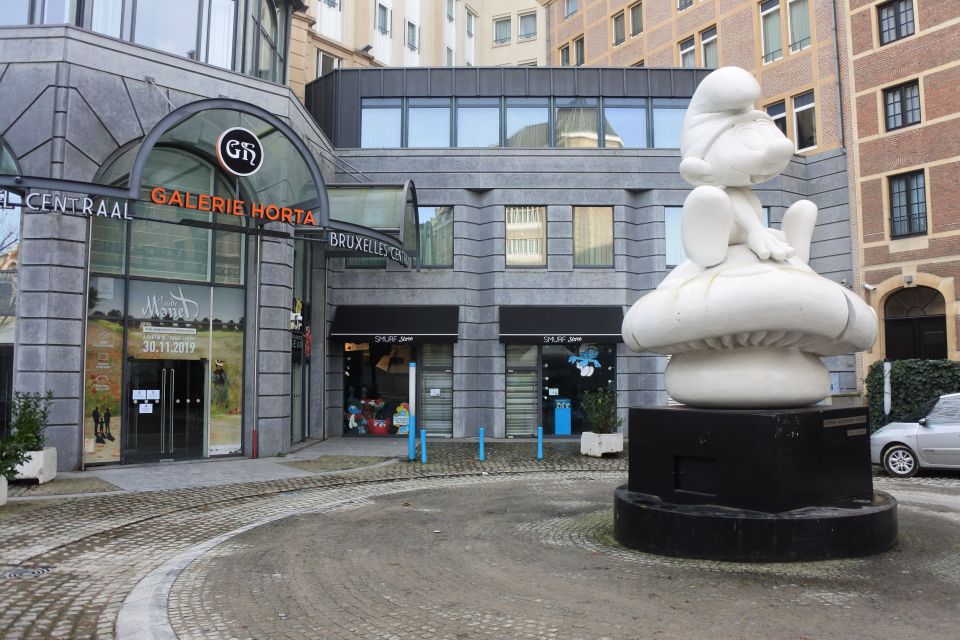
A big promise of this tour is that you learn the main techniques of French-Belgian comics. Even without turning it into a textbook, the guide’s goal is practical: to help you read murals like you read comics.
You start paying attention to repeated visual rules. How lines carry emotion. How composition guides your eye. How the art supports the story, not just the subject. The walls may look like standalone scenes, but once the guide explains the comic approach, you start spotting how panels and characters are “built” for storytelling.
This section is valuable because it changes how you look at street art afterward. You stop seeing murals as random decoration and start treating them like a language. That makes Brussels’ comic culture more than a theme park feeling.
If you’re not a lifelong comic fan, don’t worry. The tour is built to bring you up to speed. Still, it does move through a lot of information, so if you’re the type who dislikes lectures while walking, you may need to take micro-breaks and slow down on side streets to let details sink in.
Smurfs and the comic-famous center: famous characters meet real geography
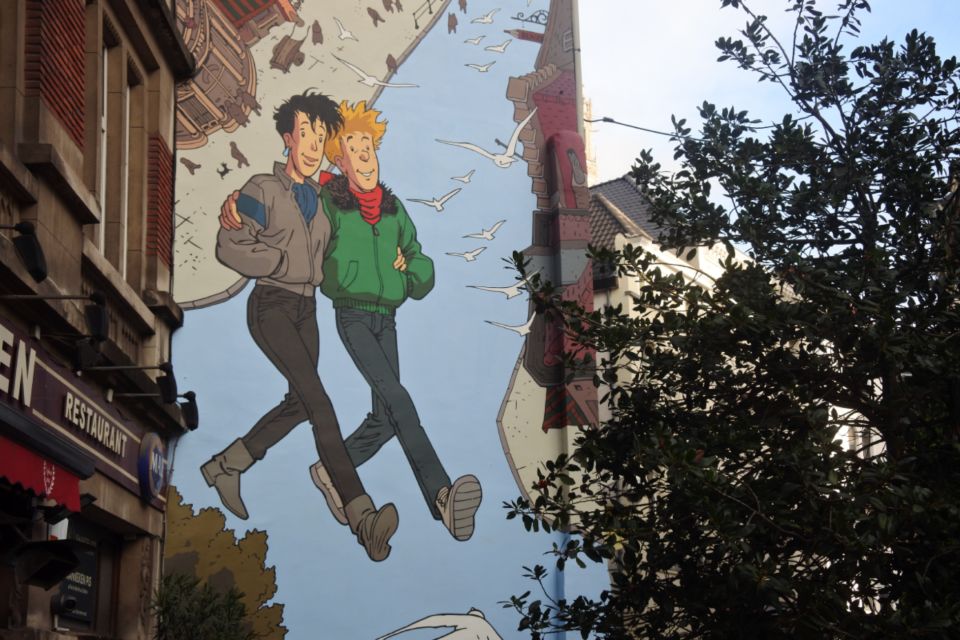
Brussels has that unmistakable moment in the city center: the Smurfs statue. The tour uses it as a reference point, a way to connect what you see in the postcard area with the broader mural network.
This matters because it prevents a common problem. Some people come to Brussels, see one or two iconic sights, and assume the comic wall story is limited. The tour quietly corrects that. The city has more than 80 walls dedicated to comics, and the route is designed to show you that you’re part of a bigger system.
You’re also learning the authors and origins behind Belgian comics. That background gives your eyes something to track. When you recognize a style or a character connection, the walking feels less like sightseeing and more like decoding.
If you’re visiting with someone who is less interested in comics, this is where you can still have fun. Even non-readers tend to enjoy famous characters like the Smurfs, and the guide can bridge from recognition into context.





Walking beyond the center: why the route feels more local than tourist
One of the highlights is walking through streets that go beyond the center of Brussels. This is where the tour earns its keep, because it avoids the “repeat-the-same-blocks” trap.
When murals show up in everyday neighborhoods, they stop being curiosities and start looking integrated. That’s the authentic Brussels feeling: a normal city that happens to carry comic culture on its walls. You see how the murals sit among regular storefronts and street life, and it gives you a stronger sense of where comics belong in the city.
At 150 minutes, this is long enough to feel like a proper walk, not a quick loop. It also means pacing matters. Wear comfortable shoes, and don’t plan a tight connection immediately afterward. You’ll want a moment to digest what you learned, not just rush to the next stop.
For people with reduced mobility, the tour is described as accessible and mentions wheelchairs and strollers. Still, it is a walking tour, so you’ll want to be comfortable with uneven sidewalks and city walking time.
Multimedia in your pocket: using the app without losing the story
The tour includes complementary multimedia information in an app, with Spanish or English options via Telegram:
- Spanish: https://t.me/curiositasmundusES
- English: https://t.me/curiositasmundusEN
This is a smart add-on for a tour like this. Instead of relying only on memory, you can revisit context later. And during the walk, the multimedia material helps when your attention dips or when you want to confirm a detail the guide just mentioned.
It also supports a more interactive feel. The best part of tours like this is when the guide asks questions or checks understanding, and the app lets you follow up without waiting for a pause.
This is also where the tour earns extra value for language learners. One experience advantage from the tour style is clarity. In practice, the guide’s job is to keep everyone on the same page, and the multimedia supports that.
Learning where to get comics in your language
Another highlight is knowing where to get comics in your language. That sounds small, but it’s a real travel win. You’re not just walking away with photos; you can continue the hobby at home.
The guide points you toward practical options, so you don’t waste time guessing. For many travelers, that’s the difference between enjoying a themed tour and actually carrying the theme forward into daily life.
This also helps you make the tour more personal. If you read in Spanish, you can follow up in Spanish. If you want a broader selection, you know how to hunt efficiently instead of browsing randomly.
Who this tour is best for (and who might not love it)
This Brussels comic-wall walk is best for you if:
- You like French-Belgian comics, even if you’re not an expert.
- You enjoy guided explanations paired with street-level seeing.
- You want to understand the style and origins, not just collect character photos.
- You’re happy walking for about 2.5 hours and listening as you go.
You might want to think twice if:
- You’re easily bored by lots of spoken detail while walking. One practical consideration is that the tour can feel very detailed, and the 150 minutes will reflect that.
- You need a quiet, low-stimulation experience. This is a talk-and-walk format.
The tour is not suitable for visually impaired or hearing-impaired people, based on the information provided. So plan another type of Brussels experience if those needs apply to your group.
Language is also key. This particular schedule is Spanish-only (Thursdays and Sundays). Choose your day carefully so the tour language matches your comfort level.
Price, value, and the math of a 150-minute mural tour
The listed price is 15€ for ages 11 and up, and kids 0–10 go free. It’s about 150 minutes long, with a professional guide and an app add-on.
For value, the best part isn’t the number of walls. Brussels has many comic murals, and you could theoretically walk and “discover” them on your own. The value here is the guided reading: the first comic wall from 1991, Tintin’s house timeline before Moulinsart, and the explanation of the French-Belgian comic approaches behind the visuals.
That’s what turns a photo walk into a story walk. If you enjoy learning how cultural trends develop on real streets, you’ll likely feel the price makes sense.
If you’re on a tight schedule or you’re only casually interested in comics, you might find yourself wanting a shorter or simpler format. But for comic fans and curious readers, it’s a strong use of time.
Should you book the Brussels comic book walls walking tour?
Yes, I think you should book it if you want Brussels to feel like a living comic page, with real stops tied to recognizable stories like Tintin and Smurfs. The 1991 first mural and Tintin’s house detail are the kind of anchors that make the whole city-walk concept click.
Book it especially if your group includes kids or you want a tour that mixes familiar characters with real context. Just go in with the expectation that it’s information-heavy and language-specific, and wear comfortable shoes for a steady 150 minutes of walking.