REVIEW · BRUSSELS
Antwerp and Ghent Day Trip from Brussels With Atomium Photo Stop
Book on Viator →Operated by Buendía · Bookable on Viator
Antwerp and Ghent in one day sounds intense, but it’s smart. You get guided walking tours in both cities, plus a quick Atomium photo stop to anchor the day. The trade-off: it’s a long 10-hour outing, so your free time is useful but not huge, especially if you want a relaxed dinner plan.
I like that the day is organized around “see it fast, understand it, then choose.” You’ll walk through key squares and churches with a guide explaining what you’re looking at, then you get time to wander your own way. Just plan for walking and stop-start pacing, since the itinerary moves from landmark to landmark all day.
In This Review
- Key highlights at a glance
- A one-day shortcut from Brussels to Antwerp and Ghent
- Price and timing: what you pay for (and what you don’t)
- Meet-up at 8:30 am: where the day starts
- Atomium photo stop: a quick hit of Brussels symbolism
- Antwerp walking tour: from Steen Castle to the giant hand
- Plantinkaai and the river approach
- Het Steen and why roofs look a certain way
- Antwerp’s guild and square story: Vleeshuisstraat, Grote Markt, Brabo
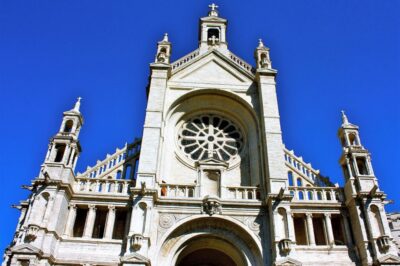
- Carolus Borromeus Church and Rubens in context
- Cathedral of Our Lady and Rubens works
- Groenplaats, the Meir Avenue, and Antwerp’s symbols
- Antwerp free time: how to use 1.5 hours without stress
- Ghent guided tour: medieval power and major art
- Town Hall (Stadhuis) and the Belfry dragon
- St. Bavo’s Cathedral and The Adoration of the Mystic Lamb
- Church stop and what Belgian churches do
- Guild house, Korenmarkt, and the old post office idea
- St. Michael’s Bridge and tower story
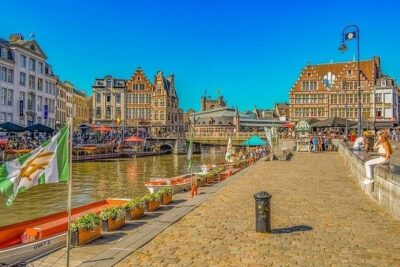
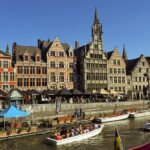
- Ghent’s riverfront photo belt: Graslei, Korenlei, and covered markets
- Graslei and Korenlei
- OOOST and the covered market angle
- Kleine Vismarkt and cuberdon
- St. Veerleplein and souvenir timing
- The bus ride factor: what to expect from the coach day
- Pace, ears, and group dynamics: making the most of the walking time
- What’s not included: meals, drinks, and your personal comfort plan
- Who should book this Antwerp and Ghent day trip
- Should you book it?
- FAQ
- What time does the tour start?
- How long is the day trip?
- How much does it cost?
- Is the tour offered in English?
- What’s included in the price?
- Are food and drinks included?
- Is there free time in both cities?
- What are the main stops in the itinerary?
- Does the tour run in bad weather?
- What’s the cancellation policy?
Key highlights at a glance
- Two guided city walks that help you read Antwerp and Ghent like a story, not just a checklist
- Atomium photo stop that sets a Brussels-to-Belgium mood right away
- Free time built in twice (about 1.5 hours each city, depending on traffic and group rhythm)
- Classic medieval and Baroque stops like Ghent’s St. Bavo’s and Antwerp’s Rubens-linked churches
- A/C round-trip coach from central Brussels that saves your energy for the walking parts
- Small-group feel (maximum 45 travelers) with a professional English-speaking guide
A one-day shortcut from Brussels to Antwerp and Ghent
This is the kind of day trip that makes sense when you’re only spending one chunk of time in Belgium. Instead of trying to coordinate trains, stations, and transfers, you start and end in central Brussels with a comfortable coach ride.
What makes the tour feel worthwhile is the structure. You get guided time in the places that are easiest to miss if you arrive on your own, then you’re released to explore. It’s basically a guided map plus the freedom to follow your own curiosity.
You can also read our reviews of more tours and experiences in Brussels

Price and timing: what you pay for (and what you don’t)
At about $56.72 per person for a ~10-hour day, the value comes from two things: transportation and guided walking. You’re paying for someone to handle the routing and timing, and for a guide to explain the why behind the walls, towers, and art.
Food is not included, and that matters. Belgium dining is not something you want to improvise while sprinting between meeting points, so budget for at least one solid meal on your own.
Also, count on walking. You’ll be on your feet through town-center highlights in Antwerp and through the older core in Ghent, so comfortable shoes aren’t optional.
Meet-up at 8:30 am: where the day starts
The meeting point is Carrefour de l’Europe in Brussels, starting at 8:30 am. Being at a central transit spot makes the morning easier than weird edge-of-town pickup logistics.
You’ll get a mobile ticket, and you’ll be with a professional English-speaking guide. The group size caps at 45 travelers, which usually keeps things from turning into a parade.
One practical note: the tour is described as operating in all weather conditions, so pack for rain and wind. You’ll still be outside for key moments.
Atomium photo stop: a quick hit of Brussels symbolism
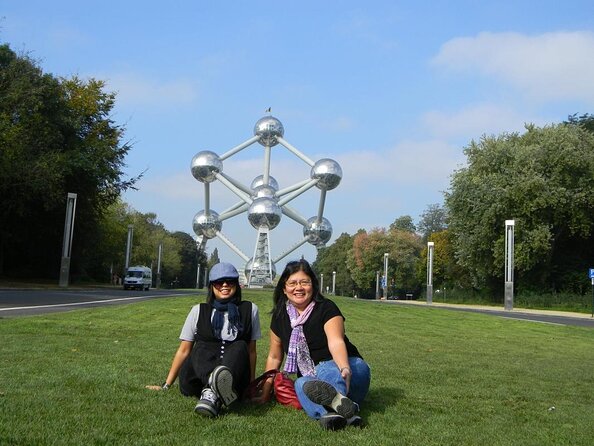
The day begins with a brief stop at the Atomium, the monument associated with Brussels and Belgium. You’ll have about 15 minutes for photos, and the stop is marked as free for admission.
This is a smart move at the start. Even if you’ve seen pictures before, the Atomium gives you a context for the Belgian “ideas + design” vibe—then you head into two historic cities that feel very different, but equally intentional.
Don’t plan on deep exploration here. Think of it as a visual warm-up.
Antwerp walking tour: from Steen Castle to the giant hand
Antwerp is the city where the guide’s explanations really pay off. The route is built around waterfront approach, medieval power, guild culture, and then the more modern-feeling shopping axis.
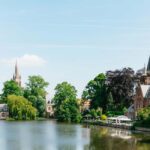



Plantinkaai and the river approach
You’ll stop near Plantinkaai, then head toward the Steenplein area. The walk down the river side helps you orient yourself before the tour proper.
At Steenplein, there’s a short history intro with the skyline and water in the background, and you’ll also get a bathroom break with clear instructions on where to meet later. That’s a small detail, but it prevents the classic day-trip problem: nobody knows where everyone went.
Het Steen and why roofs look a certain way
Your first true landmark stop is Het Steen (Steen Castle). The guide explains the building’s history and why roof shapes show up similarly in parts of Belgium and Holland.
This is one of those “small architecture lesson” stops. Even if you don’t know Antwerp’s timeline yet, you start noticing patterns in stonework and building silhouettes.
Antwerp’s guild and square story: Vleeshuisstraat, Grote Markt, Brabo
Next you’ll get a look at Vleeshuisstraat, connected to the old meat house. The guide links the architecture to commerce and how the city was organized.
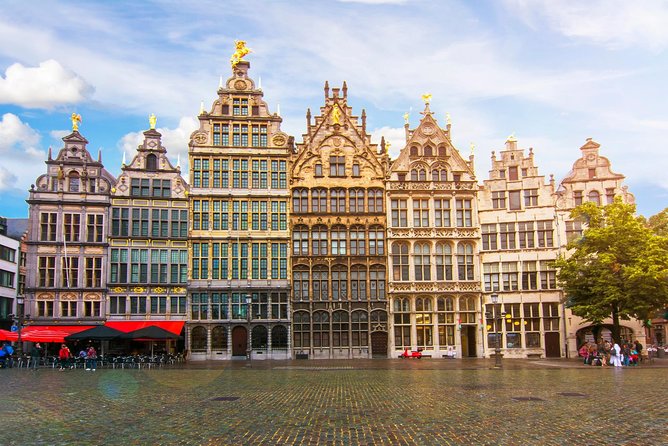
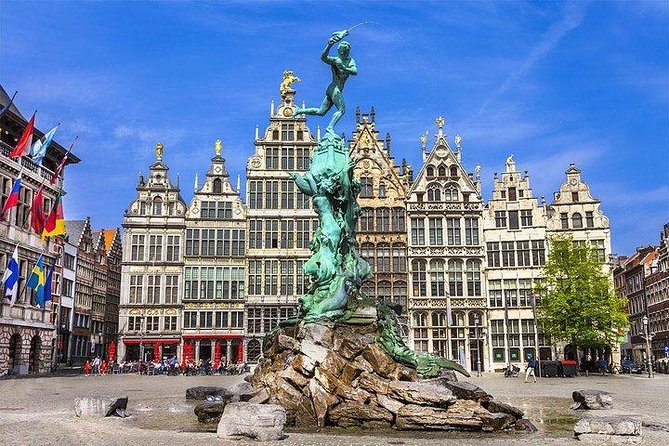
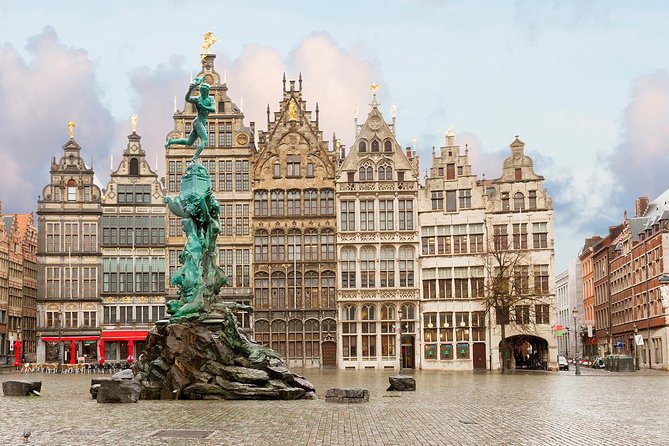
Then comes Grote Markt, Antwerp’s iconic square. Here you’ll see the town hall and guild houses, plus the legend around the Standbeeld van Brabo. Even without going deep into the legend itself, it’s a good example of how Antwerp’s public spaces carry stories like posters from the past.
Carolus Borromeus Church and Rubens in context
At Carolus Borromeus Church, you can enter and see a painting by Rubens in its context. This is a practical stop: it’s one thing to hear the name Rubens, and another to look at his work in a real church setting while someone explains why it’s there.
Cathedral of Our Lady and Rubens works
You’ll continue toward the Cathedral of Our Lady, where the guide points out architectural styles that shaped the cathedral and highlights Rubens works inside. The cathedral’s front area also includes a sculpture with an emotional story attached.
This stop makes Antwerp feel less like “shopping streets and photos” and more like a city with heavyweight religious and artistic layers.
Groenplaats, the Meir Avenue, and Antwerp’s symbols
At Groenplaats, the guide explains how an old cathedral cemetery became the current green square. You’ll also have photo time for the cathedral and Rubens sculpture.
Then you roll into Meir Avenue, Antwerp’s shopping street. In the middle stands a sculpture of a giant hand, and the guide explains the reasons Antwerp and Belgium connect to this symbol. It’s quirky, but that’s Antwerp: serious art and legends, next to fast-moving city life.
Antwerp free time: how to use 1.5 hours without stress
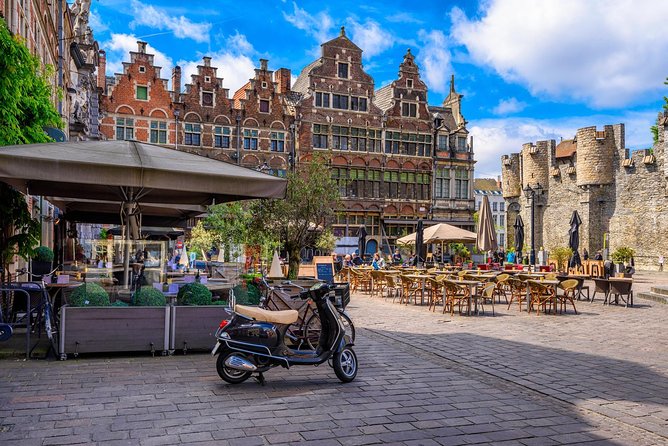
You’ll get about 1.5 hours of free time in Antwerp (timing can shift with traffic and group pace). That’s enough to grab a meal, browse a bit, and still return on time—if you don’t over-plan.
My approach for this kind of free time:
- Pick one easy goal near where you’re dropped off.
- Decide your meal style before you’re hungry (quick sit-down beats searching mid-rush).
- Set a mental return time early.
If you like slow wandering and long museum visits, Antwerp alone might deserve more than this trip gives. For most people though, 1.5 hours is a good recharge.
Ghent guided tour: medieval power and major art
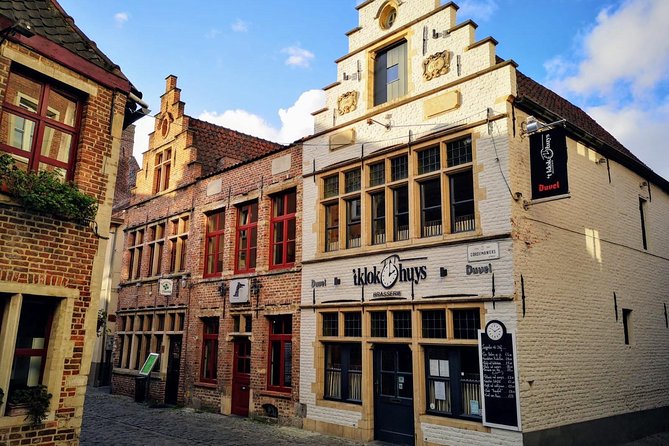
Ghent is where the medieval atmosphere hits hardest. This tour treats Ghent like a full second act, with a guided walk through major civic buildings and cathedral highlights.
Town Hall (Stadhuis) and the Belfry dragon
You’ll arrive and walk to the center, then start at Ghent Town Hall (Stadhuis). The guide explains different architectural styles of the building, which helps you understand why it looks the way it does instead of just thinking it’s “old and pretty.”
Next is the Belfort (Het Belfort van Gent), including the tower’s history and the dragon legend tied to it. It’s a classic Ghent moment and a great “photo-and-stand-still” stop.
St. Bavo’s Cathedral and The Adoration of the Mystic Lamb
Then you reach St. Bavo’s Cathedral. You’ll see both the outside and inside, and learn about the famous Van Eyck brothers painting, The Adoration of the Mystic Lamb, noted here as the most stolen painting in history.
This is one of the most important stops of the day. If Antwerp’s charm is often in its mix of art and commerce, Ghent’s weight is in its long civic and religious continuity. And being inside matters—you can’t replicate that feeling with a photo alone.
Church stop and what Belgian churches do
A short stop comes at Esglesia de Sant Nicolau. The guide notes that Belgian churches host concerts and other events. Even if you don’t catch a performance, it adds a modern rhythm to places you might otherwise treat as static monuments.
Guild house, Korenmarkt, and the old post office idea
You’ll pass the Masons’ Guild Hall area, with explanations of what guild houses were and what’s peculiar about this one. Then you reach Korenmarkt, where the guide connects the square to the former post office.
If you like city systems—trade, civic roles, communication—these stops help you understand how medieval Ghent actually worked, not just what it looked like.
St. Michael’s Bridge and tower story
Next is St. Michael’s Bridge, framed as an excellent photo viewpoint. The guide also tells the story of the tower of St. Michael’s Church, which gives you something to look for besides the river.
Ghent’s riverfront photo belt: Graslei, Korenlei, and covered markets
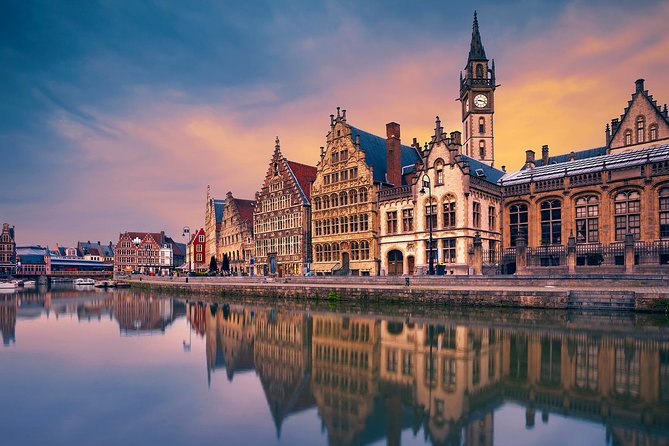
This is the part where your camera does more work. The tour follows the Lys riverbank, focusing on key viewpoints and the buildings around them.
Graslei and Korenlei
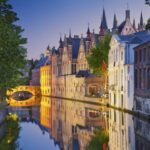
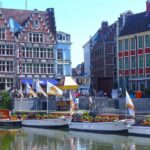
You’ll spend time at Graslei and Korenlei, with photos along the river. The guide connects what you see—like buildings associated with guilds and notable structures—to Ghent’s river-based identity.
It’s an easy walk, but it’s also a moment where you really start to feel Ghent’s medieval density.
OOOST and the covered market angle
At OOOST (the Great Butchers), the guide explains it dates back to the 15th century and was originally a covered market. This is another clever “how city life happened” stop: commerce was housed, planned, and protected from the weather.
Kleine Vismarkt and cuberdon
Then you have a brief stop at Kleine Vismarkt, with a traditional market stall where the seller shares about Ghent’s famous candy, cuberdon.
Even if you don’t buy anything, it’s a fun sensory break—sweet, quick, and local—built into the walk without turning into a shopping stop.
St. Veerleplein and souvenir timing
The guided tour finishes at Sint-Veerleplein Square. The guide explains the square’s story and the buildings around it, and also gives tips on souvenir shops. They also make sure you know when and where to be for the bus back to Brussels.
That last instruction matters more than you’d think. Day trips fail when people get distracted and lose meeting-point clarity.
The bus ride factor: what to expect from the coach day
This is round-trip transit from central Brussels via a comfortable A/C coach. That’s a big part of the appeal if you want to cover two cities without making transit part of your day-plan.
It’s also why you’ll feel the day running on a schedule. The itinerary is not a slow wander; it’s guided pacing plus photo and bathroom breaks, with the timing shaped by traffic.
A practical expectation: the day can feel long even when the walking segments are well-structured. My advice is to eat a real breakfast and bring a water bottle.
Pace, ears, and group dynamics: making the most of the walking time
The tour is guided with multiple stops and short explanations at each. That’s usually good, but it means you’ll get more out of it if you’re comfortable standing and walking steadily.
Communication quality shows up as a key issue in some real-world situations. On longer outdoor days, you can lose bits of dialogue if the guide has to speak loudly over background noise. If you’re sensitive to hearing details, consider bringing your own hearing support if you use it.
Also, some departures may include another language group on the same coach, but with separate guidance. That tends to keep direction clearer for each language, which can help with timing and meeting points.
What’s not included: meals, drinks, and your personal comfort plan
No food or drinks are included. The guide will point you to great places to eat, but you still need to decide what fits your budget and schedule.
Two smart moves:
- Bring snacks if you’re the type who gets grumpy before lunch.
- Plan bathroom comfort. There’s a bathroom stop built into the Antwerpen portion at Steenplein, and the day’s structure relies on meeting points being respected.
Since the free time is limited, I’d rather plan for a simple meal near where you’ll be dropped or guided—so you’re not racing back from the far end of the city.
Who should book this Antwerp and Ghent day trip
This tour fits best if you want:
- A guided orientation to two Belgian cities in one day
- History tied to what you’re actually seeing on the street
- Enough freedom to wander and shop, without turning it into a full-time trip
It’s also a nice choice if you’re staying in Brussels and want variety fast. Antwerp and Ghent feel totally different from Brussels in architecture, civic design, and atmosphere, so the contrast is a big part of the payoff.
If you hate walking, or if you want long museum hours with no pressure, you might be happier booking separate visits to each city.
Should you book it?
I’d book this if you’re doing Brussels as a base and you want Antwerp and Ghent without the headaches of planning transport and timing yourself. The guided stops are built around the city’s most recognizable areas, and the balance of guided segments plus free time is the real reason it works.
I’d skip it if you’re very sensitive to hearing the guide on noisy days, or if your ideal day includes long sit-down meals and unhurried museum wandering. In that case, separate trips let you stretch out and absorb at a slower pace.
If you book, do it with the right mindset: this is a day for seeing, learning, and choosing your own extras, not a full “live there for a week” experience.
FAQ
What time does the tour start?
It starts at 8:30 am from Carrefour de l’Europe in Brussels.
How long is the day trip?
The duration is listed as about 10 hours.
How much does it cost?
The price is $56.72 per person.
Is the tour offered in English?
Yes, it is offered in English.
What’s included in the price?
Included are a professional English-speaking guide, city recommendations and tips, round-trip coach with A/C, a guided walking tour in Antwerp, and a guided walking tour in Ghent.
Are food and drinks included?
No, food and drinks are not included.
Is there free time in both cities?
Yes. You’ll have about 1.5 hours of free time in Antwerp and about 1.5 hours of free time in Ghent (timing can depend on traffic and the group’s rhythm).
What are the main stops in the itinerary?
In Antwerp you’ll visit places like Het Steen, Grote Markt, Carolus Borromeus Church, and the Cathedral of Our Lady, plus stops around Groenplaats and Meir. In Ghent you’ll see the Stadhuis, Belfort, St. Bavo’s Cathedral, and major river viewpoints like Graslei and Korenlei.
Does the tour run in bad weather?
The tour operates in all weather conditions and asks you to dress appropriately. If it’s canceled due to poor weather, you’ll be offered a different date or a full refund.
What’s the cancellation policy?
Free cancellation is available. You can cancel up to 24 hours in advance for a full refund. If you cancel less than 24 hours before the start time, the amount paid is not refunded.