REVIEW · ANTWERP
Private tour: Highlights & History of Antwerp
Book on Viator →Operated by Legends Walking Tours of Antwerp · Bookable on Viator
One afternoon in Antwerp can feel like a whole book. This private walking tour strings together the city’s big-name sights and the sly local stories that help everything click, from Grote Markt legends to Rubens-era art and architecture. If it’s your first time in town, it’s a fast way to get your bearings fast.
Two things I especially like: the walk covers the must-sees without wasting time, and the guide adds human detail that you would not find by wandering alone. I also like that you end near the center of things, so you’re ready to keep exploring right after. One possible drawback: it’s a lot of walking in about 2 hours, and some indoor stops depend on opening hours.
In This Review
- Key things to know
- Starting on Grote Markt, then letting the city unfold
- Grote Markt: guild houses, City Hall, and Brabo Fountain stories
- Hendrik Conscience Statue: literature, baroque church energy, and a “thinking” square
- Carolus Borromeus Church: Rubens art connections you can actually see
- Handelsbeurs Antwerpen: the world’s first Wall Street concept
- Rubenshuis: the artist’s former home and workshop
- MoMu fashion museum area: Antwerp as a fashion capital
- Museum Plantin-Moretus: printing history with real-world meaning
- Vlaeykensgang: Antwerp’s secret medieval alley and your best photo moment
- Nello & Patrasche statue: the sweet story people travel for
- Cathedral of Our Lady: finishing with context and a practical game plan
- What the best guides bring (and why that shows up in reviews)
- Price and value: what $105.86 buys in real time
- Who should book this Antwerp highlights tour
- Should you book this tour?
- FAQ
- How long is the Highlights & History of Antwerp private tour?
- What’s the price per person?
- Is this tour private?
- What language is the tour offered in?
- Where do I meet, and where does the tour end?
- Which stops include admission, and which ones don’t?
- Is hotel pickup available?
- What if the weather is bad, or I need to cancel?
Key things to know
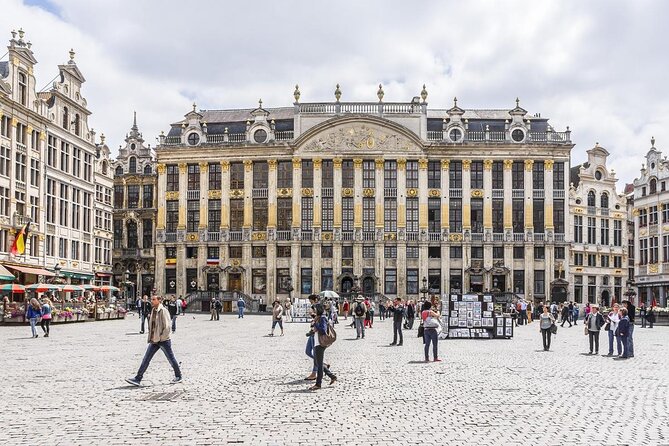
- Private group, small-route focus: only your group goes with the guide, so the pace feels natural.
- Art and money, side by side: Rubens and the Handelsbeurs Antwerpen Golden Age story land within the same loop.
- Photo-friendly alley stop: you’re guided to Vlaeykensgang, one of Antwerp’s best “wait, how is this street here?” moments.
- Two standout architecture stops: City Hall at Grote Markt plus the Cathedral area at the end.
- Fashion context without shopping pressure: you pass the designer quarter while talking why Antwerp became a fashion name.
Starting on Grote Markt, then letting the city unfold
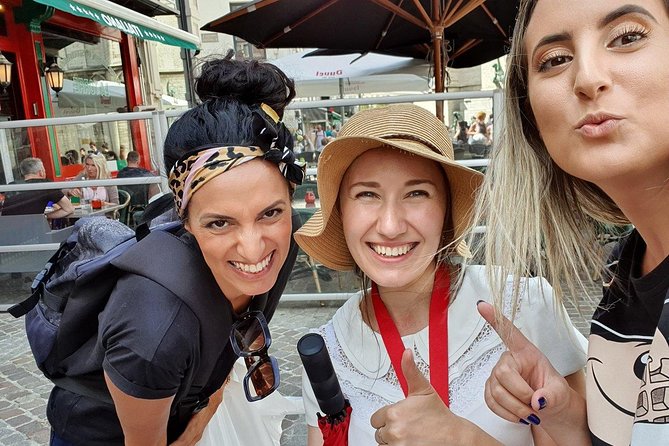
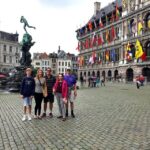
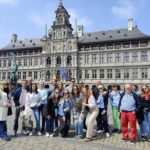
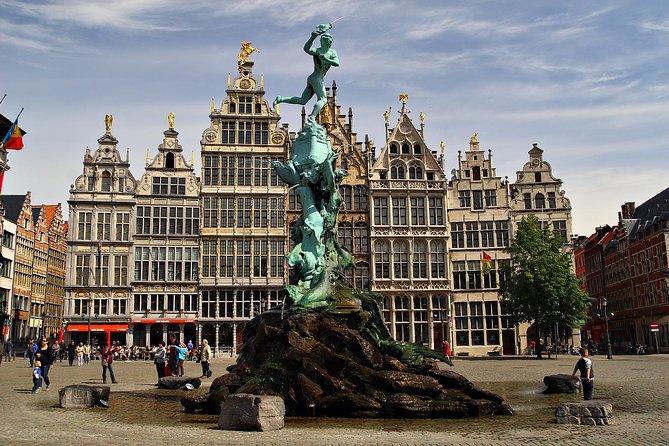
I like the way this tour begins: at Legends Walking Tours of Antwerp right at Grote Markt, Antwerp’s main square. You get thrown straight into the city’s visual language—medieval guild houses, the City Hall, and the Brabo Fountain sitting in the middle like an anchor point. It’s the easiest place to start because landmarks are close, and you can understand Antwerp’s layout in minutes.
From the first stop, the guide’s job is simple: you don’t just see buildings, you learn what to look for. The guide explains the legends and history connected to the square and its monuments, so the stones feel less like decoration and more like proof of how Antwerp worked as a city.
A huge plus for practical travelers: a good guide route means you’re less likely to zigzag awkwardly on your own. You still get a walking-city experience, but with the friction removed.
You can also read our reviews of more private tours in Antwerp
Grote Markt: guild houses, City Hall, and Brabo Fountain stories
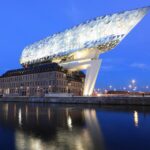
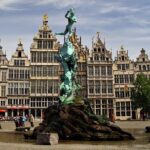
Grote Markt is where Antwerp’s “center of gravity” becomes obvious. You’ll stand in the square long enough to notice details: the ornate guild house facades around you, the civic presence of City Hall, and the Brabo Fountain as the square’s focal point. The key value here is context. If you only snap photos, you might miss why the square mattered so much.
What makes this stop worth the time
- You learn the meaning behind the monuments, not just what they look like.
- The square’s history helps you understand the rest of the walk, because Antwerp’s wealth and power radiated from here.
What to consider
- On busy days, you may need to pause near the edges to get a clear view while you listen.
Hendrik Conscience Statue: literature, baroque church energy, and a “thinking” square
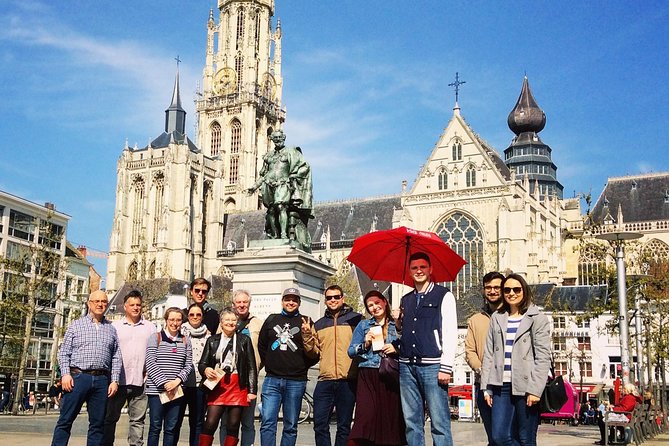
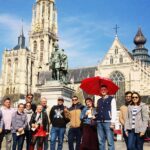
Next you shift a few steps away from the loudest center into a quieter, more atmospheric pocket. The tour focuses on the Hendrik Conscience Statue, named for the Flemish writer. The point is that Antwerp isn’t only money and art pieces; it’s also intellectual life. Near this statue, you’ll see the baroque church presence and the old city library area, tied to the local story of letters and civic identity.
This is one of those moments where a guide does real work. Without explanation, it’s easy to treat this as a pass-through. With the right framing, it becomes a reminder that Antwerp’s culture formed from more than just trade and painting workshops.
Carolus Borromeus Church: Rubens art connections you can actually see
The tour then moves into a major Baroque stop: Carolus Borromeus Church. This 17th-century church is known for Rubens artwork. In practice, that means you’re not just hearing a name dropped; you’re connecting how a painter’s work shaped what a building feels like. The tour covers Rubens’s contributions to the church and also points out elements tied to the facade and interior decoration.
Why I think this works
- Baroque architecture can feel like visual noise if you don’t have a guide’s lens.
- When you connect Rubens to the church’s design, the experience becomes coherent instead of overwhelming.
Watch for this
- The tour says this visit happens during opening hours. If you’re arriving late in the day and the church is closed, you might not get the same interior time.
Handelsbeurs Antwerpen: the world’s first Wall Street concept
Then you hit Handelsbeurs Antwerpen, the Antwerp bourse. The tour frames it with a big comparison: it’s often described as the world’s first Wall Street. That phrase is catchy, but here’s the real value—standing in front of this building while hearing how the city became an international trading hub during the 16th-century Golden Age.
You learn how money moved, how merchants gathered, and how Antwerp’s trading identity shaped the city. If you like history that explains why a place looks the way it does, this stop pays off.
Good for your trip planning
After this stop, Antwerp’s architecture makes more sense. You’ll start noticing which buildings feel civic, which feel commercial, and which feel artistic.
You can also read our reviews of more historical tours in Antwerp

Rubenshuis: the artist’s former home and workshop
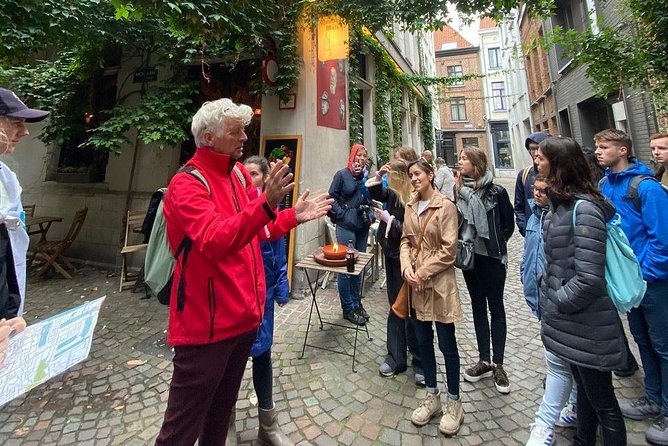
From there, you pass through the Rubenshuis area, the former home and workshop of Peter Paul Rubens. The tour gives you the arc of his life story and shares secrets behind how he built his reputation and success.
Important value note: admission is not included for Rubenshuis. So what you’ll get on this tour is the interpretive experience, not the full museum ticket experience. If you’re a serious Rubens fan, you might want to plan a separate time to go in later with a ticket.
Who should lean into Rubenshuis
- If you care about the “how did he work?” side of art history, this stop will motivate you to see the house details up close another day.
MoMu fashion museum area: Antwerp as a fashion capital
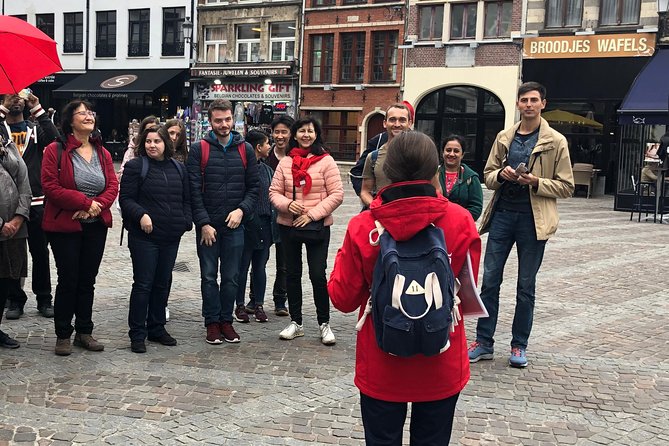
Antwerp’s fashion reputation isn’t treated like a slogan here. You’ll pass through the designer’s quarter while talking about why Antwerp rose into the world fashion conversation.
Admission to MoMu is not included, so again, this is more about context than a ticketed museum visit. Still, it’s useful because it turns a trendy neighborhood into a story-driven place. After the walk, you’ll know where to shop with intention instead of wandering by instinct.
Consideration
- If you’re not interested in fashion at all, you might treat this segment as a quick orientation pass.
Museum Plantin-Moretus: printing history with real-world meaning
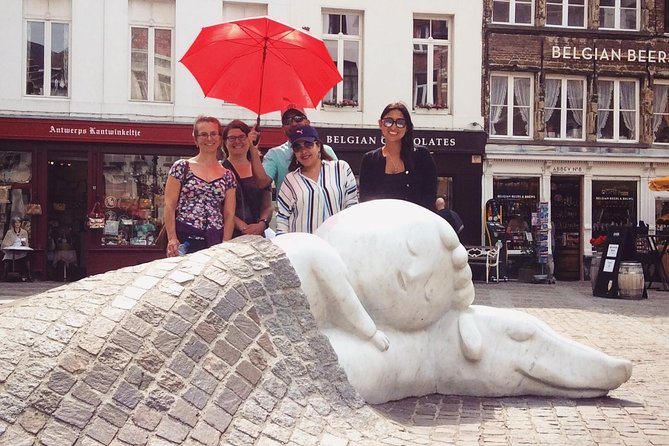
Then comes one of the smartest stops on the route: Museum Plantin-Moretus. The tour presents it as a true standout for book and printing history, and it also notes the museum was the first to be listed as UNESCO World Heritage. That combination matters—printing history can sound abstract until you see how it shaped everyday knowledge and communication.
The walk includes the museum’s garden time in most cases (the historical garden is usually included). Even if your main interest is architecture and art, this stop connects to the earlier “thinking square” moment near the Conscience connection. Antwerp isn’t only creators of paintings; it’s also a city of words, printing, and distribution.
Why this is a value stop
It slows the tour down in a good way. You leave with a sense of how technology and culture traveled through Antwerp.
Vlaeykensgang: Antwerp’s secret medieval alley and your best photo moment
One of the most memorable parts is the Vlaeykensgang stop. This is described as the best-kept medieval street of Antwerp, a secret alley that’s not easy to find on your own. The guide leads you there, and that matters because part of the fun is the surprise of discovering it.
It’s also said to be the most photographed place in the city. I get that. The narrow lane turns the city into a mini stage set. Even if you hate “photo stops” on tours, this one helps you understand Antwerp’s medieval depth.
What to expect
- You’ll get a short window to look, photograph, and listen without being rushed.
- The alley’s layout makes it easy to picture how people once moved through the old city.
Nello & Patrasche statue: the sweet story people travel for
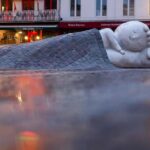
Next is a smaller, story-heavy stop: the Nello & Patrasche Statue. The tour notes that a lot of local people don’t know the story, yet it’s a reason many visitors come to Antwerp. The guide shares the tale behind the statue, which turns a simple photo point into something more personal.
This is a good example of why I like guided walking tours: you get the narrative hook. Without that, the statue is just another pretty corner in a beautiful city.
Cathedral of Our Lady: finishing with context and a practical game plan
The tour ends in front of the Cathedral of Our Lady. This is where the walking loop “clicks” together. You get history and curious facts about the cathedral’s construction, and then you receive recommendations to help plan the rest of your time in Antwerp.
This ending location is smart because it sets you up for more exploration without forcing you to backtrack. If you want a smooth post-tour afternoon, ending near the cathedral area is ideal. It’s also where you can pivot into museums, riverside strolls, or lunch plans.
A note from the tour details: the tour ends in front of the cathedral, while the listed end point is Handschoenmarkt. If you prefer a different final drop-off, you can add a note.
What the best guides bring (and why that shows up in reviews)
This tour is private, and the guide makes a visible difference. Some guides have been praised for turning Antwerp into a kind of character story—like Luc D., who’s highlighted for bringing buildings alive with humor and story, making the time feel like it flew. Edna is also mentioned for fun city “gossip” and an energetic approach. Johan and Gaston come up for engaging explanations and a big store of historical details. Arie and Flip are singled out for flexibility and customization, including meeting people around transport issues.
You shouldn’t rely on one name, of course, but the pattern is clear: the guides put personality into the facts. If you enjoy lively narration while you walk, this tour matches that style.
Price and value: what $105.86 buys in real time
At $105.86 per person for about 2 hours, you’re paying for focused attention and route efficiency—not just talking points. In a city with so much to see, getting the right order matters. This tour covers a strong range of themes: civic center (Grote Markt), art (Rubens connections), commerce (Handelsbeurs), publishing history (Plantin-Moretus), and the medieval “small streets” that make Antwerp feel special.
Also, many stops are free to view as part of the walk. The tour notes admission is free at several key points and includes visits during opening hours where applicable. That means your money goes into guidance and storytelling, not stacking up entry fees across every single stop.
Where costs can change
- Rubenshuis admission is not included.
- MoMu entry is not included.
So if you want full museum time at those specific places, you’ll likely pay additional tickets.
Who should book this Antwerp highlights tour
This is a good fit if:
- You want a first-time overview that doesn’t feel like a checklist grind.
- You like architecture, art connections, and city stories that make places make sense.
- You prefer a private setting where you can ask questions and set the pace.
It’s also a decent choice if you want photography stops with guidance, especially for Vlaeykensgang and the statue segment.
It may be less ideal if:
- You’re looking for a long museum day with full interior time at multiple ticketed venues.
- You have limited walking tolerance. The tour is short, but it’s still a walking circuit.
Should you book this tour?
I’d book it if you’re coming to Antwerp for the first time and you want a clean, confident start. The route makes smart sense: you see the civic heart, get the Rubens angle, understand why the city prospered, then end with the cathedral area and recommendations for what’s next.
I would only hesitate if you’re traveling very late in the day and concerned about opening hours for indoor stops like the churches and bourse. Also, if you want hotel pickup, confirm your hotel location matches the pickup plan—optional pickup exists, but it may not work for every address outside the downtown area.
FAQ
How long is the Highlights & History of Antwerp private tour?
It’s about 2 hours.
What’s the price per person?
The price is $105.86 per person.
Is this tour private?
Yes. It’s a private tour/activity, and only your group participates.
What language is the tour offered in?
It’s offered in English.
Where do I meet, and where does the tour end?
You start at Legends Walking Tours of Antwerp, Grote Markt 1, 2000 Antwerpen. The tour ends near the Cathedral, with the listed end point at Handschoenmarkt, 2000 Antwerpen.
Which stops include admission, and which ones don’t?
Several stops are listed as free for the tour (like Grote Markt, Carolus Borromeus Church during opening hours, Handelsbeurs Antwerpen during opening hours, Museum Plantin-Moretus, Vlaeykensgang, and the Nello & Patrasche statue). Admission is not included for Rubenshuis and MoMu. Museum Plantin-Moretus notes the historical garden is usually included.
Is hotel pickup available?
Optional hotel pickup is included, and you can add a note if you prefer a different end point.
What if the weather is bad, or I need to cancel?
You can cancel for free up to 24 hours in advance for a full refund. The experience requires good weather, and if it’s canceled due to poor weather you’ll be offered a different date or a full refund.