REVIEW · ANTWERP
Private Historical Tour: Legends of Antwerp
Book on Viator →Operated by Legends of Bruges Free & Private Tours · Bookable on Viator
Antwerp’s legends start at a crowded main square. This private walking tour threads the city’s big medieval landmarks with stories about giants, symbols, and the Golden Age ups and downs—stuff you’d miss if you just stroll on your own.
I like how the route stays tight and purposeful. You cover major stops like the Grote Markt, Het Steen, and the Cathedral of Our Lady, plus key side streets and landmarks that explain Antwerp’s power and decline without turning it into a textbook.
One thing to consider: the tour’s historical focus can vary by guide. A review mentioned a gap on the Jewish community topic, so if that’s a big interest for you, ask direct questions early so you get the depth you want.
In This Review
- Key things I’d mark before you go
- Entering Grote Markt: Antwerp’s giants, the hand, and the Golden Age story
- Het Steen: the stone castle that connects legends to real life
- Museum Vleeshuis (Butchers Hall): guild power, money, and the messy side
- Carolus Borromeus Church to Rubens territory: Baroque beauty with painter context
- Vlaeykensgang: Antwerp’s smallest street as a Middle Ages reality check
- Cathedral of Our Lady: legends on the largest stage
- Plantin-Moretus Museum: industrial printing, not just printing trivia
- How the 2-hour format works for real planning
- Private, English, and built for questions
- Who this tour is best for
- Price and value: what $105.82 buys you (and what it doesn’t)
- Should you book Legends of Antwerp?
- FAQ
- How long is the Private Historical Tour: Legends of Antwerp?
- What is the starting meeting point?
- Where does the tour end?
- Is the tour offered in English?
- Is this a private tour?
- Are there admission tickets you need to buy for the stops?
- What’s the cancellation policy for a full refund?
Key things I’d mark before you go
- A legend-first route: giants, the hand symbol, and local myths tied to real places
- Classic Antwerp anchors: Grote Markt, Het Steen, Carolus Borromeus Church, and the Cathedral of Our Lady
- Old industries get explained: butcher-guild history at Museum Vleeshuis and printing at Plantin-Moretus
- Pacing is flexible: at least one guide adjusted the speed to match the group
- Walkable but not flat: cobblestones are part of the deal, so good shoes matter
- Private-group feel: only your group participates, with optional hotel pickup depending on the departure
Entering Grote Markt: Antwerp’s giants, the hand, and the Golden Age story
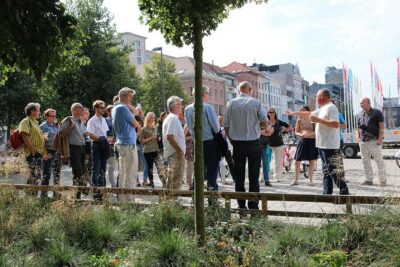
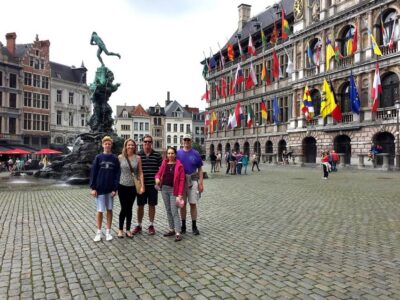
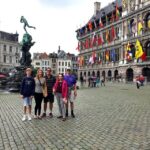
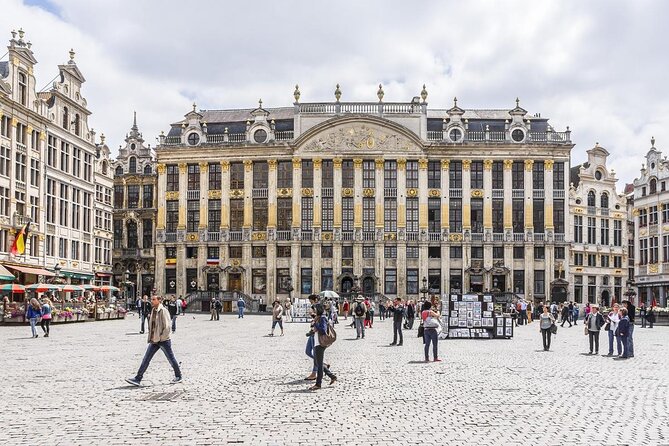
Your tour begins on Grote Markt, Antwerp’s main square, where the guide sets the tone with the city’s most famous visual clues. You’ll hear why Antwerp is often called the city of giants—and how the hand became a symbol tied to the legend life of the city. These aren’t random myths; the guide uses them to explain how people in Antwerp talked about power, fame, luck, and outsiders.
Grote Markt is also where you learn the big-picture logic. The guide connects Antwerp’s climb to being one of Europe’s wealthiest cities in the 16th century with the reasons that wealth later slipped away. That timeline matters because it makes the later stops click: you’re not just looking at old buildings, you’re watching the city’s priorities change as Antwerp’s fortunes shift.
Timing note: this is a short stop, around 15 minutes. If you want more time for photos, tell your guide early so they can adjust. The upside of a private format is that you can usually negotiate a little—without losing the rest of the route.
You can also read our reviews of more private tours in Antwerp

Het Steen: the stone castle that connects legends to real life
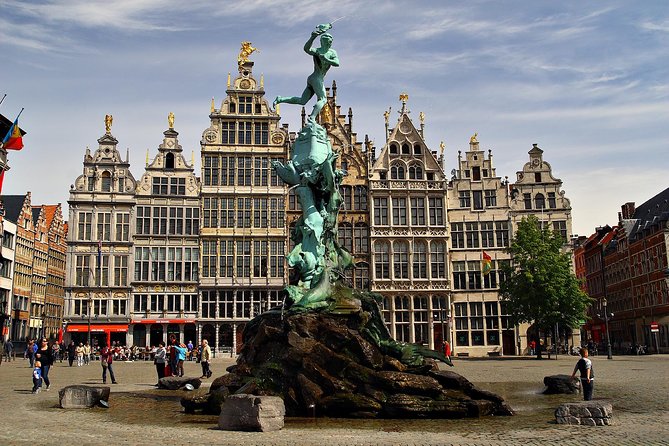
From the square, the tour moves to Het Steen, the stone castle that’s widely described as the city’s oldest building. Here the guide makes a simple but smart connection: the castle isn’t only an architectural relic. It ties into earlier legends, including the idea of Antwerp’s giant figure and how older stories were attached to physical landmarks.
Het Steen’s value on a walking tour is that it gives you a sense of continuity. One building, many lives—military, administrative, and practical uses over time. Even if you only catch a slice of its story, you’ll leave with an explanation for why Antwerp bothered to protect and repurpose this spot in the first place.
If you care about medieval urban defense, this is one of those stops that works well even without museum-style detail, because the guide grounds it in what the location meant.
Museum Vleeshuis (Butchers Hall): guild power, money, and the messy side
Next is Museum Vleeshuis, linked to the old Butcher’s Hall. The guide frames it as the oldest guild house in the city and explains why guilds mattered so much in Antwerp’s days of growth. This stop is about commerce—who controlled trade, how rules were enforced, and what happened when a city’s daily business got political.
The tone here tends to be a bit darker. The guide brings up the often bloody history connected to butchers and guild life. Whether you find it fascinating or just a little grim, it’s an important reminder that Antwerp’s wealth wasn’t only art and kings. It was also bodies, markets, taxes, and power struggles.
Practical consideration: this is a quick stop (about 5 minutes). If you want a deeper story, you may need follow-up questions. But as a quick “place-to-meaning” moment, it does its job fast.
Carolus Borromeus Church to Rubens territory: Baroque beauty with painter context
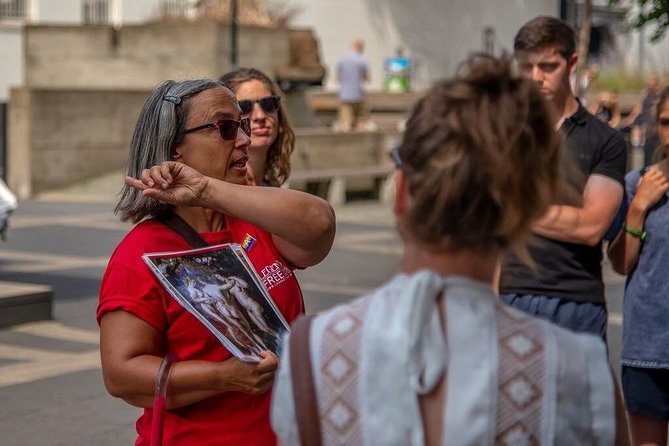
The tour then heads to Carolus Borromeus Church, a Baroque church tied closely to Antwerp’s famous painter Rubens. The key point the guide makes is that this wasn’t just a random religious building. It connects to Rubens’s world—described as a place connected to his life and work—so you understand why Antwerp attracted artists in the first place.
What I like about this part is that it’s not only about architecture. The guide uses the church to keep tying stories back to people. Antwerp’s Golden Age wasn’t just wealth; it was patronage and cultural status. When the guide links a Baroque church to Rubens, you start seeing Antwerp as a place where art and influence walked side-by-side.
After that, the tour passes by areas that steer you toward the art-and-fashion axis, including mention of the Meir shopping street and the fashion district. You’ll also be taken to the area near the Rubens museum, where Rubens lived and worked his whole life. Even if you don’t go deep into the museum collections during this walking format, the guide’s pointing helps you recognize what you’re looking at.
If you’re the type who likes to read a city with your feet—rather than just snapping photos—this is a strong sequence.
Vlaeykensgang: Antwerp’s smallest street as a Middle Ages reality check
Then comes Vlaeykensgang, described as the smallest street of Antwerp. This stop works for a different reason than the major squares and grand churches. Instead of scale and power, you get proportion and texture: a tight, narrow street that feels like a leftover pocket from the Middle Ages.
The value here is psychological. After seeing major landmarks, it’s refreshing to shrink the lens. You start to understand how everyday people likely moved through the city’s older fabric—how access, proximity, and density shaped life.
It’s only about 10 minutes, so don’t plan on writing a novella here. But for a short walk that adds atmosphere and context, it’s a great pivot.
You can also read our reviews of more historical tours in Antwerp

Cathedral of Our Lady: legends on the largest stage
The tour ends at Cathedral of Our Lady—one of Antwerp’s most imposing sights—and the guide uses the setting to tell legendary stories tied to the cathedral’s history. This stop also acts as a natural “wrap” because it sits at the end of your route and gathers Antwerp’s key themes: belief, power, and the way stories stay attached to buildings.
What’s useful for you is that the guide doesn’t treat the cathedral as a final photo stop. It’s presented as part of Antwerp’s long memory, which helps you connect what you saw earlier—giants, guild life, and painter culture—to a single end-point symbol of the city.
The tour finishes by Handschoenmarkt, described as about 50 meters from the main square. In plain terms: after the guided time is over, you’re still close to food, coffee, and the next thing you want to explore.
Plantin-Moretus Museum: industrial printing, not just printing trivia
The last major named stop is Museum Plantin-Moretus, presented as the place where industrial printing was born. This matters because it shifts your Antwerp story from legends and art to technology and information flow. If Antwerp’s wealth was tied to trade and culture, printing is where ideas could scale.
The guide’s approach here (as described) is practical: you see how the printing legacy connects to the city’s economic and cultural muscle. You walk away with a new lens for Antwerp—not only a place for legends and churches, but a place where practical industries shaped how people learned, bought, and spread ideas.
Timing: it’s about 10 minutes on this tour, so consider it an orientation stop. If you’re a printing-history person, you may want to return later with more time.
How the 2-hour format works for real planning
This is listed as about 2 hours, and the stops are paced in short chunks—around 5 to 15 minutes each. That structure has a specific benefit: it keeps you moving between landmark clusters so you don’t waste time staring at the same street with no context.
It also means you should plan around walking comfort. One review specifically mentioned being comfortable on cobblestones, which is exactly the kind of detail you’ll want to respect. Bring shoes you’d wear for a city stroll, not just for one museum stop.
For scheduling, it helps to know that the tour is often booked around 50 days in advance. If you’re traveling in peak season or want a specific departure, book earlier rather than later.
Private, English, and built for questions
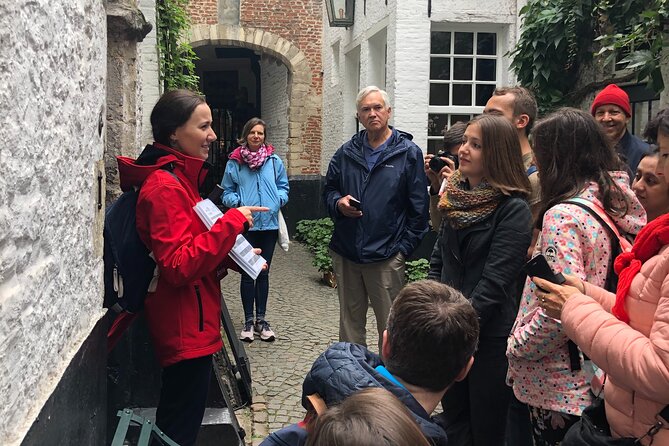
This is a private tour, meaning only your group participates. That changes the vibe. You can ask follow-ups, and the guide can adjust the pacing to your speed—as at least one review noted when the guide matched the group’s walking tempo.
The tour is offered in English, and that matters because Antwerp’s local lore has layers. When the guide is telling legends about the hand symbol or connecting buildings to guilds, you’ll want to understand every link.
Group discounts are mentioned, which is worth thinking about if you’re traveling with friends or family. If your group can pool together, the cost per person is more likely to feel fair.
Also, the tour includes a mobile ticket. That’s a small convenience, but in a city where you’ll likely be juggling directions and timing, it helps you avoid last-minute friction.
Who this tour is best for
This walking tour tends to fit well if you:
- Want Antwerp legends tied to real locations like Grote Markt and Het Steen
- Like a route that covers both the big monuments and the small streets
- Enjoy art-adjacent context, especially with Rubens and the Baroque church stop
- Want an efficient 2-hour overview that helps you choose what to explore next
If you’re the kind of traveler who wants a strict lecture with lots of documents, you might find the stops short. And as noted earlier, if a specific community topic is your top priority, you’ll get the best results by asking pointed questions so the guide steers toward what you care about.
Price and value: what $105.82 buys you (and what it doesn’t)
At $105.82 per person for roughly 2 hours, the value comes from three things:
First, it’s private. You’re paying for a dedicated guide and a route designed to make you leave with connections, not just photos.
Second, many stops are listed as free admission for the visitor component. That reduces the surprise costs that often show up when tours turn into ticket-hunting errands.
Third, the itinerary covers several major Antwerp anchors without requiring you to map the route yourself. Even if you could technically do some of this on your own, the guide’s thread—legends to symbols to Golden Age economics—helps you understand what you’re seeing.
What it doesn’t include (based on the provided details): it doesn’t present itself as a long museum deep-dive. Think of it as a walking story engine that sets you up to explore independently after.
Should you book Legends of Antwerp?
If you want a story-driven private walking tour that connects Antwerp’s famous landmarks to legends and everyday power—from guild life to printing—this is a strong pick. The reviews also highlight a real strength: guides who make the city feel alive, including names like Flip of Antwerp, Luc D, Joske, and Beren, with at least one guide praised for adjusting pace to the group.
I’d especially recommend it if you’re short on time and want your first Antwerp day to feel complete. And I’d book with a quick mindset of: bring comfortable shoes, be ready for cobblestones, and ask questions early if there’s a historical topic you really want covered.
FAQ
How long is the Private Historical Tour: Legends of Antwerp?
It’s listed at about 2 hours.
What is the starting meeting point?
The tour starts at Grote Markt, 2000 Antwerpen, Belgium.
Where does the tour end?
The tour ends at Handschoenmarkt, 2000 Antwerpen, Belgium, and it finishes near the Cathedral (about 50 meters from the main square).
Is the tour offered in English?
Yes. The tour is offered in English.
Is this a private tour?
Yes. It’s private, and only your group will participate.
Are there admission tickets you need to buy for the stops?
The stops are marked as admission ticket free in the tour details, so you shouldn’t need paid entry tickets for those listed stops.
What’s the cancellation policy for a full refund?
You can cancel for a full refund up to 24 hours before the experience starts. If you cancel less than 24 hours before, the amount paid isn’t refunded.