Bruges on a retro bike feels made for stories. I really like starting in a secret garden at Hof Bladelin House, then cruising past the big sights with a local guide who can explain what you’re seeing (and why it mattered). I also loved the mix of famous stops and the type of side streets that make Bruges feel lived-in, including places like the Stairway To Heaven that you’d miss on your own.
You’re riding cobblestones and narrow medieval lanes, so keep that in mind. The tour runs rain or shine, and it’s not suitable for wheelchair users or people who are visually impaired.
In This Review
- Key things you’ll notice on this Bruges bike tour
- Retro bikes and a medieval palace setting at Hof Bladelin
- Basilica of the Holy Blood to the Belfry: the big Bruges landmarks, explained
- Church of Our Lady, the Beguinage, and the slower side of Bruges
- Dijver, Sint-Anna Quarter, and Jeruzalemkerk: neighborhoods with character
- Bruges City Hall, Rozenhoedkaai, and Gruuthusemuseum: where the city flexed
- Market Square wrap, plus windmills and Lake of Love vibes
- Hidden corners: Chocolate Line, local chapels, and Stairway To Heaven
- How the ride really feels: pace, cobbles, and small-group comfort
- Price and value: what $52 buys you in Bruges
- Who should book this Bruges retro bike tour
- Should you book Retro Biketours Bruges?
- FAQ
- Where is the meeting point for the tour?
- How long is the guided bike tour?
- What’s included in the ticket price?
- Is food included?
- What language will the guide speak?
- Does the tour run rain or shine?
- Are there photo stops during the ride?
- Do I need to bring my own helmet?
- Is this tour accessible for wheelchair users or visually impaired people?
- What are the cancellation and payment options?
Key things you’ll notice on this Bruges bike tour
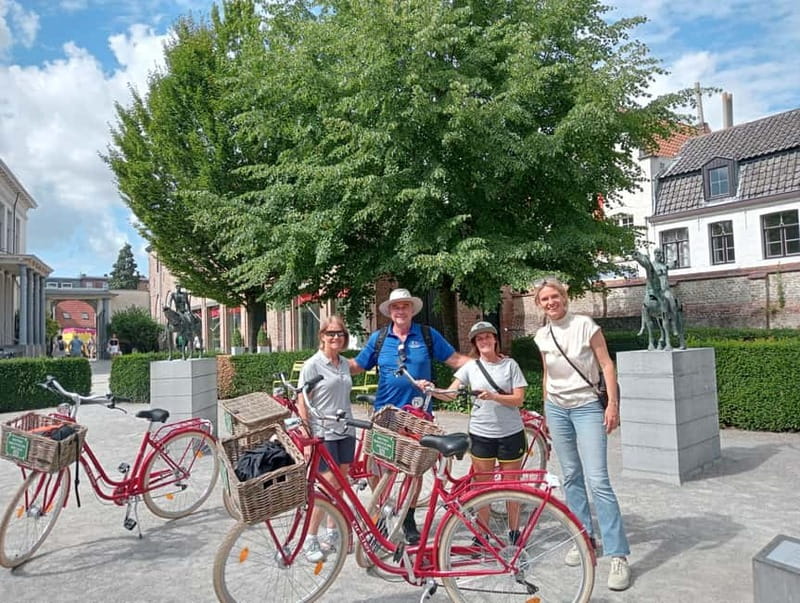
- Hof Bladelin secret garden start and finish: a calm medieval setting instead of a busy street corner
- Story-led stops at UNESCO hotspots: Belfry, Markt, City Hall, and more with context
- A real canal-and-windmill Bruges route: not only churches and squares
- Local-only style details: Stairway To Heaven, Chocolate Line, Jerusalem Chapel
- Small-group energy: easier pacing and more time for questions
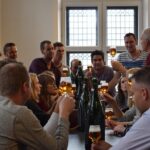
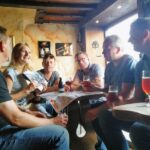
- End with a local drink: beer or limonade served in the garden
Retro bikes and a medieval palace setting at Hof Bladelin
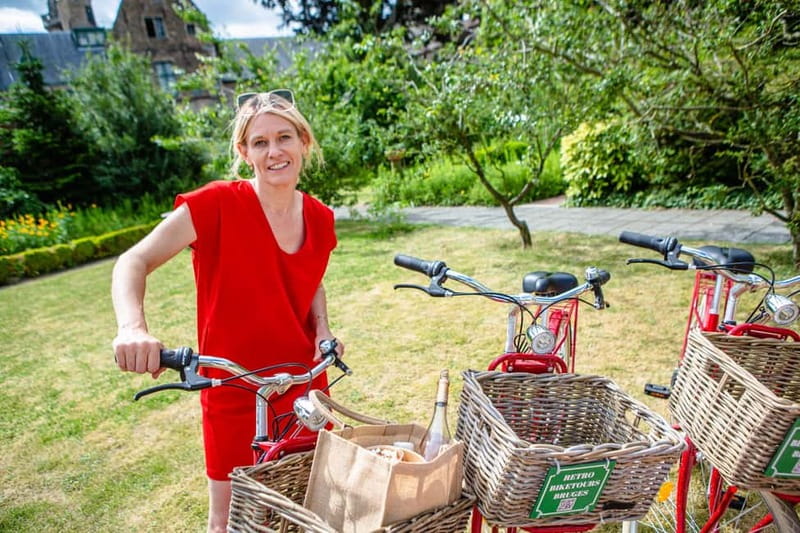
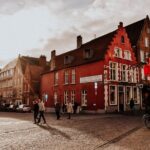
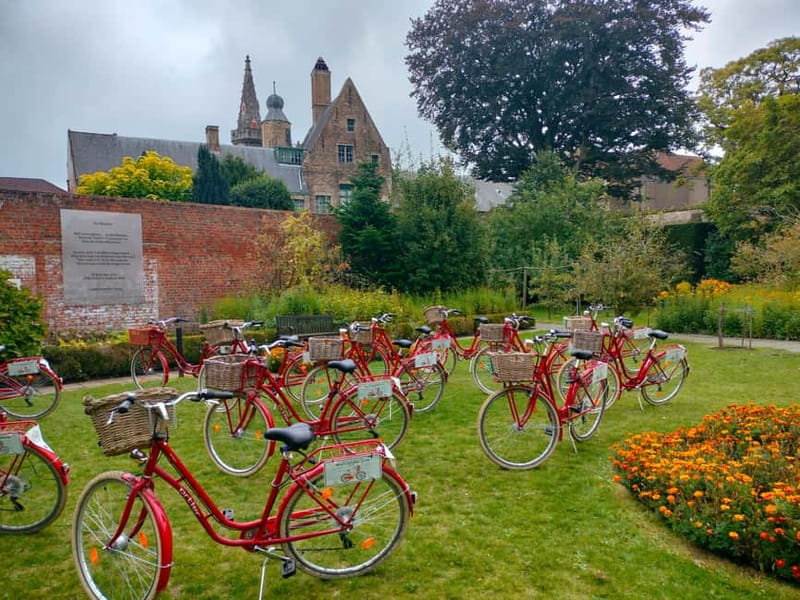
This tour starts in an unexpected place: the Retro Biketours Bruges office on Grauwwerkersstraat, behind a green gate. You’ll enter a little wonderland of calm in the garden area of the 15th-century Hof Bladelin. It sets the tone fast. Instead of beginning in a loud check-in line, you start with a sense of Bruges, old-world but not stuffy.
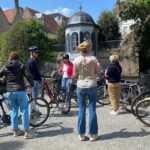
You get a retro bike with a basket, and you’ll have a helmet available for your safety. Many people find the bikes stable and easy to ride, even if you haven’t practiced in a while. Bruges is pretty flat, so the bigger challenge is the surface: cobblestones. If you’re even slightly nervous, slow down on turns and keep your hands relaxed.
And yes, the guides are part of the appeal. Names that come up often include Sebastian and Eveline, and their style is consistent: they connect landmarks to legends, family rivalries, religious life, and the practical politics of a medieval city. It makes the tour feel less like sightseeing and more like someone showing you their home town.
You can also read our reviews of more cycling tours in Bruges
Basilica of the Holy Blood to the Belfry: the big Bruges landmarks, explained
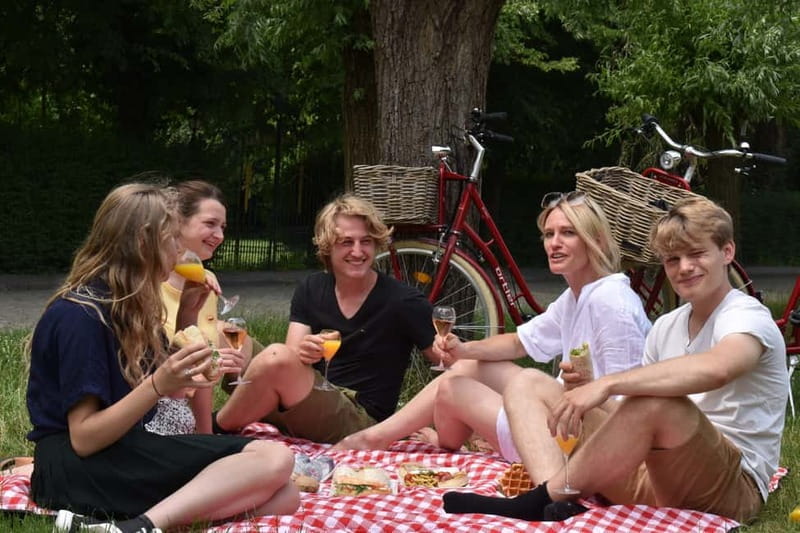
The early rhythm is simple: you meet your guide, get on the bike, and head straight into the sights that define the city.
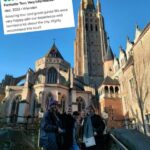
First up is a photo stop at the Basilica of the Holy Blood. Even if you only linger briefly, it’s worth treating this as a warm-up. This is the kind of place where the stories matter as much as the architecture. The guide’s explanation helps you look beyond the façade and see why Bruges kept attracting attention.
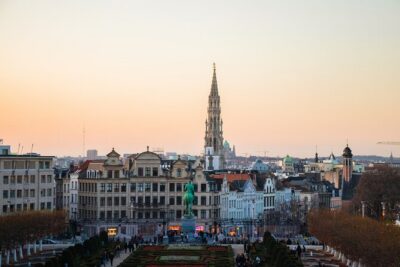
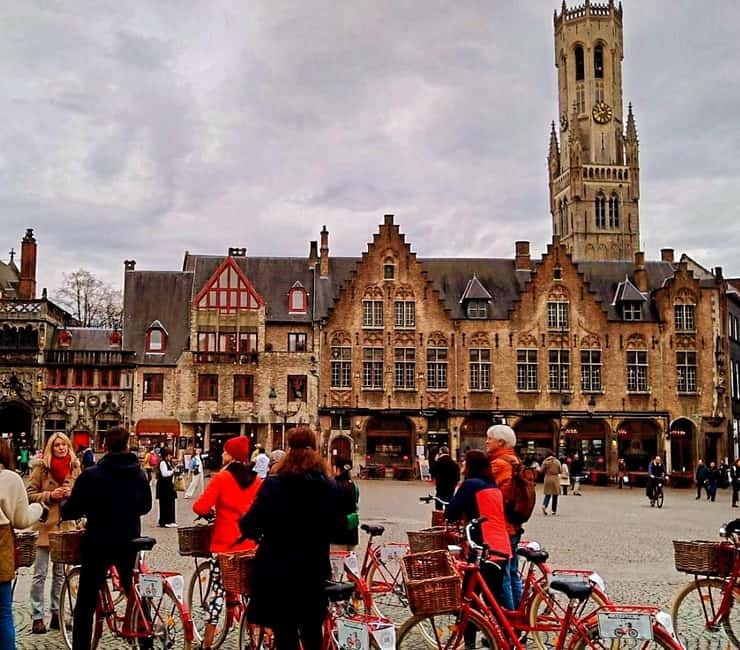
Then you roll to the Belfry of Bruges and the historic Market Square. The Belfry isn’t just a pretty tower. With the guide’s context, you start seeing it as a symbol of civic pride—Bruges as a city that had power and influence. You’ll take photos around the square, and you’ll get the sense that you’re moving through layers of public life, not just tourist scenery.
If you like your tours to include both visual highlights and meaning—rather than a parade of stops—this opening section does that well.
Church of Our Lady, the Beguinage, and the slower side of Bruges
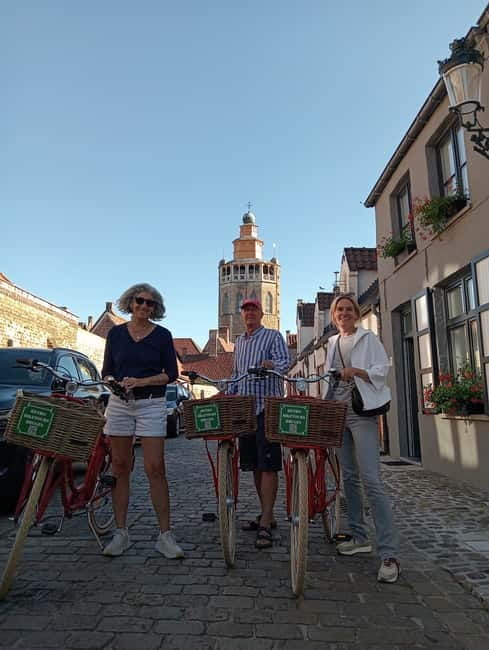
After the main square energy, the tour shifts toward Bruges’ calmer spiritual and community spaces.
You’ll stop for photos at the Church of Our Lady (another quick hit, guided and purposeful). Then you head toward the Beguinage, including Ten Wijngaerde. This is one of the places where cycling helps. You glide into a quieter tempo and you don’t feel boxed in like you might walking from entrance to entrance.
In plain terms, the Beguinage area gives you perspective. Bruges wasn’t only merchants and mayors. It also had religious communities and everyday lives shaped by faith, charity, and tight-knit rules. When your guide talks about these places, you start noticing details you’d otherwise skip—layout, entrances, and the overall “how the community was meant to function” vibe.
A nice practical benefit: photo stops mean you can keep moving without the tour becoming a constant standstill. You get a moment, you get the story, then you’re back on the bike.
Dijver, Sint-Anna Quarter, and Jeruzalemkerk: neighborhoods with character
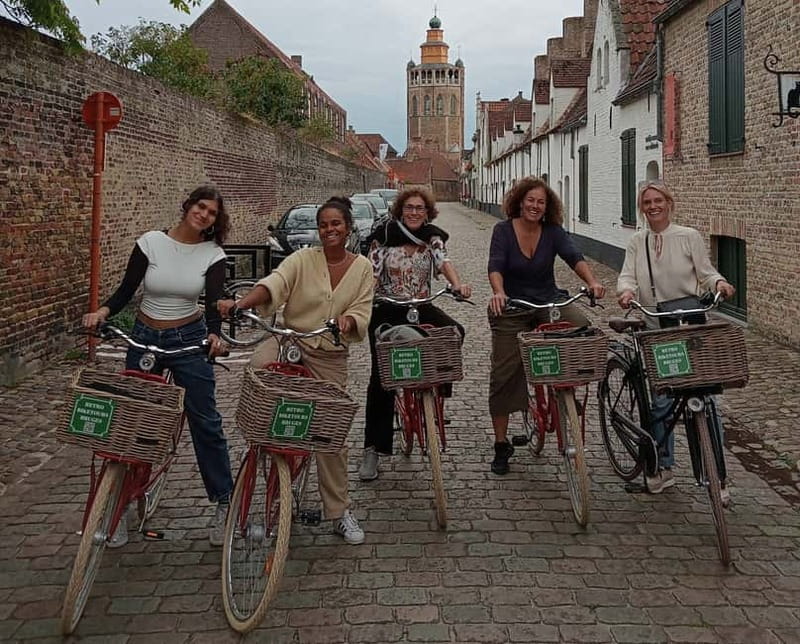
Next comes a stretch that feels more like riding through Bruges as a lived city.
You’ll pass through areas such as Dijver and the Sint-Anna Quarter with photo stops and guided explanations. These segments are great if you want more than the postcard view. They help you understand how Bruges is stitched together—how squares connect to canals, and how the city’s geography shapes daily routes.
One of the key stops here is Jeruzalemkerk, the Jerusalem Chapel area. It’s another example of how the guide can make a building feel like a chapter in Bruges’ bigger story. The tour also weaves in references to local legends and artwork, including Mary of Burgundy’s work, so you’re not just ticking boxes—you’re learning what people valued.
Look at this as the tour’s “slow reveal” portion. You’re still cycling, but the information makes you notice the smaller things: positioning, architectural style, and the reasons certain corners became famous.
Bruges City Hall, Rozenhoedkaai, and Gruuthusemuseum: where the city flexed
Now you hit the parts of Bruges that feel most “official.”
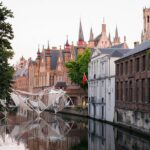
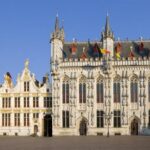
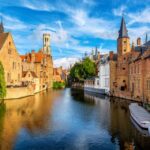
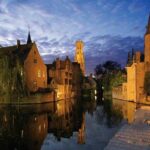
There’s a photo stop and guided sightseeing at Bruges City Hall, then another set of stops around Rozenhoedkaai. Rozenhoedkaai is especially good on a bike because you naturally get angles. You’re not just standing in one spot trying to frame the canal with a selfie stick. The guide’s timing helps you see it as a scene—water, architecture, and the gentle motion of the city around it.
You’ll also see the Gruuthusemuseum area (another photo stop with guided context). Museums can be hit-or-miss if you go in cold, but here you’re getting a route-based intro. That means the exterior and the setting start to make sense before you ever decide whether to come back for a longer visit.
By now, you’ve already covered the major “must-sees,” but the tour keeps turning them into story points rather than stop signs. It’s a smart way to make a short stay feel longer.
You can also read our reviews of more guided tours in Bruges

Market Square wrap, plus windmills and Lake of Love vibes
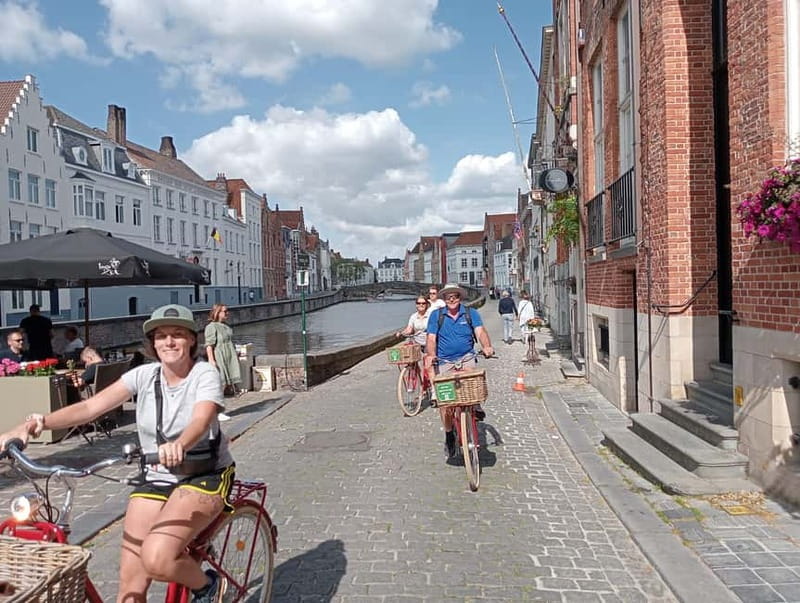
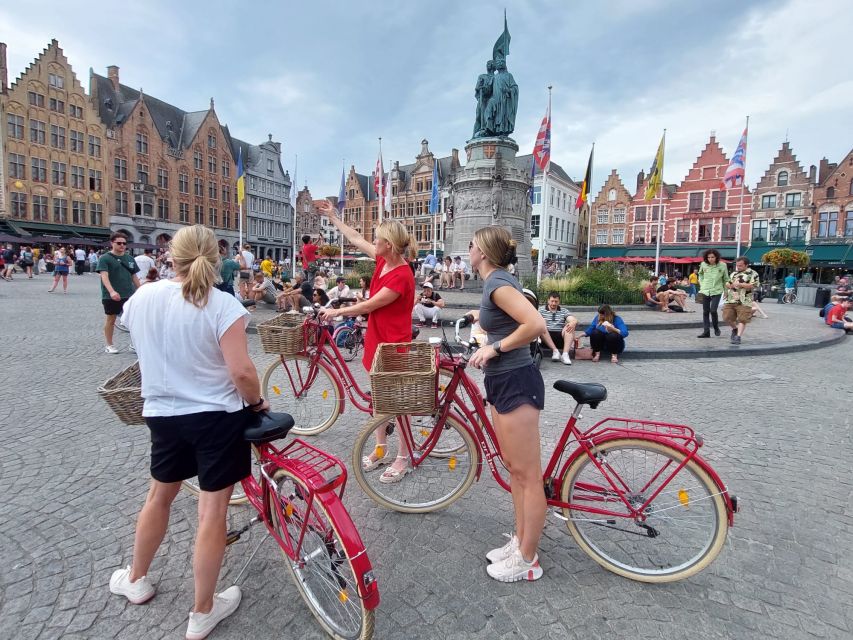
The tour loops back through the Markt area for another guided photo moment. By this stage, you’ve seen enough of Bruges that the center starts to feel like a hub instead of just a landmark.
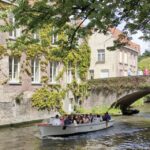
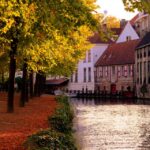
And the best part of the later ride is that Bruges doesn’t stay frozen in medieval imagery. You also get the classic scenic elements: canals, medieval bridges, windmills, and the Lake of Love (Minnewater). These spots are where Bruges feels like it’s exhaling. Cycling past them gives you a visual reset after churches and civic buildings.
Lake of Love is a standout because it changes the mood. Even if you don’t stay long, the guided framing helps you appreciate why it’s called out as a signature location. You’re not just seeing water—you’re seeing a named experience in the city’s emotional geography.
Hidden corners: Chocolate Line, local chapels, and Stairway To Heaven
This is where the tour earns its “highlights and hidden gems” name.
Along the way, you’ll discover details like the Chocolate Line and Stairway To Heaven. These are exactly the kind of things that sound like curiosities until you learn the reason they’re woven into Bruges’ story. Your guide connects them to local culture and the city’s legendary reputation.
You’ll also hear legends and see references to Jerusalem Chapel and other tucked-away points. The wording on the tour description is clear: the guide knows the places locals pay attention to. And that comes through in the pacing. You don’t feel like you’re being rushed from attraction to attraction. Instead, you get a steady stream of explanations that turn side streets into meaningful stops.
If you’ve only got a couple days in Bruges and you don’t want your sightseeing to feel like a checklist, this “hidden corners” section is where you’ll feel the value.
How the ride really feels: pace, cobbles, and small-group comfort
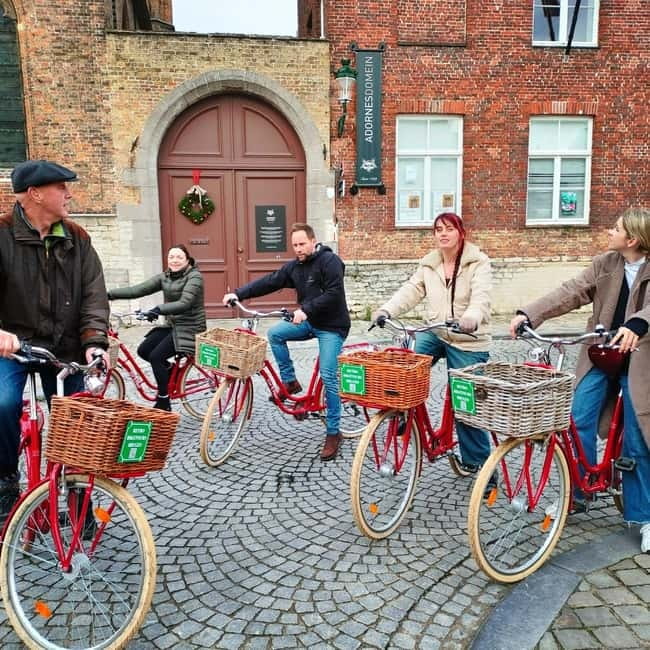
The duration is listed as 2 hours to 150 minutes. That time matters because Bruges can eat up hours if you’re walking. This tour compresses a lot of ground while still giving you enough stops to absorb stories.
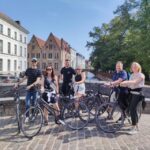
The pace also seems designed for real people, not just hardcore cyclists. Many visitors point out that the bikes are manageable on cobblestones, and the guides keep an eye on the group. In a small-group format, you’re less likely to be stranded at the back or stuck waiting at every curb.
Still, be honest with yourself about the cobbles. If you’re prone to shaky ankles, take it slow on uneven sections. And bring a light layer if it’s cold. Bruges weather changes fast, and the tour runs rain or shine.
Price and value: what $52 buys you in Bruges
At $52 per person for about 2 to 2.5 hours, you’re paying for more than bike rental. You’re buying three practical things:
- Transport inside the core: cycling in Bruges saves energy and time compared with walking between scattered sights.
- A local guide with story context: you’re not just seeing places, you’re hearing why they’re significant—often with legends and character-driven details.
- Included gear and a small treat: retro bike with basket, helmet, and a taste of a local beer or limonade at the end.
You don’t get food. That’s normal for a city tour like this, but it’s smart to plan a meal after. The drink at the end isn’t a full meal replacement; it’s more like a thank-you and a moment to breathe in the garden before you head off on your own.
If your goal is to understand Bruges quickly and get solid recommendations for the rest of your stay, this price is fairly easy to justify.
Who should book this Bruges retro bike tour
This tour fits best if you want an efficient first experience in Bruges. It’s also ideal for people who enjoy history told through stories, not lectures.
You’ll probably enjoy it if:
- you want to see major UNESCO-level highlights without getting lost
- you like canals, bridges, windmills, and viewpoints—not just interiors
- you want hidden details like Stairway To Heaven and the Chocolate Line
- you appreciate a guide who answers questions and keeps a small-group flow
It’s not a fit if you use a wheelchair or if you’re visually impaired. Also, if you have low tolerance for uneven surfaces, the cobblestone riding may feel like too much.
Should you book Retro Biketours Bruges?
Yes, if you’re the kind of visitor who wants Bruges to make sense fast. This tour does a good job of pairing famous landmarks (Belfry, Market Square, City Hall) with quieter, more local-feeling stops (Beguinage Ten Wijngaerde, Lake of Love, Jeruzalemkerk, and the Stairway To Heaven style surprises). The small-group, family-owned feel and the end-of-tour garden drink add a warm, human touch that you won’t get from a bus tour.
I’d skip it only if your mobility needs conflict with cobblestones or if you’d rather wander without a structured plan. Otherwise, it’s a strong value way to turn a short stay into a “I really get this city” kind of visit.
FAQ
Where is the meeting point for the tour?
You meet at the Retro Biketours Bruges office on Grauwwerkersstraat 29. Look for a green gate with a bike nextdoor, then enter the secret garden behind it.
How long is the guided bike tour?
The tour runs for about 2 hours to 150 minutes. Starting times depend on availability.
What’s included in the ticket price?
Included are a retro bike with a basket, a helmet, a local guide, a taste of local beer or limonade, and insider tips for the rest of your stay.
Is food included?
No. Food is not included on this tour.
What language will the guide speak?
The live guide is available in English, Dutch, and French.
Does the tour run rain or shine?
Yes. The tour takes place rain or shine.
Are there photo stops during the ride?
Yes. The tour includes multiple photo stops at sights such as the Basilica of the Holy Blood, Belfry of Bruges, Church of Our Lady, and more.
Do I need to bring my own helmet?
No. Helmets are provided as part of the tour setup.
Is this tour accessible for wheelchair users or visually impaired people?
No. It is not suitable for wheelchair users or for people who are visually impaired.
What are the cancellation and payment options?
You can cancel up to 24 hours in advance for a full refund. You can also reserve now and pay later to keep plans flexible.