REVIEW · BRUGES
Discover the secrets of Bruges by playing!
Book on Viator →Operated by Coddy · Bookable on Viator
Bruges gets fun when you play detective. This smartphone-guided urban escape game sends you after riddles around the city’s most photo-worthy spots, with a curious virtual character guiding you step by step. I like how it turns a standard walk into a hunt, so you get to notice details you’d otherwise miss—especially with a mobile, mission-based guide.
Two things I really like: first, the over 20 challenges push you to explore both famous sights and quieter streets, so you actually get your bearings in a new place. Second, the puzzles and riddles keep your brain on, which makes the history feel earned instead of just read.
One consideration: you’ll need your own smartphone and battery, since they are not included. If your phone dies mid-game, your team will slow down fast.
In This Review
- Key highlights to know before you start
- Bruges missions on your phone: what this experience feels like
- Price and what you really get for $29.79 per group
- The pacing: finish in ~2 hours or stretch it out
- Starting at Jan van Eyckplein: how to get oriented fast
- How the smartphone game works (and why the format is smart)
- Rozenhoedkaai to Onze-Lieve-Vrouwekerk: your mission route in plain English
- Stop 1: Quai du Rosaire / Rozenhoedkaai
- Stop 2: Belfort
- Stop 3: Princely Beguinage Ten Wijngaarde
- Stop 4: Onze-Lieve-Vrouwekerk
- Private team play: who this works best for
- The real payoff: photos at the end and a 3-year game window
- Small logistics that matter more than you think
- Tips to help your team win the missions (without stress)
- Should you book this Bruges smartphone mission game?
- FAQ
- How long does the Bruges smartphone game take?
- Where does the activity start and end?
- How much does it cost?
- What language is the experience available in?
- Do I need to bring a smartphone?
- Is this activity private?
- Is online support available if we get stuck?
- Can we cancel for a full refund?
- How long is the game available after purchase?
- Are service animals allowed?
Key highlights to know before you start
- Virtual character, real street stops: Your route mixes classic views with lesser-known corners.
- 20+ missions you can pace yourself: Finish in about 2 hours or take your time.
- Riddles that reward attention to detail: The game nudges you to look up, not just walk through.
- Private team of 2 to 6: Small group size makes it feel focused, not crowded.
- Photo recap after you play: You get a summary of the adventure to revisit later.
- 24/7 online support: Help is available whenever questions pop up.
Bruges missions on your phone: what this experience feels like
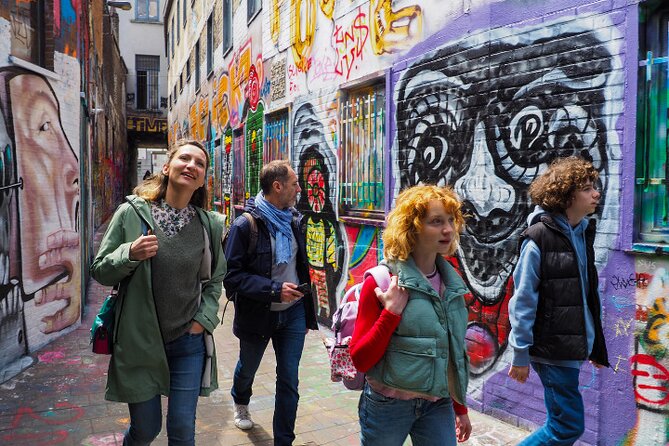
If Bruges is your next stop and you want more than the usual photo parade, this game hits a sweet spot. You walk the city center, but instead of following a rigid script, you’re solving a chain of missions. A virtual character stays with you the whole time, tossing out challenges as you move from place to place.
The best part is that the game makes your eyes work. You’re not just passing landmarks—you’re investigating them. That means you’ll likely notice facade details, angles, and small clues that don’t show up in a quick glance from street level.
It also helps that the activity is designed for small teams (up to 6 people). You’re not getting swept into a big group rhythm where half the fun is lost waiting for someone else. With a tight team, you can argue gently, test ideas, and move on without feeling rushed.
You can also read our reviews of more tours and experiences in Bruges.

Price and what you really get for $29.79 per group
The price is listed as $29.79 per group, for groups up to 6. That matters, because you’re not paying per person. If you’re traveling with friends, family, or a small group, this can be a very practical way to spread the cost.
You’re also getting more than a “walk and read” format. You get:
- a mobile ticket,
- a smartphone-guided experience in English,
- 24/7 online support if you get stuck,
- a photo recap after the game,
- and access to your game for up to 3 years.
So the value isn’t only the 2 hours of walking. It’s the structure that helps you explore Bruges in a way that sticks—because you solved it, not just watched it.
The pacing: finish in ~2 hours or stretch it out
This activity is designed for about 2 hours (approx.), but it’s not a clock-punishing race. You can challenge yourself to complete the game in the estimated time, or you can slow down and take the scenic breaks that Bruges demands.
That flexibility is useful. Bruges can be easy to enjoy at a slower pace—especially if you like to pause for corners with great light, or if you’re traveling with mixed interests (one person wants landmarks, another wants hidden streets, and everyone wants a good view).
Just keep in mind that the game depends on solving missions. If your team is the type that likes to stop and research answers on their phone, the experience will naturally run longer.
Starting at Jan van Eyckplein: how to get oriented fast
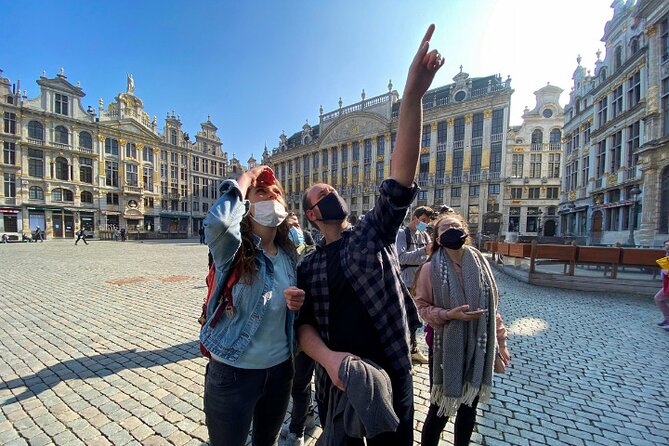
You meet at Jan van Eyckplein, 8000 Brugge, Belgium. That start point is handy because it gives you an easy place to begin, then the game pulls you into the historic core.
You’ll also return to the starting point when the activity ends. That loop is practical: you don’t have to plan a separate pickup or figure out where you’ll land after the last puzzle.
The game runs with opening hours listed as Monday to Sunday, 12:00 AM to 11:30 PM, so you’re not boxed into one narrow window. You can match it to your day—morning stroll, afternoon sights, or an early evening outing when the city feels especially atmospheric.
How the smartphone game works (and why the format is smart)
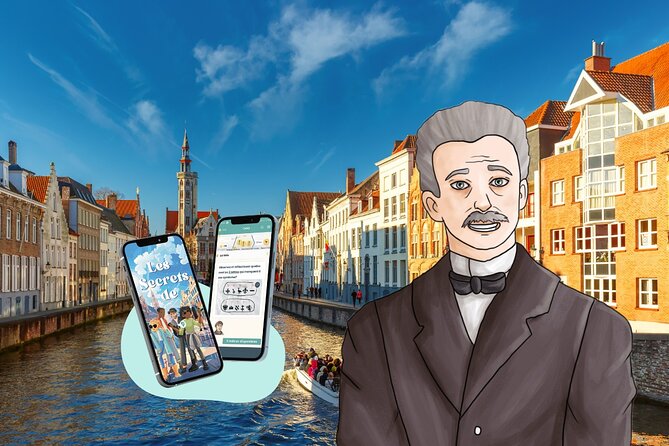
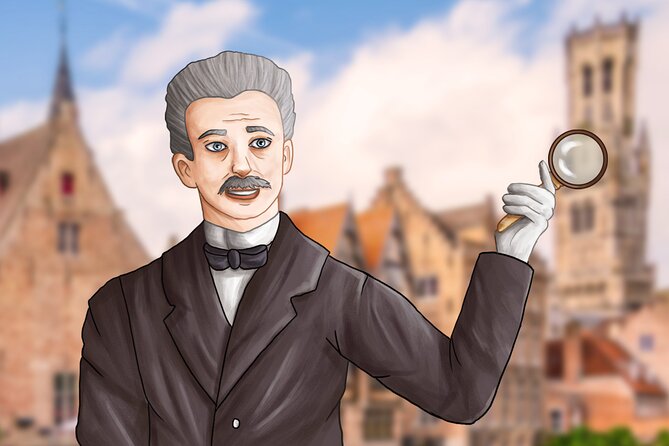
At the center of this experience is a smartphone guide with a virtual character. Instead of hearing a narrator for a fixed length of time, you get missions along the route—puzzles and riddles that ask you to investigate specific spots.
You’re playing as a team, generally 2 to 6 players. That’s a great setup for a mix of ages and styles:
- One person can read the clues carefully.
- Another can spot details on building facades.
- Someone else can try combinations and test answers.
This format also helps you travel lighter mentally. You don’t have to memorize a list of sights. The game tells you where to go next and why, so you stay oriented even if Bruges streets feel like a maze at first glance.
And since there’s 24/7 online support, you’re not completely on your own if you’re missing a clue. That support doesn’t replace your team’s problem-solving, but it can prevent a stalled game from becoming a frustrating one.



Rozenhoedkaai to Onze-Lieve-Vrouwekerk: your mission route in plain English
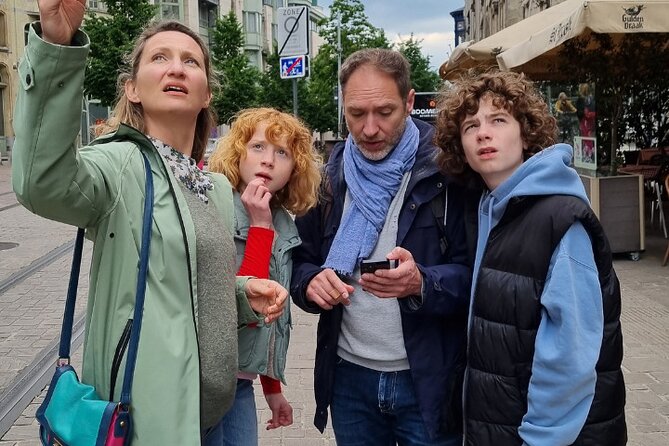
The city route is built around four main stops. Along the way, you’ll be nudged into exploring both obvious and lesser-known corners, using the clues to guide your feet.
Below is what each stop is likely doing for the game, and what you should watch for when you’re there.
Stop 1: Quai du Rosaire / Rozenhoedkaai
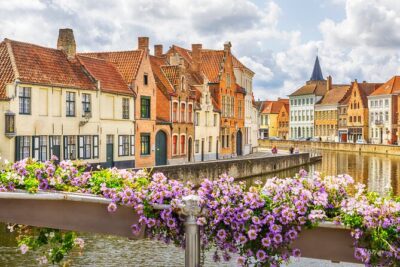
You start near the water at Quai du Rosaire / Rozenhoedkaai. This area is all about atmosphere. The game uses this kind of setting to get you looking outward—toward the canal views—and then back toward the buildings and edges that make Bruges so recognizable.
In practical terms, this is a strong opener because it helps everyone in your group settle into the experience. You’re not dropped immediately into the most complex puzzle spot. You’re in a beautiful zone where you can orient yourself, then begin solving.
What to do here: slow down for a moment. Look at angles, lines, and any detail your clue might point toward. If your team races forward too quickly, you can miss the kind of small visual information riddles usually want.
Stop 2: Belfort
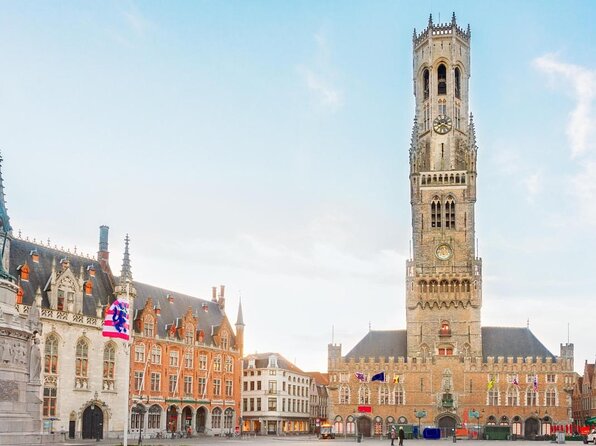
Next up is Belfort. If you’ve ever seen Bruges photos, Belfort is the kind of landmark that anchors the city visually. For a mission game, it works because a big historic building usually offers lots of potential “clue surfaces”—think signage, architectural features, and areas where a puzzle can reference something you can actually find on foot.
This stop is a good checkpoint. By the time you reach it, your team has likely already figured out the game’s rhythm: read clue, go investigate, confirm, move on.
Drawback to consider: if your team is split between puzzle focus and sightseeing focus, Belfort can become a moment where arguments start. That’s normal. Keep it light, check each clue carefully, and don’t let speculation replace the actual looking.
Stop 3: Princely Beguinage Ten Wijngaarde
Then you head to The Princely Beguinage Ten Wijngaarde. Beguinages have a distinct feel—quiet, human-scale, and often calmer than the main street flow around them.
For this kind of city game, that matters. After more iconic landmark energy, you get a setting where you can notice the layout and the mood. The missions at this stop likely reward close attention, since beguinages aren’t just one big monument—they’re a sequence of spaces.
Tip: when you arrive, let your team take a breath. The best results come when people stop walking long enough to truly observe the environment the clue is pointing to.
Stop 4: Onze-Lieve-Vrouwekerk
Finally, you reach Onze-Lieve-Vrouwekerk. Churches in Bruges are not just architecture—they’re landmarks that carry weight, detail, and history you can see in stone and structure.
For a puzzle-driven route, this stop is where you’ll likely feel the payoff. Big, meaningful sites give the game room to reference noticeable features, and your team tends to leave this kind of stop feeling satisfied—like you didn’t just pass through, you actually studied the place.
Practical note: churches can change how light hits surfaces and can also affect how comfortable you are walking around while solving. If your group prefers steady ground and clear visibility, give yourselves a little extra time here so the mission doesn’t feel rushed.
Private team play: who this works best for
This is listed as a private activity, meaning only your group participates. That’s a big quality factor. It turns the experience into your own small adventure rather than a shared scramble with strangers.
You’ll probably enjoy this most if you:
- like puzzles and riddles,
- want to explore Bruges without booking a timed guided tour,
- are traveling with 2 to 6 people who can work as a team,
- want both famous corners and lesser-known streets.
It can also work well for families, since the experience is described as accessible and not overly long. Still, it’s not a passive attraction. Kids who enjoy problem-solving will likely have a good time; if your group prefers quiet sightseeing only, you might find the mission format a bit demanding.
The real payoff: photos at the end and a 3-year game window
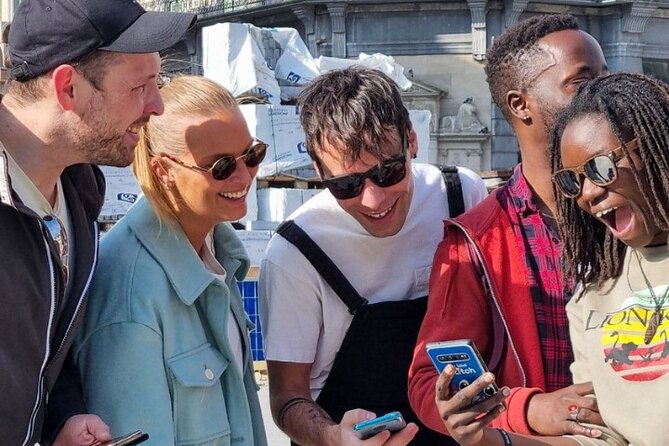
One of the more underrated perks is the summary of your adventure with photos at the end of the game. Instead of forgetting the route a week later, you get a record of what you did.
There’s also something practical and travel-friendly here: the game validity is listed as up to 3 years. That means you can revisit the experience window later, or keep it as a handy option when your plans change.
I like this because it turns the activity into more than a single-use outing. Bruges is a city you might return to, and having a game saved in your pocket can help you see it differently the second time.
Small logistics that matter more than you think
This is a phone-based experience, so a few practical things will strongly shape your day:
- Bring a charged smartphone. The tour explicitly says the smartphone and battery are not included. If your battery is low, you’ll feel it immediately.
- Have enough time to enjoy the city between missions. Even if you finish near the 2-hour mark, Bruges rewards pauses.
- Wear shoes that handle cobblestones and short detours. Since riddles can lead you into quieter corners, you’ll likely do more turning than you’d expect.
Also, it’s offered in English, with mobile tickets. That keeps the experience simple if you’re traveling in English-speaking groups or you prefer a clear guide language without translation friction.
Tips to help your team win the missions (without stress)
You don’t need special skills. You do need teamwork habits:
1) Assign roles quickly
One person reads, one person searches visually, and one person tests possible answers. Rotating is fine, but starting with roles prevents the whole team from staring at the same clue screen.
2) Look before you guess
These riddles are meant to be solvable from the street. If your team starts guessing without actually investigating, you’ll lose time.
3) Keep moving at a steady pace
If you stop to admire everything permanently, the game clock will catch you. Bruges is gorgeous—just schedule your “serious photo time” for after you solve the mission.
4) Use support if needed
Since 24/7 online support is included, treat it like an escape hatch for stuck moments, not a replacement for your own puzzle-solving.
Should you book this Bruges smartphone mission game?
I’d book it if you want an active way to learn Bruges and you like the idea of puzzles guiding you to real corners of the city. The format is a smart match for first-time visitors who want orientation fast, and it’s also a fun option for repeat visitors who think they’ve seen everything.
Skip it if your group mainly wants a quiet, purely sightseeing day with no brainwork. Also skip it if you’re traveling with a phone battery that’s already strained. The game depends on your device, and nothing kills the mood like watching your screen die mid-mission.
If you’re a team of 2 to 6 and you enjoy challenges, this is a good-value way to turn Bruges into a playable story—one riddle at a time.
FAQ
How long does the Bruges smartphone game take?
It’s listed as about 2 hours (approx.), with the option to complete it in that time or play at your own pace.
Where does the activity start and end?
You start at Jan van Eyckplein, 8000 Brugge, Belgium. The activity ends back at the meeting point.
How much does it cost?
The price is $29.79 per group, for groups up to 6 people.
What language is the experience available in?
The experience is offered in English.
Do I need to bring a smartphone?
Yes. A smartphone and battery are not included, though you’ll use a mobile ticket and the smartphone guide during the game.
Is this activity private?
Yes. It’s private, and only your group participates.
Is online support available if we get stuck?
Yes, 24/7 online support is included.
Can we cancel for a full refund?
You can cancel for a full refund up to 24 hours in advance of the experience start time.
How long is the game available after purchase?
Your game has validity up to 3 years.
Are service animals allowed?
Yes, service animals are allowed.