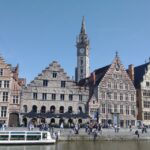
REVIEW · GHENT
Discover authentic Ghent with historian & taste the best chocolate
Book on Viator →Operated by Guide in Ghent · Bookable on Viator
Ghent’s history is written in stone. This 2-hour walk turns key squares and buildings into a story of how Ghent gained power, lost it, and kept going, with a chocolate tasting folded into the route. You’re guided by a historian-style teacher who explains what you’re looking at, not just what it used to be.
I especially like the focus on details you can actually see. You’ll stand in the right spots for art and architecture, like the St. Bavo’s Cathedral area, then pick up clues on facades around Korenmarkt and the harbor zone at Graslei and Korenlei.
One thing to consider: the chocolate is a helpful break, not a full-on chocolate festival. If your main goal is lots of tasting time, you might wish it lasted longer.
In This Review
- Key highlights you’ll care about
- Getting your bearings in Sint-Baafsplein (the square that explains Ghent)
- St. Bavo’s Cathedral: art, building history, and why it mattered
- Maaseikplein and the Van Eyck brothers: spotting the local art connection
- Geeraard de Duivelsteen: the Scheldt side and the taste of local legend
- Hoogpoort and the 13th-century feel: reading old stone without a headache
- Ghent Town Hall (Stadhuis): Charles V, revolt, and the meaning behind nicknames
- Stadshal: the contested building and why its nickname matters
- Korenmarkt: 800 years of houses and the fun of mysterious inscriptions
- Het Groot Vleeshuis: how butchers guarded quality before refrigeration
- Gravensteen: a small castle built to show a fist
- St. Veerleplein: hunting for Neptune, seahorses, and odd sea creatures
- Graslei and Korenlei: the harbor highlight with skippers and entertainment
- Chocolate tasting: how the sweet break fits the history walk
- Price and logistics: is $42.05 good value for what you get?
- Who this Ghent walk fits best
- Things to watch for before you go
- Should you book this Ghent historian and chocolate walk?
- FAQ
- How long is the Ghent historian and chocolate tour?
- How much does the tour cost?
- Where does the tour start?
- Where does the tour end?
- What language is the tour offered in?
- How many people are in the group?
- Are entrance tickets needed for the sights?
- Do I get a mobile ticket?
- What is the cancellation policy?
- Is the tour suitable for most travelers?
Key highlights you’ll care about
- Historian-style storytelling that connects politics, religion, and culture to the street scene
- Free-entry landmarks at every stop on the route
- Chocolate tasting as part of the flow, timed into a compact 2-hour loop
- Photo-worthy medieval corners with specific “look for this” prompts
- Small group size (max 15) that keeps the pace human and the questions realistic
Getting your bearings in Sint-Baafsplein (the square that explains Ghent)
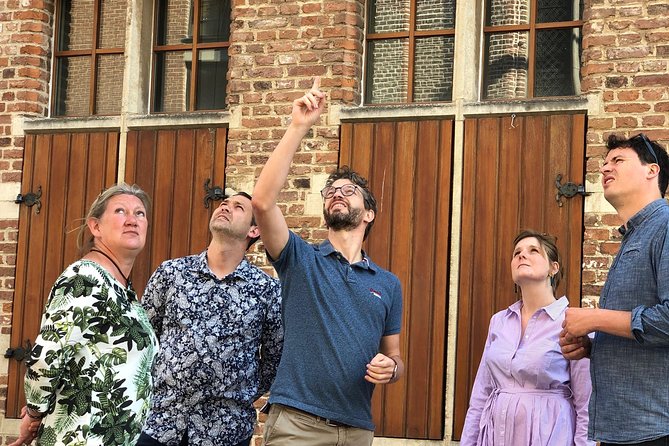
Most Ghent walking tours start with a landmark. This one starts with Sint-Baafsplein and, more importantly, with the idea that one square can tell you a lot at once. You meet in front of the white statue in the middle of the square, then you get a quick orientation for how to read the city as you go.
From there, your guide zeroes in on the city’s economic, political, cultural, and religious history. That matters because Ghent can look like a postcard—then you realize it’s also a record of fights over power and belief. Once you understand that, you’ll start noticing symbolism everywhere: why buildings are where they are, and why certain streets and institutions mattered.
A practical note: this tour is short and timed, so don’t wander off at the meeting point. If you arrive early, take a minute to confirm you’re in front of the white statue, then wait where you can see the square.
You can also read our reviews of more tours and experiences in Ghent



St. Bavo’s Cathedral: art, building history, and why it mattered
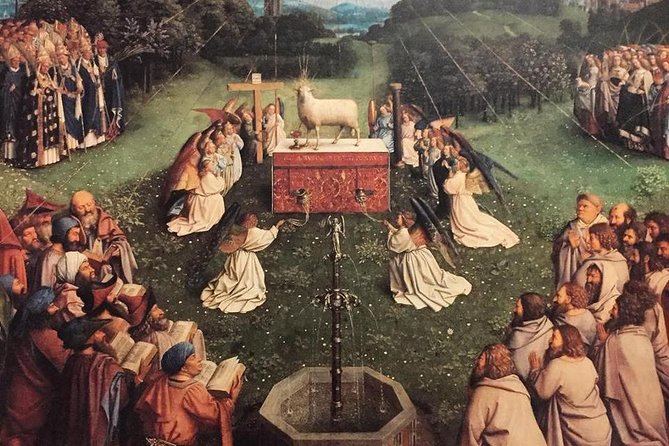
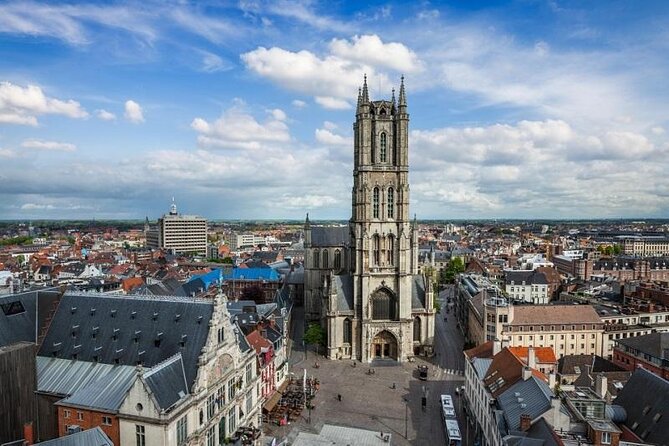
After you take in the square’s bigger picture, you move to St. Bavo’s Cathedral. Here, the emphasis is on two things: how the building developed and the major art treasure connected to it. Even without going deep into technical terms, you’ll get a sense of why this cathedral is a city anchor.
This stop is brief, but it’s the kind of brief that’s useful. You’re not left staring at stone with no context. You’ll get a guided walkthrough of what makes the cathedral significant, so your photos feel less like random snapshots and more like documentation.
Maaseikplein and the Van Eyck brothers: spotting the local art connection
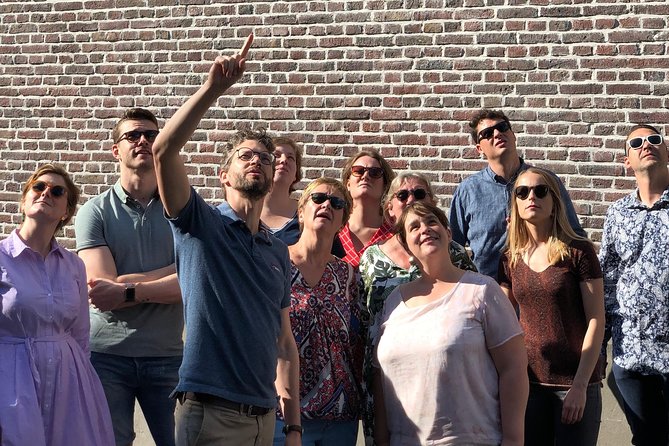
One of the clever touches is how the tour nudges you toward Ghent’s art identity early. At Maaseikplein, the prompt is simple: do the Van Eyck brothers images look like what you’ve seen before? That question helps you build recognition as you walk.
The Van Eycks aren’t just “famous artists.” In Ghent, they’re part of the city’s cultural identity. This is a quick stop, but it works like a mental warm-up for the larger idea that Ghent’s reputation isn’t only about trade or politics—it’s also about art that shaped how people saw the world.
Geeraard de Duivelsteen: the Scheldt side and the taste of local legend
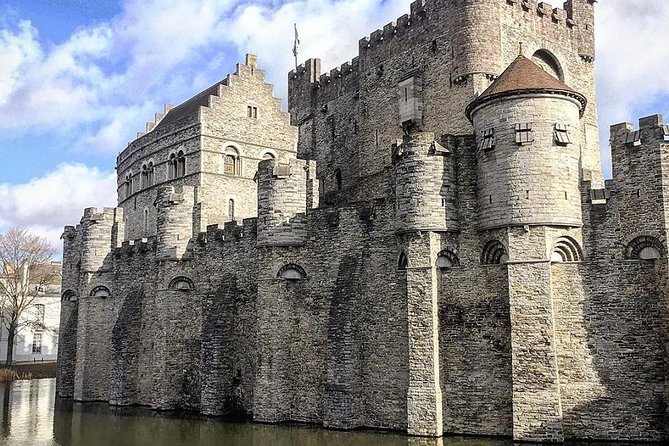
Next comes Geeraard de Duivelsteen, known as the Castle of Gerald the Devil. You’re near the Scheldt, and the tour leans into how Ghent’s stories can be both gritty and entertaining. The walk frames the area around villains you might hear about in local legend, including Vikings and Geeraard De Duivel.
Why this stop works: folklore makes the city feel human. You’re not just learning dates—you’re learning how Ghent people have told stories about danger, outsiders, and power. Those stories help explain why certain places get treated like symbols instead of just buildings.
This part of the route is short, but it’s a perfect breather before you return to more official civic architecture.
Hoogpoort and the 13th-century feel: reading old stone without a headache
Hoogpoort is where you slow down just enough to notice age. Your guide points out ancient buildings dating back to the 13th century, which sounds like a trivia fact until you see how it changes your perspective.
When a street holds buildings that old, you start walking differently. You look up, you notice rooflines and facades, and you realize you’re moving through a city that has been physically here for a long time—long enough that generations reused ideas, upgraded buildings, and fought over what should remain.
This stop is quick, but it’s valuable because it teaches you how to see without needing an art degree.





Ghent Town Hall (Stadhuis): Charles V, revolt, and the meaning behind nicknames
Then you hit one of the big civic sites: the Ghent Town Hall (Stadhuis). Here, the tour connects architecture to political drama. The town hall has been built for centuries, but the real lesson is that power is never just abstract.
You’ll hear how Emperor Charles V became part of local memory, including the fact that the Gentenaars revolted against him—and how that fed into Ghent’s nickname often tied to the town’s identity as noose bearers. It’s one of those stories where you go from “what’s this building” to “okay, I get what people were reacting to.”
Even if you’re not a history buff, the guided context helps you see the town hall as a living symbol. This isn’t a monument that exists outside daily life. It’s the structure that held decisions—and the tensions that came with them.
Stadshal: the contested building and why its nickname matters
After the town hall, the route heads to Stadshal, described as the most contested building and linked to a nickname. You don’t get lost in official-sounding jargon here. Instead, your guide frames it as a place that sparked disagreement.
That’s useful because it teaches you what to listen for in Ghent. If a building is contested, it’s usually because of rights, money, or influence. Once you start thinking that way, the city stops feeling like a static museum and starts feeling like a place where people argued—then built.
This stop is short, but it sets you up for later “commerce meets city life” stops, like the meat halls.
Korenmarkt: 800 years of houses and the fun of mysterious inscriptions
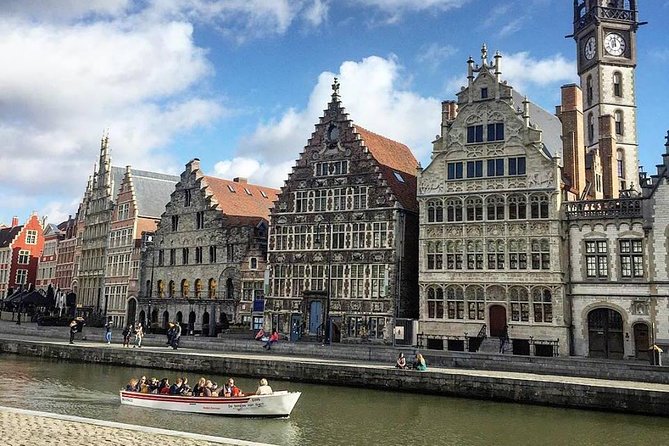
Korenmarkt brings you to houses with a long timeline—about 800 years of history in this area. The tour adds a small challenge: some of the houses have mysterious inscriptions. That’s a great way to keep your eyes working instead of letting you drift into background scenery.
When you’re in older city centers, inscriptions can become invisible if no one points them out. The guided reminder turns this into an interactive stop: you get to hunt for clues and realize that old towns don’t just build big things—they record details in stone too.
If you like street-level mysteries, this is one of the stops you’ll enjoy most, because it feels like you’re solving something on the go.
Het Groot Vleeshuis: how butchers guarded quality before refrigeration
Now you’re into practical city life. Het Groot Vleeshuis, the Great Butchers’ Hall, is where the tour tackles an everyday question: how do you guarantee meat quality in a time without refrigeration?
The answer is teamwork and infrastructure. The butchers worked together in one building, turning what could have been scattered handling into controlled processes. It’s a reminder that medieval Ghent wasn’t only about cathedrals and councils—it was also about keeping food safe and business running.
This stop is short, but it gives you a strong lens. When you understand how people handled basics like meat, the city starts to make sense as a real place where real people lived.
Gravensteen: a small castle built to show a fist
From commerce to confrontation: Gravensteen is where the count of Flanders wanted to show a fist to Ghent inhabitants. This is described as a small castle—built to remind people who held power.
You don’t need a long lecture here. You just need the context: castles aren’t only for drama in movies. In cities like Ghent, they were political statements you could walk past every day.
This stop is brief, so you’ll want to absorb the vibe fast. If you’d like deeper visuals, plan a return visit later. But as part of this 2-hour loop, it does its job: it makes the city’s tensions visible.
St. Veerleplein: hunting for Neptune, seahorses, and odd sea creatures
Then comes a lighter, fun stop: St. Veerleplein. Your guide leads you in a search for Neptune, seahorses, and strange dolphins.
This is the kind of detail that makes guided walking tours worth it. You could walk right past sculptures and never connect them to meaning. Here, the guide gives you a mission, and suddenly the square becomes a scavenger hunt.
It’s also a nice change of pace after castles and power struggles. You get a break where you can focus on art and symbolism instead of politics.
Graslei and Korenlei: the harbor highlight with skippers and entertainment
For many people, the highlight arrives at Graslei and Korenlei. This is the harbor area on the Scheldt, and it’s easy to see why it gets attention. Skippers worked here for centuries, and the harbor wasn’t just labor—it also had entertainment.
That last part is important. A harbor is where goods, people, and stories mix. Once you understand that, you can look at the buildings along the water and read them as part of a system: commerce, transport, and social life all stitched together.
The tour ends near Saint Michael’s Bridge, so you’ll likely finish with a view that feels connected to the whole route. You’ve been learning how power and daily life shaped Ghent; now you get to see how it looks when it all comes together by the water.
Chocolate tasting: how the sweet break fits the history walk
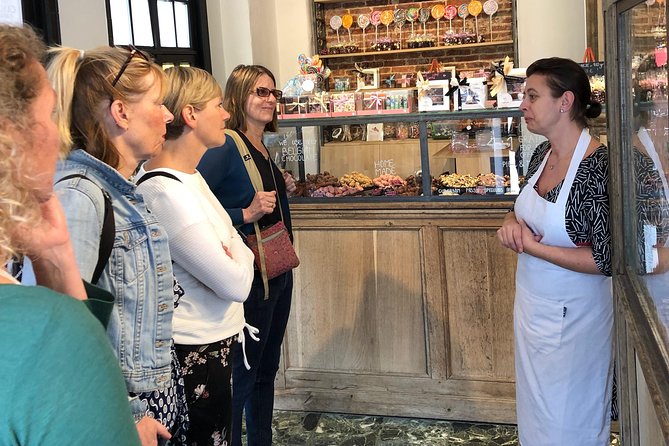
The experience is built around a simple idea: tasting is easier when your mind is warmed up. The walk gives you a series of quick history hits, then you get a chocolate refresher in the middle.
Just don’t expect this to be a long chocolate workshop. The structure keeps the total duration around 2 hours, and the stops are timed. The chocolate is more like a rewarding pause than a separate destination.
If you love chocolate but also want meaning behind what you see, this works well. You’ll come away with both: a better picture of Ghent and a small treat to make the walk feel extra satisfying.
Price and logistics: is $42.05 good value for what you get?
At $42.05 per person for about 2 hours, the value comes from the combination of: a guided route through major civic and cultural sites, free-to-enter stops, and a chocolate tasting, all in English with a max group size of 15.
That small group number matters more than you might think. With 15 people, you can usually hear the guide clearly and still move as a group without long waits. And because the stops are free to enter, you’re paying primarily for the storytelling and the structure—not for entrance fees piling up.
You’ll also get a mobile ticket, which is handy if you don’t want to print anything. And because it runs near public transportation, you can slot it into a busy day without committing to a long detour.
Who this Ghent walk fits best
This tour is a strong match if you:
- like your history explained in plain language and tied to specific buildings
- want a short, efficient way to understand Ghent’s main civic and cultural sites
- enjoy “look for this” moments, like the Neptune hunt at St. Veerleplein
- want a chocolate break but don’t need a long tasting session
It’s also a great option for first-timers who feel overwhelmed by medieval cities. The route is focused. The pace is compact. You get a map in your head fast, which helps the rest of your day make sense.
If you’re the type who wants to linger for 30–60 minutes per attraction, this won’t feel long enough. But if you want the why behind the what, it’s well designed.
Things to watch for before you go
- Wear comfortable shoes. You’re walking multiple city blocks in a short time.
- Arrive on time. The meeting point is specific: in front of the white statue in Sint-Baafsplein.
- Manage expectations about chocolate time. It’s a tasting break, not a full indulgence event.
Should you book this Ghent historian and chocolate walk?
Yes, I’d book it if you want a tight introduction to Ghent with storytelling that turns landmarks into context. The route covers the essentials—cathedral art, civic power, medieval trade, local legend, and the harbor—and it does it in a way that makes you notice more on your own afterward.
Skip it only if your priority is a long chocolate experience or if you hate guided pacing. For most people, the sweet spot is exactly what this tour offers: history first, chocolate close behind, all in a small English group.
FAQ
How long is the Ghent historian and chocolate tour?
It runs for about 2 hours.
How much does the tour cost?
The price is $42.05 per person.
Where does the tour start?
You meet at Sint-Baafsplein, 9000 Gent, Belgium, in front of the white statue in the middle of the square.
Where does the tour end?
The tour ends at Saint Michael’s Bridge (Sint-Michielshelling, 9000 Gent, Belgium).
What language is the tour offered in?
The tour is offered in English.
How many people are in the group?
The tour has a maximum of 15 travelers.
Are entrance tickets needed for the sights?
The stops on the route list admission tickets as free.
Do I get a mobile ticket?
Yes, the tour includes a mobile ticket.
What is the cancellation policy?
Free cancellation is available up to 24 hours in advance for a full refund.
Is the tour suitable for most travelers?
Most travelers can participate, it’s near public transportation, and service animals are allowed.