REVIEW · BRUSSELS
Delft and Keukenhof Gardens Tour from Brussels
Book on Viator →Operated by Brussels City Tours - Keolis Travel · Bookable on Viator
Delft and Keukenhof is a spring combo people plan around. This day trip pairs Delft’s classic canal-town center with guided Dutch context, then sends you straight to Keukenhof’s famous flower gardens. I love that you get a structured walkthrough in Delft instead of just being dropped in a crowd, and I also like the built-in flexibility once you’re at Keukenhof. One thing to keep in mind: it’s a long day, and spring bloom timing can be a little unpredictable.
In Delft, the stops focus on landmarks you can actually picture afterward: the City Hall on the Markt, the New Church, and the Old Church with its leaning 75-meter tower. At Keukenhof, you’re there for the real reason most people make this trip—tulips and other bulb flowers in huge displays, plus pavilions and plenty of walking space to wander at your own pace.
If you’re expecting a leisurely, slow-moving itinerary with lots of time for extra detours, this isn’t that. The schedule is built to hit the big sights, so you’ll want to bring comfortable shoes and be ready to move.
In This Review
- Key Points Worth Your Time
- The Day Trip Layout: Delft First, Keukenhof After
- Delft City Hall and the Markt Square Stops
- The Old and New Churches: What to Look For
- Walking Delft’s Canals and Ceramics Without Rushing
- Keukenhof Gardens: Tulips, Pavilions, and How to Use Your Time
- Coach Ride Reality: Timing, Comfort, and Peak-Season Pace
- Guides in Multiple Languages: When It Works, It Really Works
- Price and Value: Is $106.65 Actually a Deal?
- When Spring Changes the Details: Bloom and Access
- Who This Tour Fits Best
- Should You Book Delft and Keukenhof From Brussels?
- FAQ
- FAQ
- Where is the tour starting in Brussels?
- How long is the Delft and Keukenhof tour?
- Is Keukenhof admission included in the price?
- What languages does the guide use?
- What’s included and what’s not included?
- When does the tour operate?
- Is there walking involved, and who should consider it?
Key Points Worth Your Time
- Round-trip coach from Brussels keeps logistics simple for a 12-hour day.
- Keukenhof admission is included, saving you the hassle of ticket lines and planning.
- Delft’s core sights are walkable and well sequenced, starting from the Markt.
- English service with guide languages that may include Spanish/French depending on what the group needs.
- Spring-only operation (March–May) means tulips should be in season, but bloom quality varies year to year.
- Small-ish by big-attraction standards (max 200 people) helps keep the day from feeling totally chaotic.
The Day Trip Layout: Delft First, Keukenhof After
This is set up like a classic Dutch day: you start in Brussels early (8:00 am) and get transported to Delft for a focused look at the town center. The Delft portion works as a primer. You learn what you’re looking at—the why behind the churches, the importance of the Markt, and the kind of civic pride Delft built into its main square.
Then you move on to Keukenhof for a block of time that’s long enough to see the big gardens without feeling like you’re sprinting. The best part of this plan is that you’re not forced to stay glued to your guide. You get the context up front in Delft, and at Keukenhof you can slow down, circle back, and take photos without someone constantly moving you along.
The practical drawback is that the whole day is paced for highlights, not side quests. You’ll likely spend most of the day either riding or walking within the core areas.
You can also read our reviews of more tours and experiences in Brussels.


Delft City Hall and the Markt Square Stops
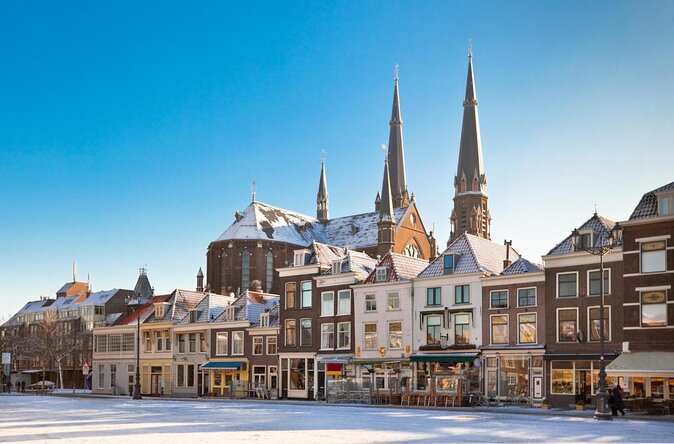
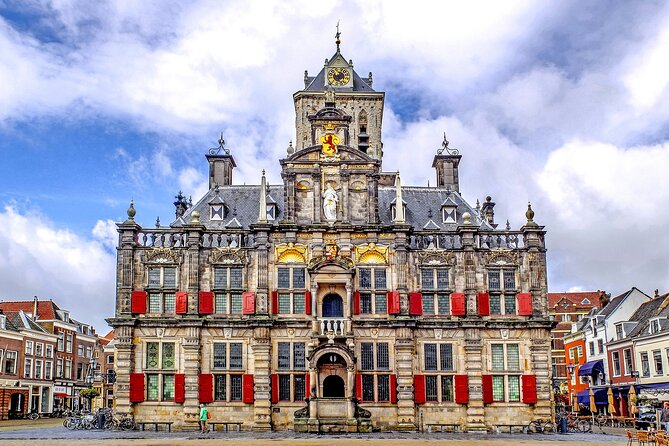
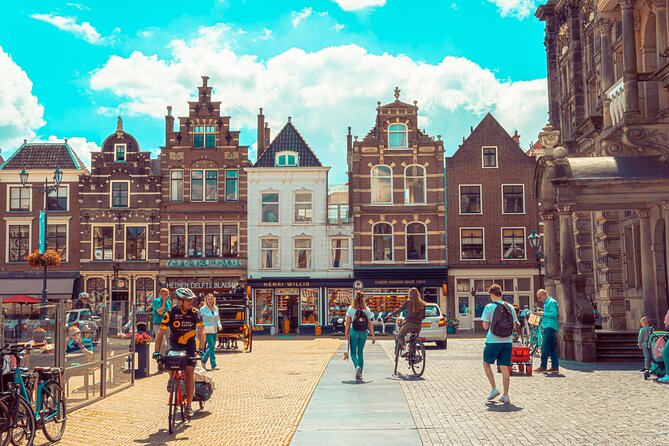
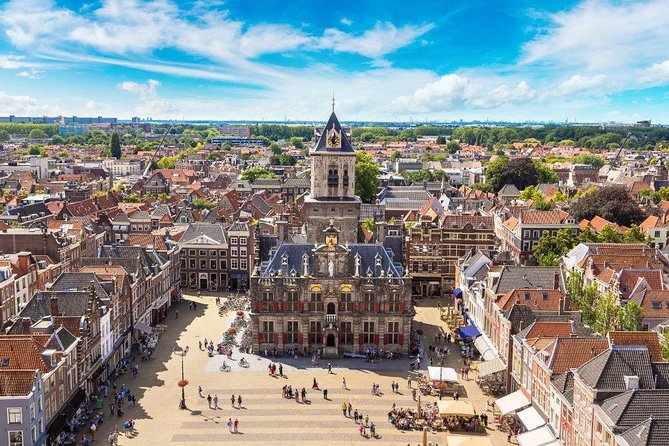
Delft begins at the Markt, in the orbit of the City Hall (Stadhuis Delft). This building is tied to Hendrick de Keyser, the municipal architect active in the 17th century, and it was built after an older medieval structure burned in 1618. Even if architecture isn’t your thing, this is the kind of fact that makes the square feel real once you’re standing there.
Next comes the New Church (Nieuwe Kerk), a Protestant church in Delft that sits opposite the City Hall on the same Market Square. One reason this stop matters: it links Delft to William of Orange. If you’ve heard that name in European history class, this is the moment where it becomes a place, not just a sentence in a textbook.
Then you hit the Old Church (Oude Kerk), also Protestant, in the old city center. The headline feature is the 75-meter brick tower that leans about two meters from vertical. It’s one of those details your brain catches instantly and keeps noticing—especially because it changes how you view the surrounding skyline.
These stops are short by design, but they anchor your Delft walk. The trick is to use those minutes to orient yourself before you wander on your own.
The Old and New Churches: What to Look For

At both churches, you’re really getting two types of value.
First, you’re getting orientation. You’ll learn what makes each building distinct in style and purpose. Second, you’re getting a sense of how Delft’s religious and civic life sat right in the center of town, not out on the outskirts.
The Old Church is the easiest to “read” quickly because the leaning tower is visually loud—standing near it teaches you more than a brochure ever could. The New Church is more about context. If you pay attention during the explanation, the stop makes Delft feel connected to the wider Dutch story, including the burial of William of Orange and his descendants.
In practice, this means you should treat these church stops as your Delft roadmap. If you want photos, aim for angles around the Market Square and then take a second run once you’ve walked a few blocks—Delft rewards multiple looks.
Walking Delft’s Canals and Ceramics Without Rushing
Delft is the kind of place where you want to turn your head. The canals and the water-channel streets give you that postcard effect, but they also help you navigate. Even during a day tour, you’ll likely end up drifting toward waterfront viewpoints if your route lets you breathe.
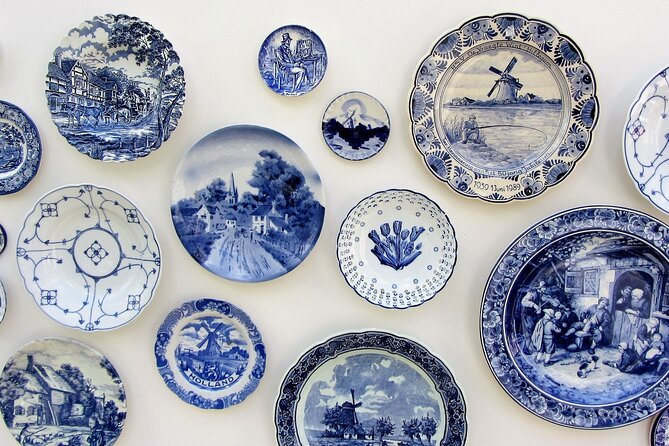
Then there’s the pottery. Delft is famous for the blue-and-white style ceramic look, and the day’s timing gives you enough time to notice shops and displays. I like that this tour doesn’t try to turn Delft into a shopping trap. Instead, it gives you time to see the real “Delft” vibe—the canals, the main square energy, and the small-street scale.
One review-based note to plan around: people sometimes wanted more time in Delft, especially if they arrived hoping for a longer wandering period. The best fix is to mentally accept you’re seeing the core, not every corner.
Keukenhof Gardens: Tulips, Pavilions, and How to Use Your Time
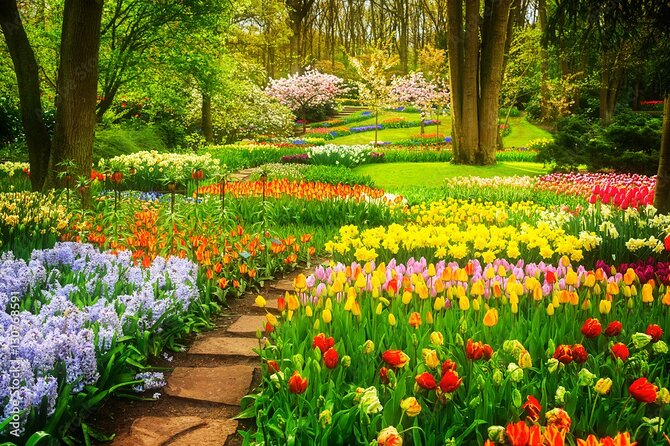
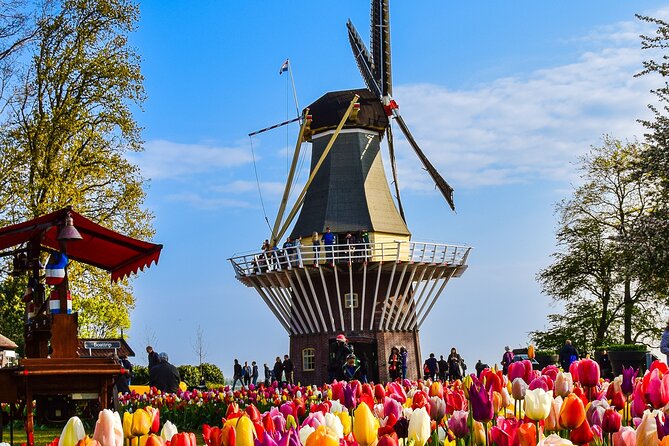
Keukenhof is built to overwhelm you—in a good way. The gardens feature tulips plus other bulb flowers like hyacinths and daffodils, and you’ll also see roses and lilies. There are pavilions too, which matters because it gives the day some variety beyond just flower beds.
The big practical question is whether 3 hours is enough. For this tour, many people found it plenty: enough time to see a lot, visit shops, get a bite to eat inside the grounds, and still feel like they weren’t sprinting the whole time. That’s the sweet spot. If you love photos, you’ll still get them, but you’ll want to pace yourself so you don’t hit one pavilion and lose your afternoon.
Weather is another factor. Even if it’s spring, it can be cold—so layers help. Also, tulip bloom can vary. Even with the tour running from March through May, one common disappointment in the day’s reviews was tulips not being fully in bloom during certain weeks. Translation: bloom quality isn’t guaranteed, but the gardens are still worth seeing.
My advice: pick a couple of “must-see” garden areas early, then spend the middle of your time wandering rather than chasing lists. Keukenhof works best when you let your eyes lead.



Coach Ride Reality: Timing, Comfort, and Peak-Season Pace
The coach part is a major part of your experience here, so it’s worth being realistic. You’re starting in Brussels at 8:00 am, and the total day is roughly 12 hours. That means you’ll be dealing with a long sit, and you’ll probably arrive at each destination with your energy already in planning mode.
Most people appreciated that the trip is well paced—Delft before lunch, then Keukenhof after. Keukenhof itself is where most of the walking happens, and since the tour mentions moderate physical fitness, comfortable shoes are a must.
One small caution: peak season can make timing a little unpredictable at entrances. There was at least one complaint about waiting outside gates while entry tickets were retrieved. It didn’t ruin the day for everyone, but it’s a reminder to show up ready and patient.
If you’re prone to getting annoyed by slowdowns, bring something to do on the coach ride (download audio, bring a book, charge your phone). It makes the time pass better.
Guides in Multiple Languages: When It Works, It Really Works
A tour like this lives or dies on the guide. This one has a strong reputation for guides who explain what you’re seeing and keep the group moving at an easy pace.
Names that came up clearly in the feedback: Stefan and Veronica. Stefan was highlighted for delivering a lot of information and doing it across languages, even tri-lingually for some groups. Veronica was praised for being informative and giving lots of context while also keeping the day running smoothly.
The practical value of multi-language guiding is simple: you’re less likely to feel lost. You’ll understand why the City Hall matters, why you’re stopping at these churches, and what to focus on in the gardens.
Balanced note: not every experience lands the same. A few people mentioned a guide who seemed less enthusiastic or gave more minimal information than expected. That can happen with any large operator, especially across a season. The upside is that the overall pattern is strong—when the guide clicks, the day feels like much more than “bus plus tickets.”
Price and Value: Is $106.65 Actually a Deal?
At $106.65 per person, you’re paying for more than a ticket.
Here’s the value equation as this tour is set up:
- Round-trip coach from Brussels saves you the hassle of trains or rental logistics.
- A professional guide adds structure and meaning, which is especially useful in Delft where the landmarks are easy to overlook if you don’t know what you’re looking at.
- Keukenhof entrance included is a big part of the cost on these kinds of trips.
Lunch and food aren’t included, so you’ll spend extra once you’re on site at Keukenhof. That’s normal, but it’s worth planning for. If you prefer to buy snacks and keep it simple, bring a little cash or make sure your card works at the on-site shops.
If your goal is a one-day hit of Delft plus Keukenhof with minimal planning, this price feels fair. If you already love self-guided travel and you don’t mind arranging transport yourself, you might be able to build a cheaper DIY version—though then you trade off the guided context and the time saved.
When Spring Changes the Details: Bloom and Access
Keukenhof is springtime magic, but spring has real variables. The tour operates only when tulips are generally blooming (March to May), which increases your odds—but it doesn’t guarantee every bed will look perfect.
A couple of real-world issues showed up in the experiences: one was that tulips were not fully in bloom during a specific April visit. Another was that on rare occasions, entry plans can change, including replacements when Keukenhof can’t be secured due to circumstances like overbooking.
So how do you handle this without stressing out?
- Go with flexible expectations on flower perfection.
- Keep your confirmation details handy, especially close to the departure date.
- If you’re traveling specifically for peak tulip spectacle, choose your dates carefully and consider that some weeks look better than others.
This kind of trip is still worth it most years, but the smart mindset is to plan for “amazing Dutch spring,” not a guaranteed perfect field every time.
Who This Tour Fits Best
This tour fits best if you:
- Want an easy day trip from Brussels with round-trip transport handled
- Like guided walking through historic centers rather than just wandering randomly
- Are going for Keukenhof first, but still want Delft to feel meaningful
It’s also a good fit for people who don’t want to juggle tickets and schedules across two different cities.
If you’re the type who hates long coach rides, this may feel tiring. And if you want lots of museum time or deep neighborhood exploration, you’ll probably wish the day ran longer in Delft or included more time in the gardens.
For kids, it’s available with an adult (the tour notes children must be accompanied). Keukenhof is also family-friendly by nature, though the walking still adds up.
Should You Book Delft and Keukenhof From Brussels?
If you want a straightforward, high-value spring day—Delft’s landmarks with real context, plus Keukenhof’s famous flower show—this is a strong choice. I especially like how the day is structured: you get orientation in Delft, then you get time to wander at Keukenhof without feeling rushed.
Book it if:
- You value guided explanations (especially if you don’t speak Dutch)
- You want Keukenhof admission included
- You’re okay with a long day and comfortable walking
Think twice if:
- You’re very sensitive to schedule changes or entrance delays
- You’re only satisfied by a specific peak-bloom moment
- You’d rather travel independently and take your time without a fixed pace
FAQ
FAQ
Where is the tour starting in Brussels?
The meeting point is Bd de Berlaimont 18, 1000 Bruxelles, Belgium, with the tour starting at 8:00 am.
How long is the Delft and Keukenhof tour?
The duration is listed as about 12 hours.
Is Keukenhof admission included in the price?
Yes. Entrance to Keukenhof is included.
What languages does the guide use?
The tour is offered in English, and the guides are pleased to guide in English, Spanish, and/or French depending on language needs of the group.
What’s included and what’s not included?
Included: round-trip coach transportation, a professional guide, and Keukenhof entrance. Not included: lunch, hotel pick up and drop-off, and food and drinks.
When does the tour operate?
It operates exclusively during springtime, when bulb flowers bloom from March to May.
Is there walking involved, and who should consider it?
The tour notes travelers should have a moderate physical fitness level. Children must be accompanied by an adult.