REVIEW · BRUGES
Bruges by a Local: Exciting Stories, Mysteries, People and Choco
Book on Viator →Operated by Green Cats Tours · Bookable on Viator
Bruges feels different when you hear the stories. This 2-hour English walking tour strings together Bruges’ most famous squares, canals, and bridges with a guide’s fun mysteries and people tales. I especially like the photo vantage points your guide calls out, and I like the relaxed bonus to 2be Beer Wall if you want a beer break. The main thing to consider is the pace: most stops are short, and you’ll see plenty from the outside rather than spending long hours inside buildings.
You’ll walk a compact route through the historic center with a small group (up to 25), and you get a mobile ticket plus quick “where to go next” advice for the rest of your trip. Also, the tour name mentions choco, so if you’re hoping for a chocolate moment, I’d ask your guide what’s possible during your exact route. For a first visit, this is a great way to get your bearings fast without turning your day into museum homework.
In This Review
- Key highlights I’d plan around
- Walking in Bruges starts at the Markt and Belfort
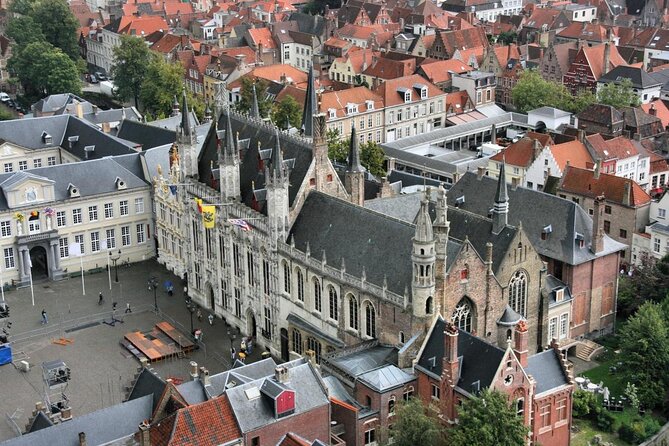
- From Burg Square to the Holy Blood basilica
- The Blind Donkey street and the dark side at Huidenvettersplein
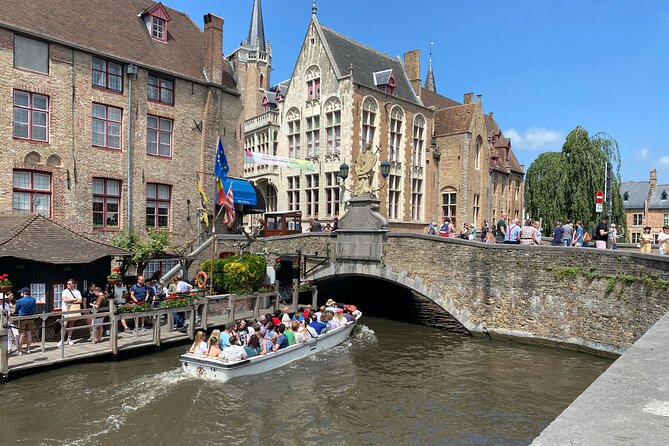
- Rozenhoedkaai canals, 2be Beer Wall, and bridge views
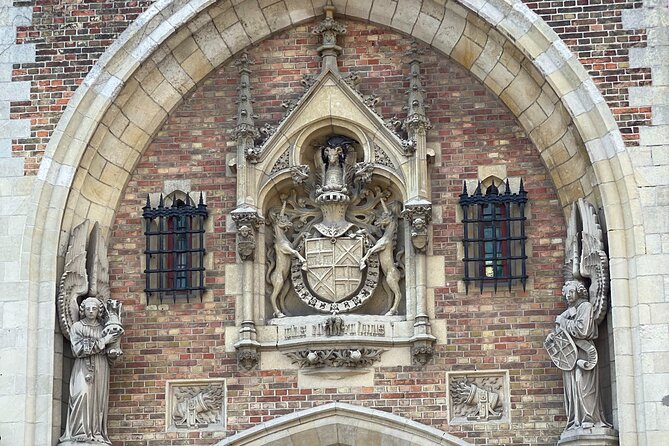
- Gruuthusemuseum exterior, Church of Our Lady, and the “so-called hospital”
- Stoofstraat and finishing at De Halve Maan Brewery
- Price and pace: what $3.62 buys you in practice
- Who this tour fits (and who might want a different format)
- Should you book Bruges by a Local?
- FAQ
- How long is the Bruges by a Local walking tour?
- Is the tour offered in English?
- What’s the price per person?
- Where does the tour start and end?
- Is admission included for the stops?
- Is free cancellation available?
Key highlights I’d plan around
- Photo-ready canal stops: The guide points you toward the best angles while the group stays moving.
- Holy Blood and old legend corners: You’ll stop at the basilica where the Holy Blood is stored and hear why the street of the Blind Donkey has its name.
- Most famous quay in minutes: Rozenhoedkaai (Quai du Rosaire) is the quick, classic postcard moment.
- Beer break option at 2be Beer Wall: A short stop that can turn the walk into something more relaxed.
- Multiple bridge perspectives: Nepomucenusbrug and Boniface Bridge give you a “Bruges from above water” view without long detours.
- Finish at De Halve Maan Brewery: The walk ends with an easy shift from sightseeing mode to a food-and-drink city mindset.
Walking in Bruges starts at the Markt and Belfort
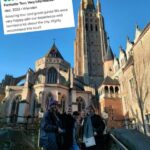
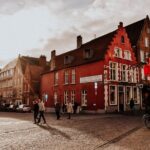
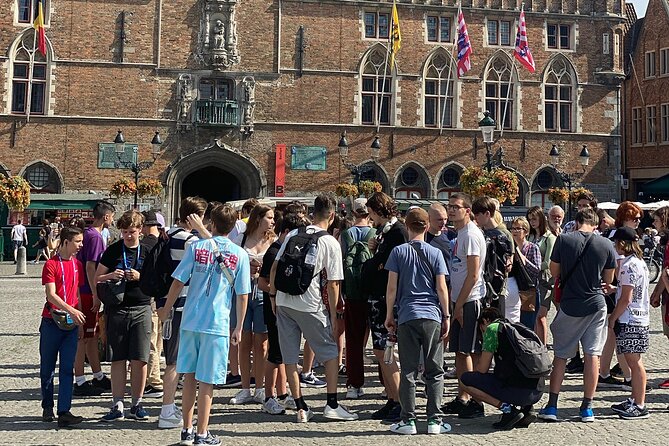
Your tour kicks off at Historium Bruges on the Markt, so you begin right in the thick of the city’s historic center. The Markt is one of those places where every façade seems to have its own “wait, tell me more” energy. Your guide frames the square as a living monument—each building has a story, even if you only catch the highlights at street level.
Then it’s off to the exterior of the Belfry (Belfort). The real value here isn’t climbing anything—it’s the context. A good guide will explain the Belfry’s purpose and why this tower matters to Bruges as a civic symbol. If you’re the type who usually walks past towers without noticing, this is where you start paying attention. Plus, the short stop keeps you from feeling stuck in a single spot while the rest of the route passes you by.
You can also read our reviews of more tours and experiences in Bruges.
From Burg Square to the Holy Blood basilica
Next comes Burg Square, which is treated as the “this is where it all started” moment. Even without going inside, you get the sense of how old Bruges is—more than a thousand years is part of how the route is framed. Your guide ties the square to the city’s early identity, so it feels less like random medieval stone and more like a place with momentum.
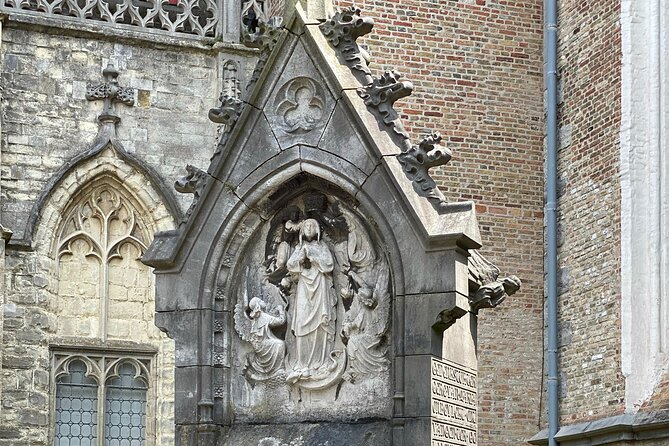
From there, you move toward the basilica where the Holy Blood is stored, described as being kept for hundreds of years. This stop works because it gives the walk a quieter, deeper tone. Bruges isn’t only pretty buildings; it’s belief, tradition, and history that people still care about. Even if you’re not into religious sites, the key is how your guide explains why the location mattered—so you can understand it rather than just glance at it.
The Blind Donkey street and the dark side at Huidenvettersplein
Bruges likes to surprise you with oddball names and strong atmospheres. You’ll hit the street of the Blind Donkey, with the route set up to answer the question Why? That’s the kind of story hook that makes this tour feel less like a checklist. If you enjoy folklore and local quirks, you’ll probably love how your guide uses small details to build bigger meaning.
Then you get a sharp tone shift at Huidenvettersplein. This square is described as dark and stinky, and that’s exactly why it’s on the route. It reminds you that historic cities weren’t all candlelight romance. You’re seeing how a place can carry a reputation, and how a guide can make that reputation feel understandable instead of awkward.
Practical takeaway: if you’re photographing, the lighting around these side areas can be less “golden postcard” and more “moody alley.” That’s not a bad thing—it just helps to know you’re walking different textures of Bruges, not only the “perfect” angles.
Rozenhoedkaai canals, 2be Beer Wall, and bridge views
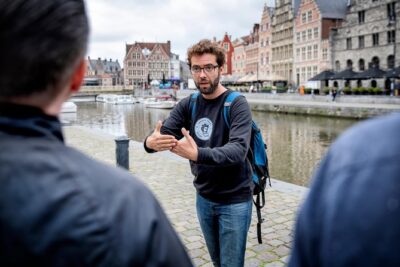
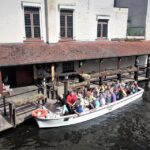
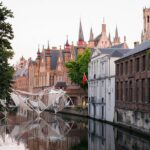
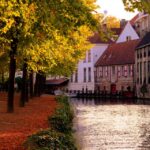
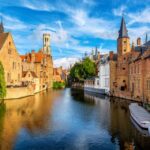
One of the fastest ways to fall for Bruges is water views. The route delivers that with Quai du Rosaire / Rozenhoedkaai, the most crowded and most photographed stretch on this walk. This is the spot where your guide’s photo guidance really matters. You don’t just get told where to stand—you’re pointed toward vantage points that help you frame the canal without fighting the crowd for 20 minutes.
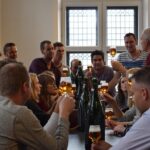
Right after the canal magic, you have a short bonus at 2be Beer Wall. If you want a break, this is the moment. The tour doesn’t turn into a long bar crawl, so you still get the rest of the walk, but you can take advantage of the change of pace. It’s also a good time to check in with your group and make sure you’re ready for the remaining bridges and stops.
Then come two bridge moments:
- Nepomucenusbrug: one of the oldest bridges on the route, with a statue of St Nepomucenus.
- Boniface Bridge: often linked to the idea of the Bridge of Love.
Even if you don’t care about bridges, this section is about perspective. Bridges let you see the city’s geometry—how streets, water, and architecture all line up. Your guide can help you spot the angles that usually take visitors longer to figure out.
Gruuthusemuseum exterior, Church of Our Lady, and the “so-called hospital”
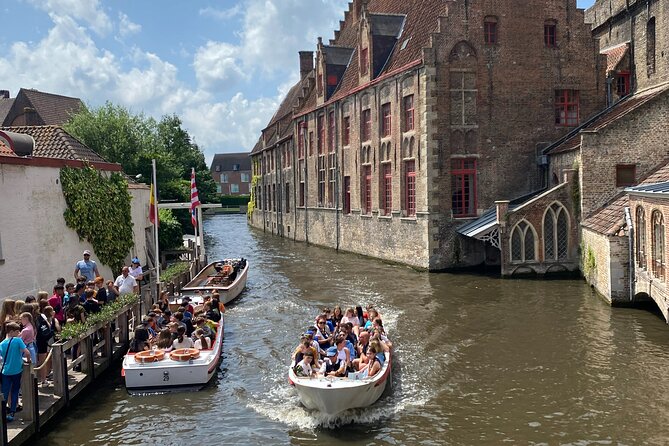
After the water-and-bridge section, the tour shifts toward buildings and streets that anchor Bruges’ medieval look.
You’ll make a stop at Gruuthusemuseum, but the route is exterior-only. That’s actually a smart fit for a 2-hour tour. Instead of trying to squeeze in one more museum ticket, you get architecture context and a quick sense of why this house matters, without losing time.
Then you pass the Church of Our Lady. The route describes it as the tallest building in the world, and even if you treat that as a marketing boast, it’s still a useful way to frame what you’re seeing. This is the kind of moment where it helps to step back and let the height sink in—your guide’s job here is usually to point out what you might miss if you’re just staring at doors.
Next: Sint-Janshospitaal, described as a so-called hospital. You’ll only spend a few minutes here, which means you’re not walking through exhibits—it’s a stop for understanding the name and significance. Think of it as a “why does this building get called that” moment.
Stoofstraat and finishing at De Halve Maan Brewery
Near the end, you’ll get a taste of Bruges street life with Stoofstraat, the Stew Street of Bruges. It’s a short stop, but it gives your walk a human angle: food culture and daily living are part of what makes Bruges feel real, not just historic.
There’s also a stop at a square with a wall. This is the kind of quick city-detail moment that can either feel random—or, when explained well, feel like a breadcrumb leading to how the city was shaped. In this kind of tour, it helps that your guide keeps connecting the dots between places.
Finally, the endpoint is De Halve Maan Brewery. That’s a satisfying close because it gives your last transition a taste-and-story vibe. After a route packed with squares, bridges, and famous names, ending at a brewery makes the city feel less like you’re studying it and more like you’re joining it. If you’re the type who likes to end with something edible, this is a strong finish.
Price and pace: what $3.62 buys you in practice
At $3.62 per person for roughly 2 hours, you’re paying for two things: guidance and structure. This isn’t a long, deep museum program. Most stops are quick, with plenty of exterior viewing and short “story stops” along the way. That’s why the guide’s style matters so much. In the feedback I used to shape my expectations, guides like Artur, Steven, Nick, Arthur, Pascal, and Ray were repeatedly praised for mixing humor with context and keeping the group engaged instead of turning it into lectures.
A good match for this price point looks like this:
- You want orientation in the center (so you can explore on your own afterward).
- You like history told through people and odd details (Blind Donkey, Holy Blood).
- You want a couple of key photo moments without planning a full self-guided route.
A possible drawback: because it’s a small-group walk with lots of short stops, if you’re hoping for slow pacing and lots of indoor time, you might feel rushed. Also, experiences can vary by guide and group dynamics. One traveler mentioned the guide experience felt like it had sales pressure and gratuity emphasis; another described a guide who handled children poorly. On the flip side, other kids loved the storytelling and interaction. So if your group has special needs—kids, accessibility requirements, or a preference for low-pressure tours—go into it ready to communicate early.
Who this tour fits (and who might want a different format)
This is a good fit if you’re:
- Visiting Bruges for the first time and want a route that covers the key sights fast.
- Traveling as a couple or small group and enjoy a chatty, story-driven guide style.
- The kind of traveler who likes photo tips and photo timing, not just “here’s a building.”
- A beer lover who’s excited about the 2be Beer Wall stop.
It’s also a decent choice for families, because some guides in past tours turned the story time into “little helper” involvement. Still, experiences with kids can be inconsistent, so if you’re bringing children, I’d pick a time when the group won’t feel overly tense and be ready for variability in how guides manage attention.
Service animals are allowed, and the walk is described as something most people can participate in. Since it’s a central walking route with multiple stops, it’s not ideal if you need long breaks or step-by-step pacing—but it’s also not described as unusually strenuous.
One more practical note from real-world meeting-point confusion: if you book, don’t assume you’ll blend in at first sight. A helpful tip is to look for a yellow umbrella on the Markt, near the Belfort tower and close to Burger King. If you’re lost, contact the number provided in your booking confirmation rather than wandering in circles.
Should you book Bruges by a Local?
I’d book this tour if you want a fast, friendly way to understand Bruges beyond postcards. The biggest wins are the guided storytelling (Holy Blood, Blind Donkey, and other local mysteries), the guide’s photo planning, and the route’s smart coverage of the center without wasting time. Ending at De Halve Maan Brewery is a satisfying closer, and the 2be Beer Wall stop gives you a chance to slow down for a beer if that’s your style.
Skip it or consider a different format if you need lots of indoor museum time, you hate any hint of pressure around tips, or you’re traveling with very specific expectations about how a guide should interact with your group. Otherwise, for a first Bruges day—or a reset day after a late arrival—this is a solid use of two hours.
FAQ
How long is the Bruges by a Local walking tour?
It runs about 2 hours.
Is the tour offered in English?
Yes, it’s offered in English.
What’s the price per person?
The listed price is $3.62 per person.
Where does the tour start and end?
It starts at Historium BrugesMarkt 1, 8000 Brugge, Belgium and ends at Walstraat 26, 8000 Brugge, Belgium.
Is admission included for the stops?
Admission tickets for the listed stops are shown as free, and all fees and taxes are included. Gratuities and tips are not included.
Is free cancellation available?
Yes. You can cancel up to 24 hours in advance for a full refund.