REVIEW · BRUGES
Bruges: Belgian Praline and Mendiants Chocolate Workshop
Book on GetYourGuide →Operated by 1USUAL INTERNATIONAL · Bookable on GetYourGuide
Tempering chocolate in Bruges feels like magic. You’ll learn how Belgian chocolatiers make pralines and mendiants from scratch, temper your own chocolates, and leave with 30+ homemade pieces in a take-home box. It’s hands-on, guided, and very real skill-building, not just a tasting session.
I especially like that you practice the full process for both classics, including the praline shell and the creamy filling, plus the mendiant technique for those crisp chocolate discs studded with dried fruit. I also love the small-station setup, where you work with your booked group (typically 2 to 3 people) and get real-time help from an instructor (examples you might get include Harry or Sabina). That combo turns chocolate making into something you can actually repeat at home with confidence.
One heads-up: the workshop room is kept focused, so spectators aren’t welcome, and children under 12 can’t attend. If you’re hoping to watch while someone else works, or you’re traveling with younger kids, you’ll need to plan around that.
In This Review
- Key Highlights You’ll Care About
- Chocolate Workshop in Bruges: Not Just a Sweet Stop
- Finding Grauwwerkersstraat 15 Without Stress
- How the 150-Minute Workshop Stays Focused
- Pralines From Scratch: Shells, Filling, and Tempering Control
- The praline shell
- The praline filling
- What you’ll end up with
- Mendiants: Crisp Discs With Dried-Fruit Texture
- Creating 30+ Chocolates: The Take-Home Box Factor
- Dietary Notes You Can Plan For (Without Guesswork)
- Instructor Style and Group Energy
- Pricing and Value: Why $69 Works Here
- Timing, Logistics, and What to Wear
- Who This Bruges Workshop Is Best For
- My Final Take: Should You Book It?
- FAQ
- How long is the Bruges Belgian praline and mendiants workshop?
- Where do I meet for the workshop?
- How many chocolates will I make?
- What chocolates will I learn to make?
- What’s included in the workshop price?
- Is the instructor English-speaking?
- Are there dietary options for dairy or gluten?
- Can children or spectators attend?
Key Highlights You’ll Care About
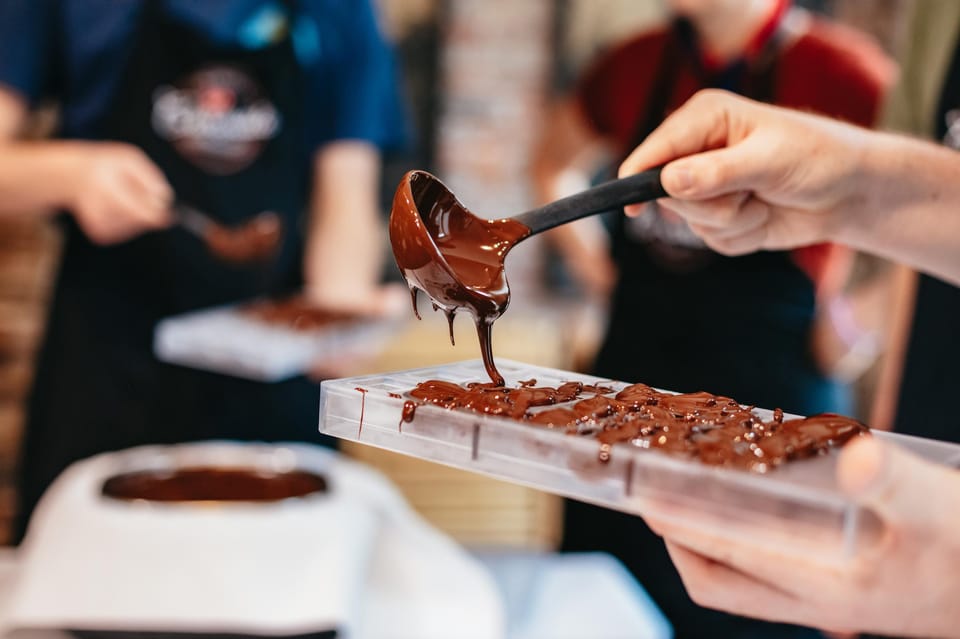
- Make 30+ chocolates (pralines and mendiants) that you can eat on the spot or take home
- Temper chocolate step by step so the shell and discs set properly
- Small stations with 2 to 3 participants means you get hands-on support
- Included extras like aprons, cookware, hot chocolate, and a take-home box
- Diet notes you can plan for: dark chocolate is gluten-free and dairy-free; the filling uses milk chocolate with a dairy-free alternative available on request
Chocolate Workshop in Bruges: Not Just a Sweet Stop
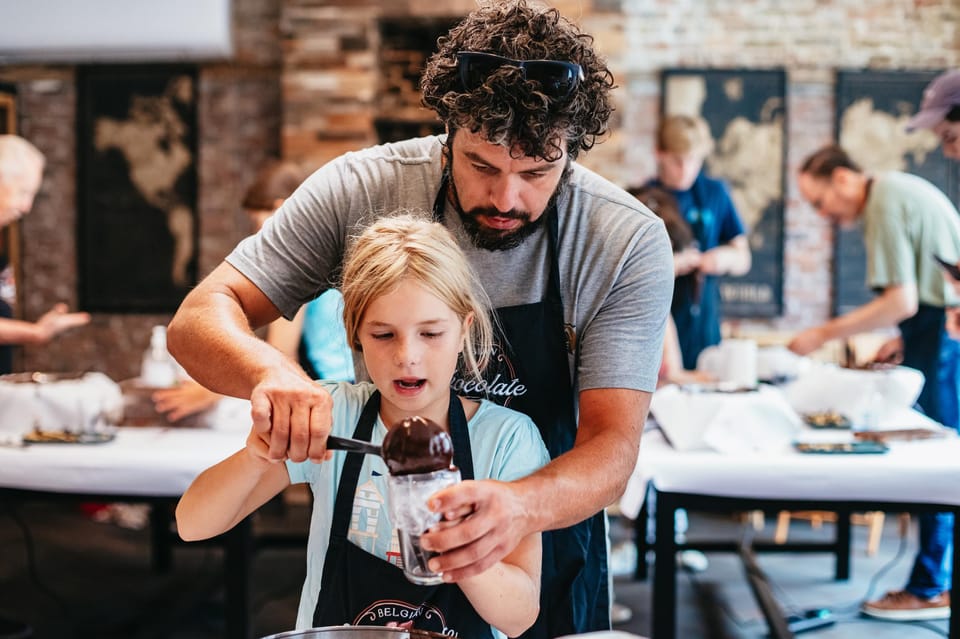
Bruges has that classic, storybook feel, but this workshop adds something better than photos: a skill you can use later. You’re not just sampling Belgian chocolate. You’re making two iconic styles—praline and mendiants—with guided technique, including tempering so the chocolate behaves.
The payoff is straightforward. In about 150 minutes, you’ll create 30+ pieces from scratch. Many people love that you’re working with real chocolate process steps (not candy assembly), and you get to bring the results home in a box.
And yes, it smells amazing the whole time.
You can also read our reviews of more tours and experiences in Bruges



Finding Grauwwerkersstraat 15 Without Stress
You meet at the workshop at Grauwwerkersstraat 15, on the corner of Grauwwerkersstraat and Naaldenstraat, in the city center. If you’re starting near the Grote Markt, it’s about a 5-minute walk. From the train station, expect roughly a 20-minute walk.
Arrive a few minutes early. Chocolate workshops run best when everyone starts together, and you don’t want to rush your coat-off, apron-on moment. Also, since spectators aren’t allowed inside, make sure your group members who want to watch wait outside—then join you at the end if the setup allows.
How the 150-Minute Workshop Stays Focused
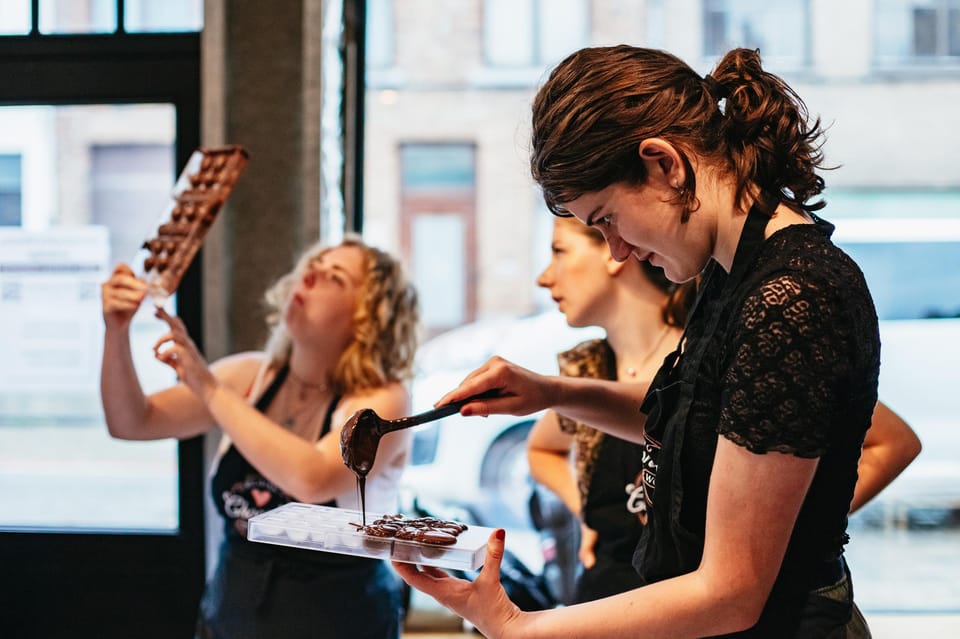
The class is designed to move. With a 150-minute duration, you’ll cycle through the two chocolate styles in a structured way: learning the technique, practicing it at your station, then finishing with packing and tasting.
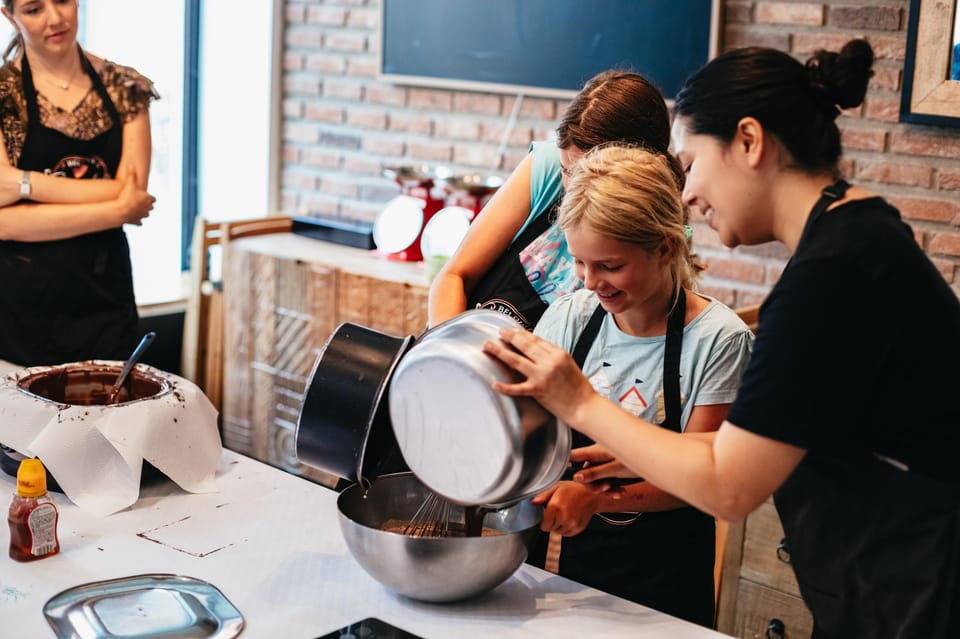
The setup is station-based. Each station hosts 2 to 3 participants, and you generally work with the same people you booked with. That small size matters. It keeps the instructor close enough to catch issues early, like chocolate that cools too quickly during tempering or filling that needs a smoother texture before piping.
You’ll also have a break built in: hot chocolate is included. It’s simple, but it helps you reset your hands and focus before the final finishing steps.
Pralines From Scratch: Shells, Filling, and Tempering Control
Pralines are the star of Belgian chocolate for a reason: they’re pretty, but the technique is what makes them melt right and taste clean. In this workshop, you’ll learn to craft both parts.
The praline shell
You’ll work with dark chocolate for the shell. The dark chocolate used here is gluten-free and dairy-free by definition. You temper it and use it to create the delicate chocolate layer that firms up into a crisp, glossy finish.
Tempering sounds technical, but the practical goal is easy to understand: you’re trying to get chocolate to set with the right texture, not a grainy one. With an instructor guiding your timing, you’ll learn what to watch for as the chocolate changes while you work.
You can also read our reviews of more tours and experiences in Bruges




The praline filling
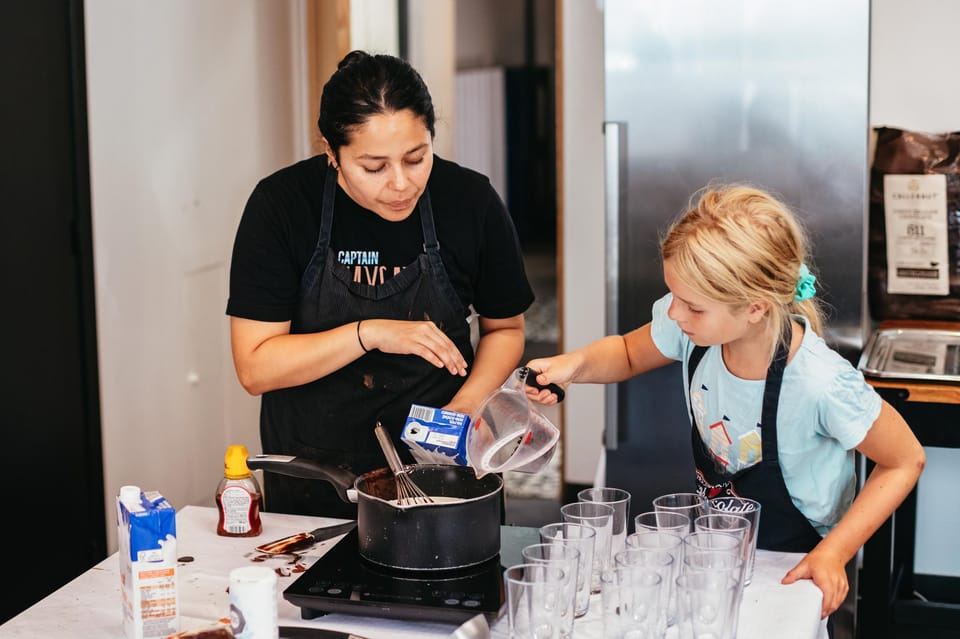
For the filling, the workshop uses milk chocolate. There is a dairy-free alternative available upon request at the start of the workshop, so you can still make pralines even if you avoid dairy.
You’ll create the filling from scratch, then combine it with the shell. This is where the workshop feels genuinely hands-on, because you’re not just melting ingredients—you’re building the final piece with careful consistency.
What you’ll end up with
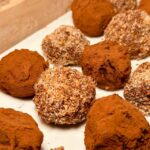
Expect pralines that are classic in shape and bite: shell first, creamy center second. And because you’ll make more than one, you get a mini learning loop: make, correct, improve, then repeat.
Mendiants: Crisp Discs With Dried-Fruit Texture
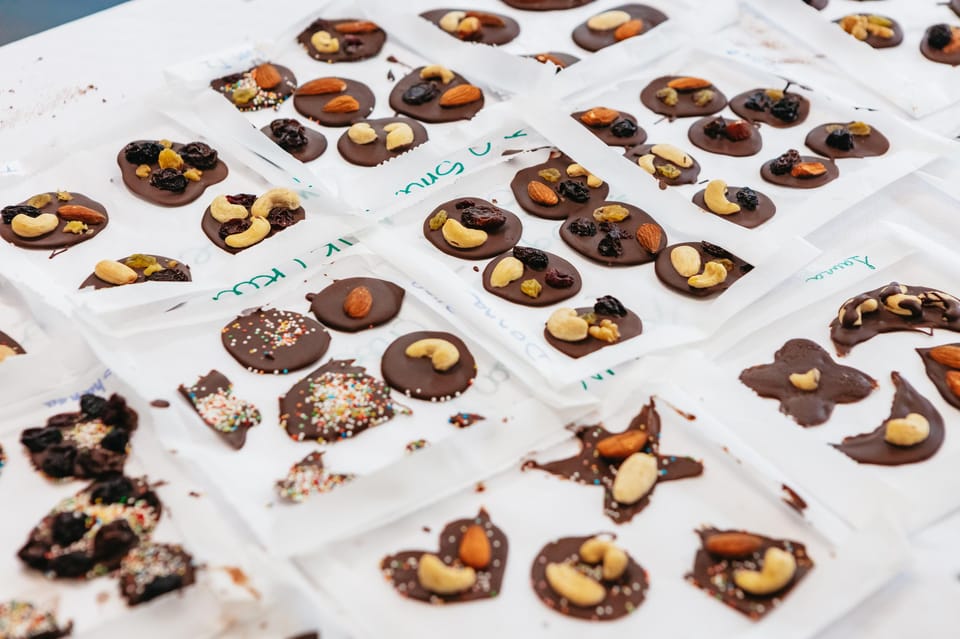
If pralines are smooth-and-melt, mendiants are the crunch. These are iconic Belgian chocolate discs topped with crispy pieces of dried fruit.
In your workshop portion, you’ll create mendiants from scratch. You’ll work with tempered chocolate, then decorate the discs in a way that sets with a satisfying snap. The dried fruits aren’t just for looks; they add texture contrast that makes mendiants addictive.
This section also helps you learn flexibility. If your pralines are about precision and timing, mendiants are a bit more forgiving in style. Still, you’ll need the same tempering care so the topping sits right and the chocolate sets cleanly.
Creating 30+ Chocolates: The Take-Home Box Factor
One of the most practical reasons to book this workshop in Bruges is the volume. You create at least 30 chocolates—and you can either eat some on the spot or take them home.
You’ll get a box to take your chocolates away. That sounds like a small detail, but it changes the whole value of the experience. Instead of leaving with a few bites, you leave with a gift you can actually share.
A quick packing tip for your end-of-day plans: keep your box cool and stable. If you’re walking around Bruges after class, shield it from direct sun as much as possible. If you’re taking it by train, plan to keep it in a bag where it won’t get squished. The goal is not just taste—it’s the chocolate’s final texture.
Dietary Notes You Can Plan For (Without Guesswork)
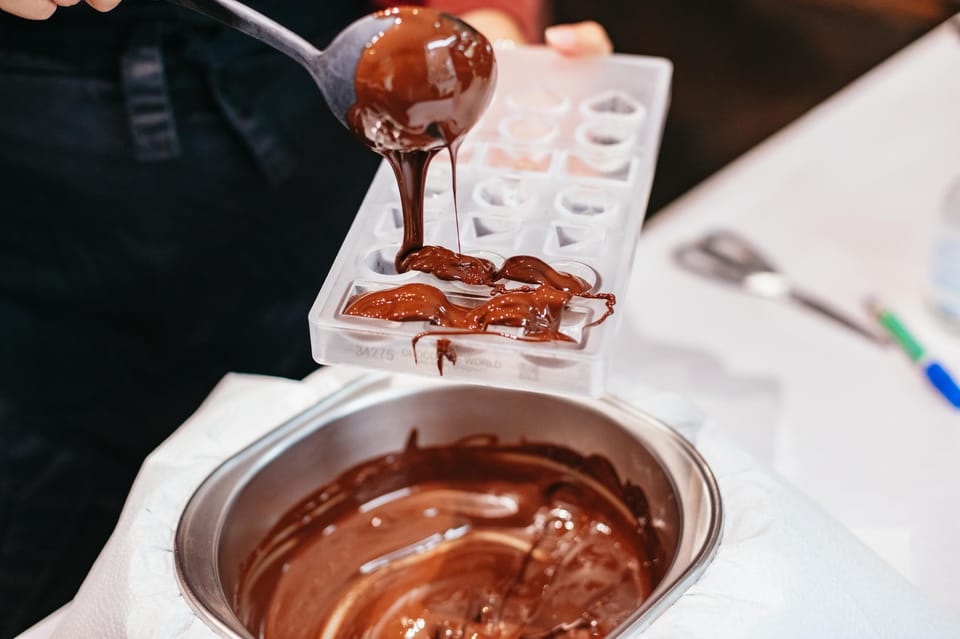
Food restrictions can make chocolate workshops stressful, so I like that this one is clear about what’s used.
Here’s the key detail: the dark chocolate used for the praline shells is gluten-free and dairy-free. That’s a big help if you need to avoid dairy and gluten.
However, milk chocolate is used for the praline filling, unless you request a dairy-free alternative at the start of the workshop. So if you’re dairy-free, speak up early. You don’t want to find out midway that you need to swap your ingredients approach.
As for mendiants, your ability to adapt will depend on how the workshop handles toppings and chocolate bases in your specific session. The workshop’s clear on the dark vs milk chocolate split, which is the most important planning point.
Instructor Style and Group Energy
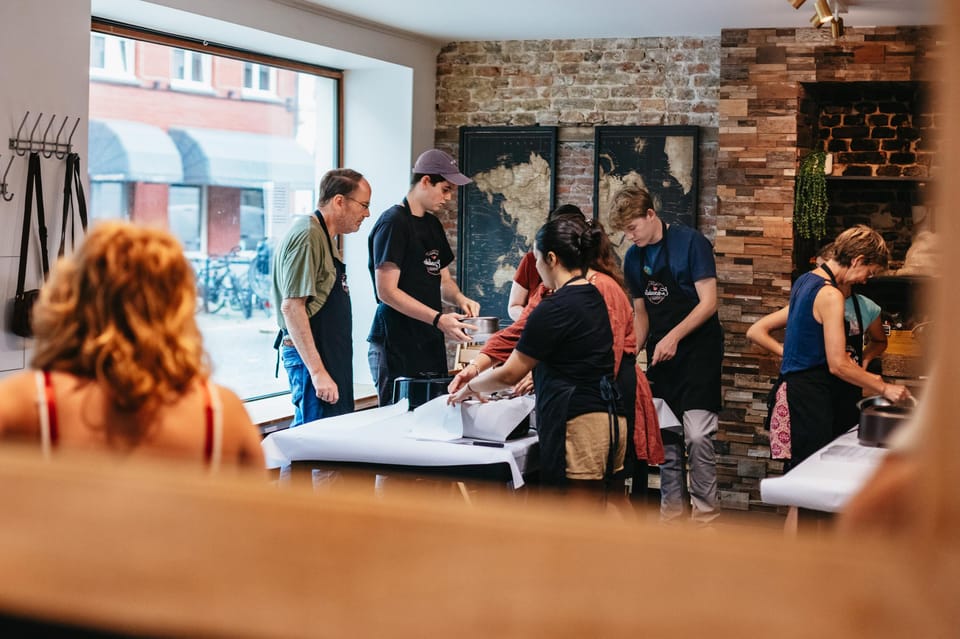
The instructor runs the show. Your class is in English, and the teaching style tends to be interactive, with step-by-step guidance and help when your hands get messy.
Across recent sessions, multiple instructors have led classes with very hands-on support. Names that have appeared among past hosts include Harry, Sabina, Ranza, Junior, Sem, August, and Henri. The consistent theme is patience—people repeatedly note that the instructor keeps things moving while still stepping in when needed.
The station setup also changes the vibe. Since you’re typically with only 2 to 3 participants per station, you’re not stuck waiting for your turn. You’re working while the chocolate is working, which is exactly how tempering should feel—active and timed.
Pricing and Value: Why $69 Works Here
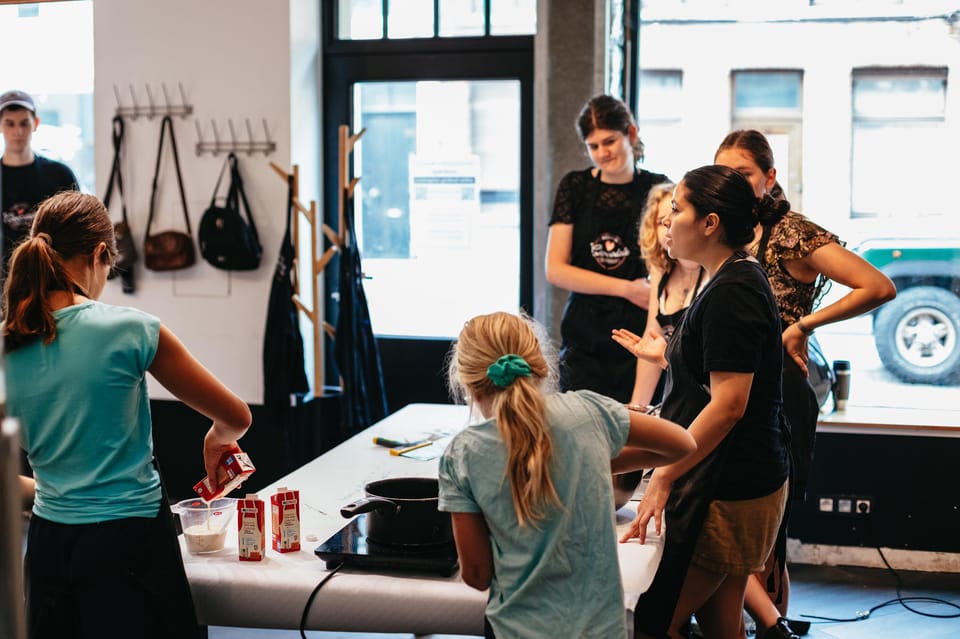
At $69 per person, this class isn’t cheap in the way a casual Bruges chocolate tasting might be. But it’s a better deal than you might think when you break it down.
You’re paying for:
- 150 minutes of guided chocolate-making technique
- ingredients and cookware
- aprons
- an instructor
- hot chocolate
- and a take-home box holding 30+ chocolates you made
Most of the value isn’t the chocolate itself—it’s the process education. Tempering and technique are hard to learn from a recipe. In a workshop, you get real-time corrections and a repeatable method.
Also, you leave with a lot of product. If you’re buying Belgian chocolates as souvenirs, this workshop can quickly look like better math—especially since the chocolates are handmade by you, not just boxed for you.
Timing, Logistics, and What to Wear
This is a practical workshop, so plan accordingly:
- Wear clothes you don’t mind getting a little messy.
- Expect you’ll move between steps and handle hot or cooling chocolate.
- Bring a small bag for your apron or personal items if you don’t want to hold everything.
The room doesn’t allow spectators or non-participating people, which keeps distractions down. That matters because when you’re tempering, your attention has to stay on what your chocolate is doing.
Finally, the workshop has a clear age rule: no children under 12. For families with older teens, it can be a fun, hands-on activity that feels like an accomplishment rather than a passive attraction.
Who This Bruges Workshop Is Best For
This is a strong fit if you:
- want a hands-on Belgian chocolate experience in Flanders, not just a tasting
- enjoy learning by doing (tempering and assembly are learnable skills here)
- like the idea of taking home 30+ handmade chocolates in a box
It also works well for couples and small groups. The station format means you won’t feel lost in a huge crowd, and the instructor can guide your technique directly.
If you’re traveling with very young kids or you need a watching-only setup, consider skipping this one. The no-spectators rule and the under-12 limit are part of the workshop’s design.
My Final Take: Should You Book It?
If you’re even slightly serious about Belgian chocolate, this workshop is worth booking. You get real technique (especially tempering), you make both pralines and mendiants, and you leave with enough chocolates to share.
Before you click confirm, check two practical points:
- If you’re dairy-free, plan to request the dairy-free alternative for the filling at the start of the workshop.
- If you want to bring young kids or have someone watch from inside, this won’t fit your expectations.
If your schedule is flexible, this option also offers free cancellation up to 24 hours in advance and reserve now, pay later, which helps if Bruges weather or transport shifts your timing.
FAQ
How long is the Bruges Belgian praline and mendiants workshop?
The workshop lasts 150 minutes.
Where do I meet for the workshop?
Meet at Grauwwerkersstraat 15, on the corner of Grauwwerkersstraat and Naaldenstraat, in the city center of Bruges.
How many chocolates will I make?
You’ll create at least 30 chocolates, including pralines and mendiants.
What chocolates will I learn to make?
You’ll learn to make two Belgian chocolate staples: pralines (with a chocolate shell and creamy filling) and mendiants (chocolate discs with dried fruits).
What’s included in the workshop price?
It includes ingredients, cookware, aprons, a guide, hot chocolate, and a box to take your chocolates home.
Is the instructor English-speaking?
Yes, the instructor works in English.
Are there dietary options for dairy or gluten?
Dark chocolate used for the praline shells is gluten-free and dairy-free by definition. The filling uses milk chocolate, but a dairy-free alternative is available upon request at the start of the workshop.
Can children or spectators attend?
Children under 12 aren’t admitted, and spectators or non-participating persons are not welcome.