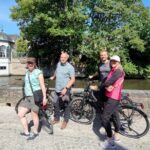
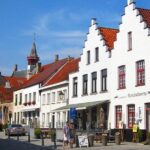
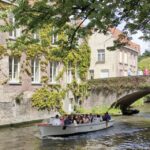
Bruges gets easier when you ride. I love how this private bike tour lets you see more than you would on foot, with your guide setting the pace and helping you slip past the busiest areas. I also love the way the route mixes major landmarks with quieter corners, so the city feels lived-in instead of just photographed. One thing to plan for: you’ll need moderate physical fitness, and bottled water isn’t included.
This is a 3.5-hour, English-language tour that starts at Stationsplein 5 and loops back to the same spot. You’ll get a bicycle and helmet, plus a mobile ticket, and you’re only biking with your group. If you’re the type who likes city history without sitting inside a museum for hours, the format fits Bruges nicely.
In This Review
- Key highlights to know before you book
- Why a 3.5-hour Bruges bike tour feels just right
- Getting rolling at Stationsplein 5 (and what’s included)
- The route: ramparts, squares, and canal moments you can actually feel
- Stop-by-stop: what you’ll notice and why it’s worth the stop
- Bikes, effort level, and what to wear
- The guide factor: pace, stories, and why it feels different
- Value: what you pay for at $197.47 per person
- Weather reality and small planning tips
- Should you book this private Bruges bike tour?
- FAQ
- How long is the private Bruges bike tour?
- What’s included in the tour price?
- What should I bring since bottled water isn’t included?
- Is this tour private or shared?
- What level of fitness do I need?
- What if the weather is bad?
- Is there a cancellation option for a refund?
Key highlights to know before you book
- Private guide in the lead so you can keep moving and avoid the worst crowd moments
- Bike and helmet included, saving time and hassle in a city where parking rentals can be annoying
- Walls, ramparts, canals, and squares built into one logical route, not a random checklist
- Plenty of short stops for photos and stories, with longer time at the Markt
- Minnewater Park and the swans as an easy, scenic finish before you head back
Why a 3.5-hour Bruges bike tour feels just right
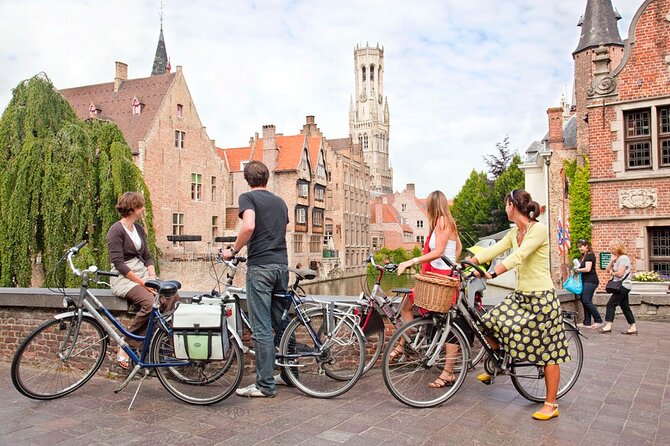
Bruges is compact, but it can still feel like a maze if you’re walking and constantly checking streets. Biking changes the rhythm. Distances that look far on a map feel quick once you’re rolling, and you can cover more of the center in a short window without feeling like you sprinted through everything.
I also like that the pacing is built for real viewing. This tour isn’t only about big sights. It’s also about the in-between spaces: streets that connect bigger spots, canal approaches, and the edge-of-old-Bruges feel you don’t always notice when you’re on foot.
And the private setup matters more than people think. When you’re on your own schedule with a guide ahead of you, you can ask questions without the tour becoming a herd-control exercise. The result is a city tour that feels more like a smart local walk, just with wheels.
You can also read our reviews of more cycling tours in Bruges
Getting rolling at Stationsplein 5 (and what’s included)
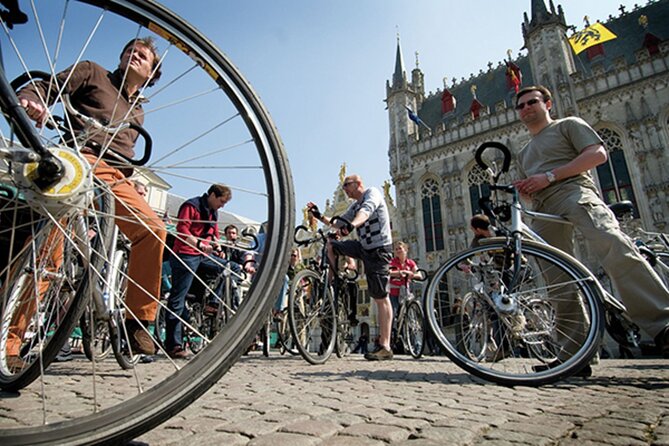
The tour starts at Stationsplein 5, a practical base because it’s near public transportation. That matters in Bruges, where you might be bouncing between sights and trains during the day. The tour ends back at the same meeting point, so you’re not stuck planning a second transfer after 3.5 hours of biking.
Your included gear is straightforward: bicycle use and helmets, and you’ll have a private guide. You also get a mobile ticket, and confirmation is sent at booking.
A small practical note: bottled water isn’t included. If you’re the kind of person who drinks early and often (I am), I’d plan on grabbing a bottle before you start, especially if the weather is warm.
The route: ramparts, squares, and canal moments you can actually feel
This tour is designed to tell Bruges in layers. Instead of treating the city like a lineup of monuments, you ride through the places where power and daily life overlapped: defenses, markets, religious sites, and the water routes that shaped trade.
You’ll pass the canal and one of the most important canal streets, then keep moving through areas tied to specific stories. You don’t just read plaques from the sidewalk; you get the city context as you cross from one zone to another.
Stop-by-stop: what you’ll notice and why it’s worth the stop
Here’s what the ride is like as it moves through the city.
Boeveriestraat (almshouses and social care)
You’ll stop near one of Bruges’ almshouses and learn how these institutions worked. This is one of those pauses that changes how you see the architecture. Instead of thinking only about medieval buildings as scenery, you understand them as places that served a practical social role.
’t Zand Squares (13th-century ramparts story)
Next comes the ramparts angle, the kind of detail you miss if you only focus on the postcard sights. Even in a flat, walkable city, those defensive lines helped shape where people could go and how the city grew.
Simon Stevin square and statue (math and physics in the 1600s)
You’ll hear the story of Simon Stevin, a founder of mathematics and physics. I like this stop because it’s a reminder that Bruges wasn’t only about trade and churches. It also produced ideas.
The Markt (the big one, with time to breathe)
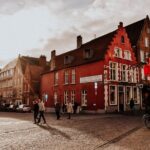
The Markt is where the city history really gathers. You’ll spend about 30 minutes here, giving you enough time to look around instead of snapping photos and rushing onward. This is the stop where you should slow down, orient yourself, and connect the rest of the tour to the city’s center.
Vlamingstraat (beauty plus the Italian quarter angle)
This is a classic “slow down and look up” street stop. You’ll see one of Bruges’ most beautiful streets and also connect it to the Italian quarter story. Even if you’re not sure how that quarter fit into Bruges at the time, the guide can connect the dots so it feels like a living neighborhood, not just trivia.
Augustijnenrei (city wall details)
A short stop, but a meaningful one: you’ll view a 13th-century city wall. These kinds of moments stick in your memory because they show the city as a system of boundaries, not only a collection of buildings.
Spanjaardstraat (the Spanish colony story)
This is brief, but it adds flavor. You’ll hear the story of the Spanish colony, which helps explain why some areas of the city reflect connections far beyond Bruges itself.
Jan Van Eyckplein (Flemish Primitives and the painter)
At this square, you connect the dots between the Flemish Primitives and Jan van Eyck. If you’ve seen his work before, this stop helps put the artist in place. If you haven’t, you’ll still come away with a clearer sense of why names like his matter to the region’s cultural story.
Passing the Groeninghe Museum area (a key art stop, without the ticket line)
You cycle through the heart of the city center and pass the Groeninghe museum, the city’s key art collection. You don’t need to spend hours inside to get the cultural context; you’re building an informed map for later.
Grootseminarie Brugge (the building that trains priests)
You’ll see the grand building where priests get their long formation. This stop makes the religious architecture feel specific and functional. It’s not only about grand facades; it’s about the purpose inside the walls.
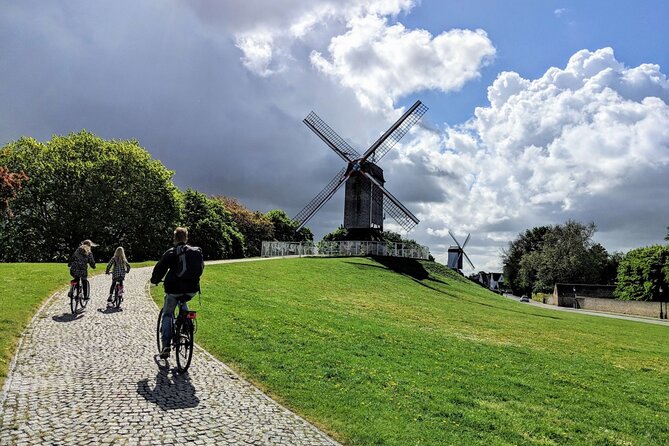
Kruisvest (the green lungs and windmills)
You’ll get a change of pace with greenery and the feel of space. This area is tied to authentic windmills, and it works as a mental reset from the tight-center streets.
Adornes Estate & Jerusalem Chapel (quiet, tucked-away atmosphere)
This is the kind of stop where you realize Bruges isn’t only streets and squares. You’ll visit the Adornes domain and the Jerusalem Chapel, framed as one of the city’s quieter, more tucked-away areas. It’s a good reminder that the city’s most interesting layers aren’t always the loudest ones.
Burg Square (main civic buildings and big-picture context)
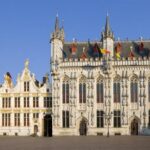
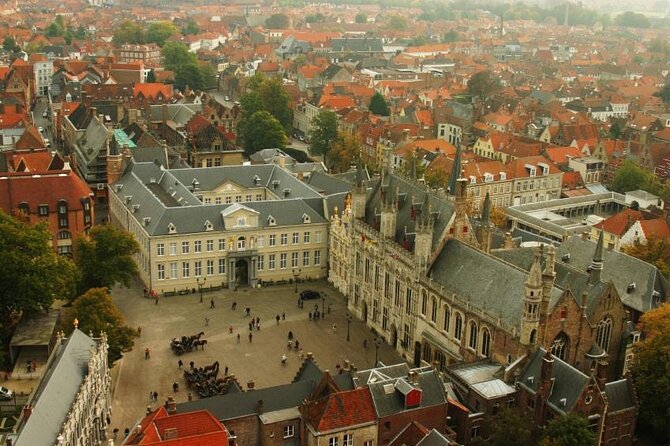
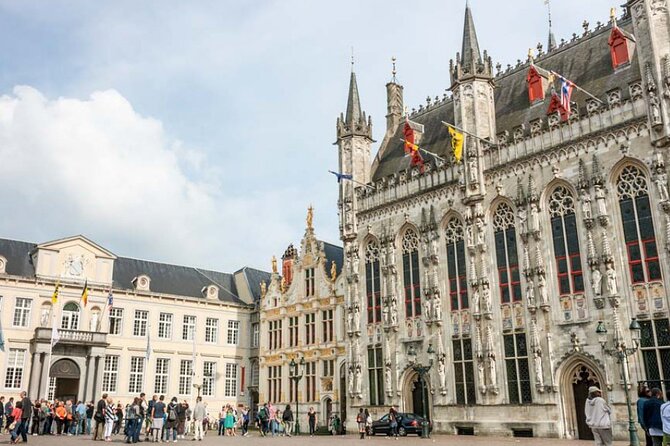
At Burg Square, you’ll get the broader city overview and hear insights about the important buildings there. This is the kind of stop that helps you understand how Bruges functioned as more than a tourist map.
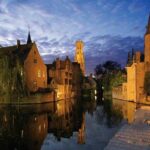
Vismarkt (canals, fish market, leather-making, and a photo spot)
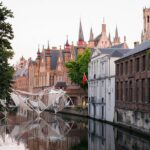
You’ll learn the history of the canals and the fisher market, and even hear about a square where leather was made. This is one of those stops where the guide turns everyday-sounding market areas into story-rich places. You’ll also be directed to an authentic photo spot—so yes, you’ll get a spot that’s actually worth stopping for.
Onze-Lieve-Vrouwekerk area (Saint Mary church, city palace, and art)
You’ll discover the Church of Saint Mary area, plus the city palace and impressive art collection. You’ll also hear the story of the Saint-Johns hospital nearby. This stop works best if you like your art and architecture paired with practical context.
Princely Beguinage Ten Wijngaarde (the beguines and their environment)
You’ll see and hear the story of the beguines and their environment, and you’ll visit the church. Beguinage areas can feel calm and ordered, and the guide’s framing helps you understand what that environment was for.
Minnewater Lake (swans as the gentle finish)
The last stretch is scenic: Minnewater Park with swans. After 3.5 hours of city focus, it’s a nice place to let your brain rest. You cycle back toward the railway station area, then finish where you started.
Bikes, effort level, and what to wear
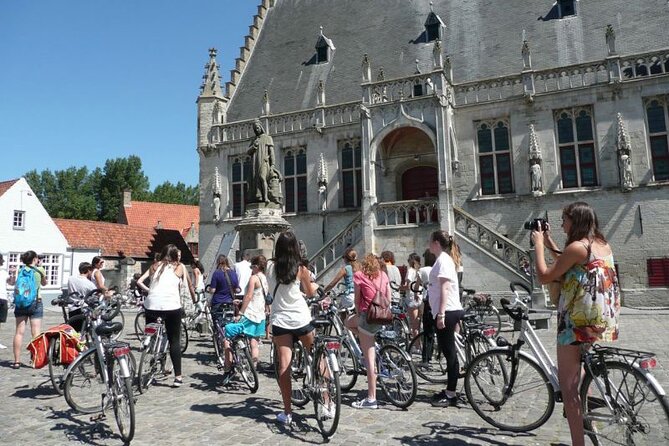
The tour calls for moderate physical fitness. That doesn’t mean you need to be a cyclist, but it does mean you should be comfortable riding for stretches of time on city paths and streets.
Helmets are included, which is a big plus for comfort and safety. You’ll also want basic riding-smart clothing: closed-toe shoes, weather-appropriate layers, and something that won’t flap around if you’re adjusting your pace.
If you tend to get tired easily, consider whether a shorter walk day might be smarter than pairing this with another long activity. The route is packed with stops, but you’re still moving most of the time.
You can also read our reviews of more guided tours in Bruges

The guide factor: pace, stories, and why it feels different
The best tours don’t just show you things. They help you understand why those things matter, and they keep you moving without making you feel rushed.
From what I’d look for, this tour’s approach is exactly that: a local lead, brief story stops, and a rhythm that lets you see more of Bruges than a typical walk. The guide energy is part of the appeal too. In the experience’s feedback, the guide—often mentioned by name as Xavier—stands out for turning Bruges history into something you can follow while you ride.
One more plus: because it’s private, the guide can adjust to your group’s pace. If someone wants an extra minute at the Markt to get their bearings, that flexibility is much easier with a private setup.
Value: what you pay for at $197.47 per person
At $197.47 per person, this isn’t a budget activity. But it does include several things that often cost extra when you plan on your own: the bicycle, the helmet, and a private guide.
That combination can be good value if you’re trying to maximize your limited time in Bruges. Instead of spending time lining up rentals, dealing with parking or bike logistics, and then trying to do history reading on your own, you’re paying for a guided route that’s already organized.
Also, it’s worth noting there are group discounts listed. If you’re booking with friends or family, ask about pricing options for your group size. Even small savings matter on a private tour.
Finally, this tour is booked fairly far in advance on average. That’s a hint that the timing slots fill up. If you have set travel dates, I’d book early rather than hoping for flexibility.
Weather reality and small planning tips
This experience requires good weather. That’s sensible for a bike tour in a city with lots of cobbles and turning points. If conditions are poor, you’ll be offered a different date or a full refund.
So what should you do? If you’re traveling in shoulder season, keep an eye on the forecast the day before. If it’s questionable, be ready to shift your plan.
And bring your own water bottle. You’ll be out for about 3 hours 30 minutes, and the tour listing doesn’t include bottled water. A small thing, but it keeps your ride pleasant instead of thirsty.
Should you book this private Bruges bike tour?
Book it if you want a fast, well-paced way to see Bruges beyond the main streets. This is especially appealing if you like history tied to specific places—ramparts, markets, canals, and institutions—and you’d rather cover ground on a bike than fight the sidewalks on a tight schedule.
Skip it (or at least rethink) if you don’t feel comfortable with a moderate physical effort. It’s not a couch-to-castle tour. You’ll be riding and stopping often enough that you’ll want comfortable shoes and a steady pace.
Also, if you’re visiting Bruges mainly for food stops and long museum time, you might want a slower plan. This tour’s strength is the ride-and-story format, not long sit-down breaks.
If your goal is to walk away with a clearer mental map of Bruges—where the city defended itself, where people worked, and why art and religious life shaped the streets—this is a solid choice.
FAQ
How long is the private Bruges bike tour?
It lasts about 3 hours 30 minutes.
What’s included in the tour price?
Your tour includes use of a bicycle, helmets, and a private guide.
What should I bring since bottled water isn’t included?
Bring your own bottled water, especially if the weather is warm.
Is this tour private or shared?
It’s private, so only your group participates.
What level of fitness do I need?
The tour requires moderate physical fitness.
What if the weather is bad?
The experience requires good weather. If it’s canceled due to poor weather, you’ll be offered a different date or a full refund.
Is there a cancellation option for a refund?
Yes. You can cancel for a full refund up to 24 hours in advance. If you cancel less than 24 hours before the start time, the amount you paid isn’t refunded.