REVIEW · BRUGES
2-Hour Medieval Walk and Chocolate Tasting in Bruges
Book on Viator →Operated by BelgoTours · Bookable on Viator
Bruges feels like it was made for slow walking. This 2-hour medieval route is practical, friendly, and built around real sights you can actually remember. I love the way it strings together Bruges landmarks without turning it into a checklist. I also like the craft chocolate tasting that keeps the whole experience grounded in something you can enjoy on the spot.
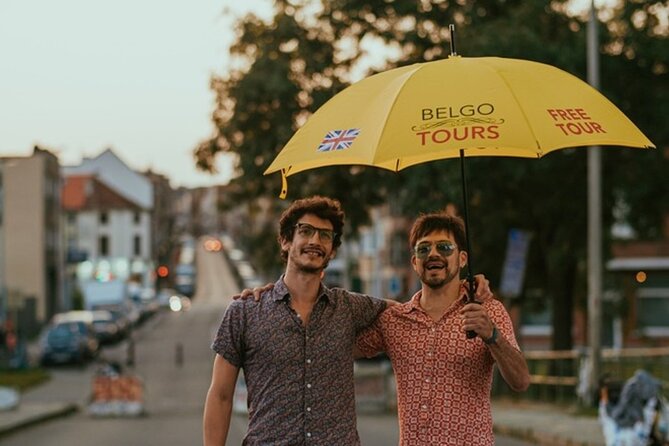
One thing to consider: the tour is run in Spanish, so if you need English, plan ahead and don’t assume translation. Also, the meeting point is busy—show up a bit early so you can spot your guide.
In This Review
- Key things to know before you go
- Why this 2-hour Bruges medieval walk makes sense
- Grote Markt and Belfort: the city’s clock, in stone
- Gruuthuse and the Provincial Palace: medieval wealth in plain sight
- Sacred Heart and the 14th-century town vibe
- Saint Boniface Bridge and Notre Dame: small bridges, big atmosphere
- Beguinage founded in 1245: a calmer kind of medieval Bruges
- Minnewater, the Lake of Love: the walk’s gentle finish
- Craft chocolate tasting: the sweet break that doesn’t feel random
- De Halve Maan Brewery: a look from the street
- Price and value of a $3 guided walk plus tasting
- Who this tour fits best (and who might want to skip it)
- Small logistics that can make or break your day
- Should you book this medieval walk with chocolate in Bruges?
- FAQ
- What’s the duration of the Bruges medieval walk and chocolate tasting?
- Where does the tour start and end?
- What’s included in the price?
- Is there a mobile ticket?
- How many people are in the group?
- What days and times does it run?
- What language is the tour offered in?
Key things to know before you go
- 2 hours, small group (max 20): easy pace for photos and questions.
- Grote Markt start, Minnewater finish: you’ll get a clean loop through the center.
- Craft chocolate tasting included: a sweet break that fits naturally into the walk.
- Belfort and its bell tradition: you’ll learn how the city marks time.
- Beguinage founded in 1245: one stop that adds real depth to the medieval story.
- Mobile ticket: keep your phone handy when you meet the guide.
Why this 2-hour Bruges medieval walk makes sense
Bruges can overwhelm you fast. The streets are pretty, but you can lose the thread—where you are, why it matters, and what to look for. This tour solves that problem with a tight route that starts at the big public heart of town and ends near a calm waterfront moment.
The timing is also smart. Around 2 hours is long enough to cover the main medieval landmarks on foot, but short enough that you still have energy left for independent exploring after. And with a max group size of 20, it tends to feel like a guided stroll rather than a cattle-herded march.
Value-wise, you’re paying $3 for a guided walk plus craft chocolate tasting. That’s unusually low. The experience also includes a note about giving a voluntary contribution to the guide at the end, which tells you the real cost model is more like a local-style walking tour. If you’re the type who likes learning the meanings behind the buildings—and then rewarding it with something sweet—you’ll probably enjoy this a lot.
You can also read our reviews of more walking tours in Bruges

Grote Markt and Belfort: the city’s clock, in stone
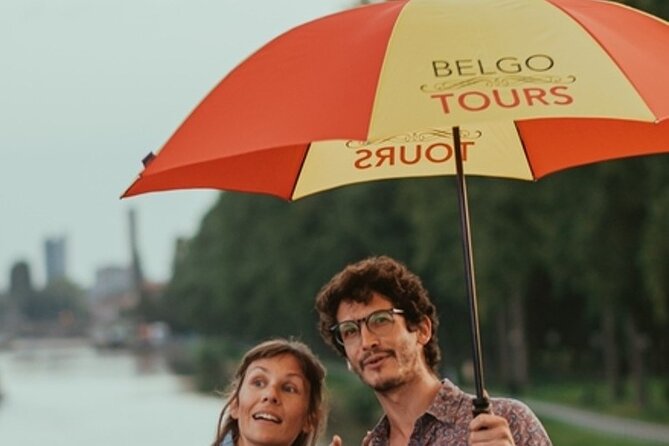
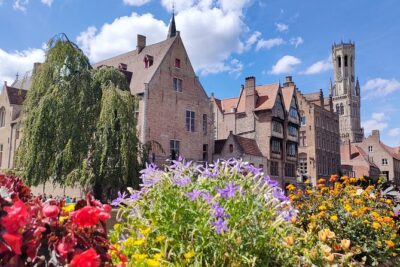
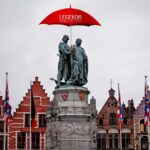
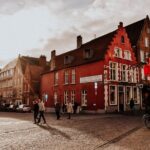
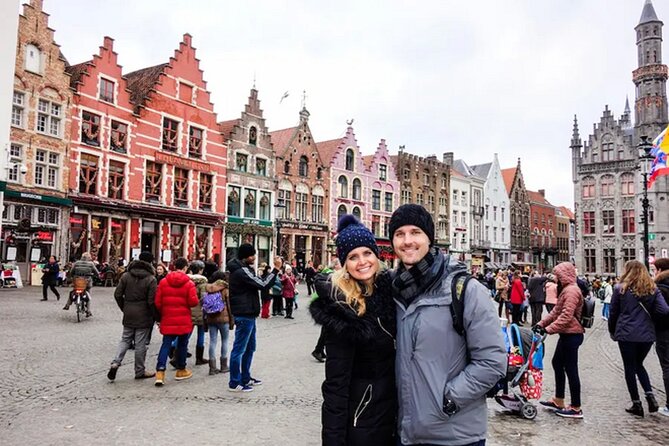
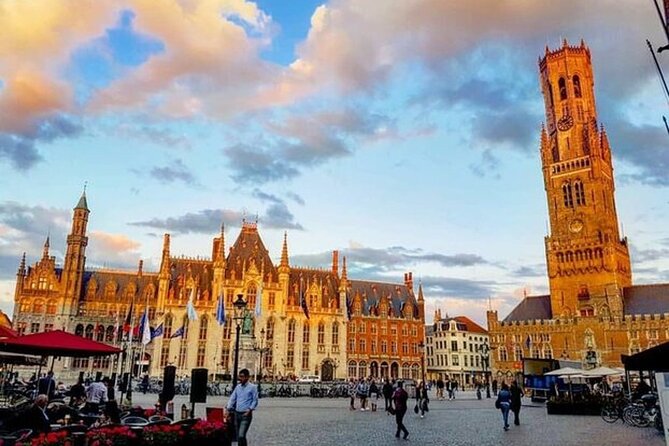
You start at Market Square (Grote Markt / Markt), the place where Bruges looks most like a medieval poster. From here, the guide’s route leans into what makes Bruges feel alive even now: civic buildings, big public space, and symbols of power.
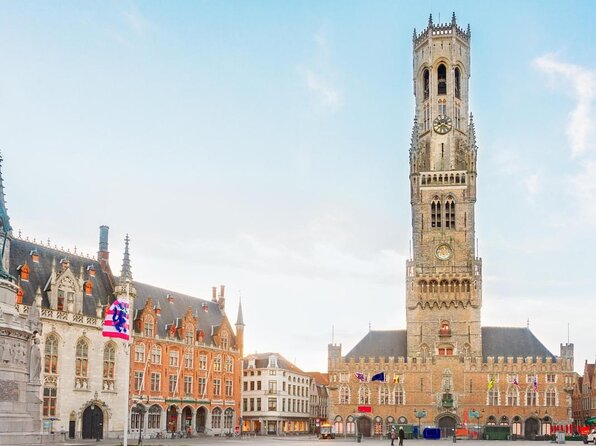
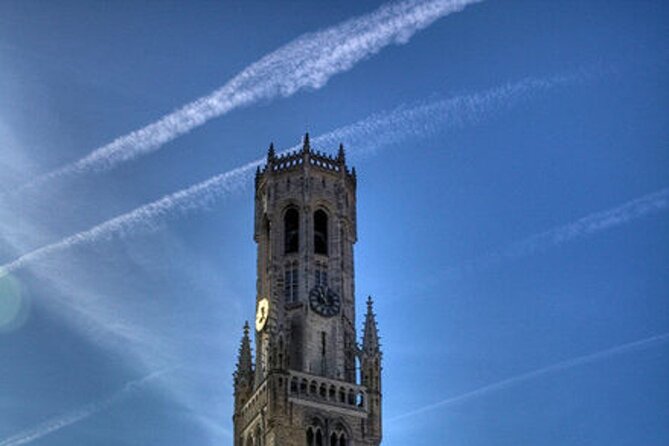
Next up is Belfort, the bell tower tied to the rhythm of the city. The key detail here is that Belfort is linked to the tower’s 47 bells, which shaped daily life. Even if you don’t climb the tower, the explanation helps you see it as more than a photo stop. It’s a literal timekeeper for the city’s past.
Practical tip: the Grote Markt area is crowded with day-trippers. Give yourself a few extra minutes to find your guide. One caution from real-world experience: when instructions are unclear, it can be hard to spot someone in a busy square. Arrive close to the start time, not five minutes late.
Gruuthuse and the Provincial Palace: medieval wealth in plain sight
As you move along Gruuthusestraat, you’ll pass by Gruuthuse and the Provincial Palace. These are the kinds of sites that look impressive from a distance, but you can easily miss the story if you’re just walking past.
What I like about this stretch is that it connects architecture to status. Bruges wasn’t only famous for canals and charm—it grew rich, and those fortunes showed up in stone and street presence. A guide can point out what to notice: layout, style cues, and the way buildings face the street as a statement.
This part of the tour is also useful if you’re trying to orient yourself. Bruges is full of beautiful corners, but it’s easy to get turned around. The guide’s path helps you build a mental map quickly—where the big civic spine of the city runs, and how side streets connect back.
Sacred Heart and the 14th-century town vibe
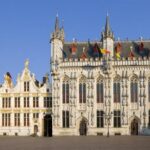
The walk continues through the area around Burg Square, where you get a mix of architectural styles. The Basilica of the Sacred Heart is highlighted here, and you also pass the 14th-century town hall.
This is a good reminder that medieval Bruges wasn’t frozen in one time period. The city developed over centuries, and the center reflects that layering. If you’re the type who likes seeing how different eras rub shoulders, this stop works well.
One more angle that I appreciate: this is where the tour helps you slow down. You start paying attention to proportions and façade details rather than just snapping pictures. That makes your later walk on your own much more rewarding, because you recognize what you’re seeing.
Saint Boniface Bridge and Notre Dame: small bridges, big atmosphere
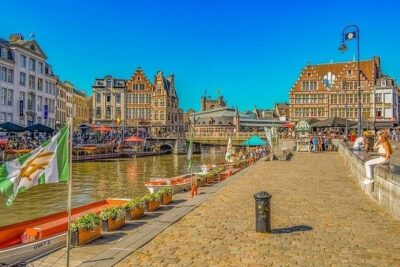
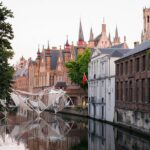
Then comes Saint Boniface Bridge—a point on the route that’s especially good for understanding Bruges’s canal-linked feel. Bridges in Bruges aren’t just crossings. They’re viewpoints and transitions between neighborhoods and perspectives.
After the bridge, you’ll circle the Church of Notre Dame de Bruges. This is one of those stops where a guide’s interpretation matters. Churches can blur together if you don’t know what to look for, but explanations help you notice the style, placement, and how the building relates to the surrounding streetscape.
If you like quieter moments in between big squares, this segment offers them. It’s not only about big monuments; it’s about the way the route moves you through the medieval city so you can feel the flow.
You can also read our reviews of more food & drink experiences in Bruges




Beguinage founded in 1245: a calmer kind of medieval Bruges
The tour then travels back in time to the Beginario (Beguinage), founded in 1245. This is one of the most meaningful parts of the route, because it shifts the focus from civic power to everyday community life.
Here’s what makes it special for visitors: the Beguinage adds context. Bruges wasn’t only merchants and councils—it had social spaces shaped by faith and community. When you arrive, it helps to keep your expectations flexible. The emotional tone changes. Instead of the big square energy, you get a more grounded, reflective pace.
Practical note: Beguinage areas can feel more delicate and residential than the main tourist core. Keep your voice down and take your photos, but don’t turn it into a photo frenzy. The best experience here is simply walking slowly and letting the setting work on you.
Minnewater, the Lake of Love: the walk’s gentle finish
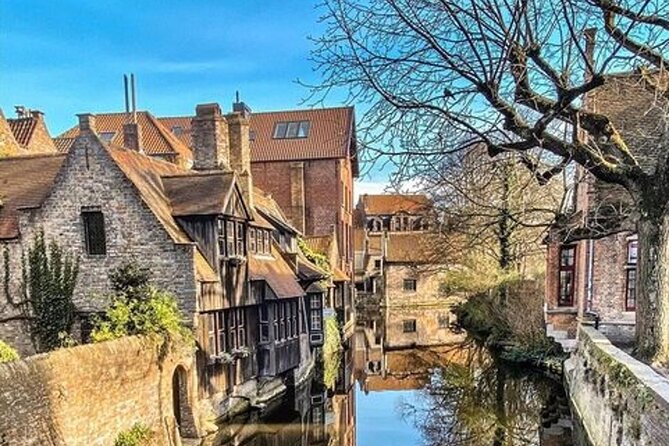
The tour ends at Minnewater, also called the Lake of Love. After a route packed with squares, towers, churches, and bridges, this finish is a nice reset. Water changes everything in Bruges. It cools the mood, adds reflections for your photos, and gives your feet a moment to breathe.
This is also a strong spot for you to extend your day. The tour ends back at the meeting point, so you’ll likely have time after to wander back through streets you didn’t catch on the guided segment. Minnewater is a natural anchor: once you’ve seen it, it’s easier to choose your next direction.
If you’re traveling in a group or with kids, this is where the energy often shifts from learning mode to enjoying mode. Even if you’re not a museum person, you can still feel why this place earned its romantic nickname.
Craft chocolate tasting: the sweet break that doesn’t feel random
The tour includes a craft chocolate tasting, and I’m genuinely glad it’s built in rather than tacked on at the end. A tasting works best when it fits the flow of the walk—right when you’re ready for a short pause, not when you’re already back at your hotel.
Even though the exact tasting details aren’t specified here, the value is clear: you get a real Bruges flavor moment connected to the tour. And at this price level, that sweet inclusion is part of why this experience feels like a good deal.
Tip for your comfort: wear shoes you can walk in for 2 hours. Bruges is famous for being pretty, but it’s also full of cobblestones. If you’re expecting museum-style comfort, you might be disappointed. Think outdoor walking comfort.
De Halve Maan Brewery: a look from the street
The route also includes De Halve Maan Brewery. In this kind of walking format, you should think of it as a sighting—something you see on the way rather than a full inside visit (unless the guide adds extra time, which isn’t guaranteed by the details provided).
Still, it’s a meaningful stop because it reminds you Bruges isn’t only medieval façades. It’s also living culture and local production. If you’re a beer lover, you might spot details or signage and feel like you’re connecting past and present.
If you want more than a street-level glimpse, consider pairing this tour with a separate brewery visit afterward. But as part of a 2-hour medieval walk, this stop plays a good supporting role.
Price and value of a $3 guided walk plus tasting
Let’s talk money, because $3 sounds almost too good to be true. In practice, what you’re buying is a short guided orientation plus a craft chocolate moment, with a small-group feel. And then there’s the note about a voluntary contribution to the guide—so the actual economics are likely that the base price keeps it accessible, while the tour quality is supported by what you choose to give.
For you, the key value question is simple: do you want structure while you walk? If you do, this is a strong offer. You’re getting help with navigation, pacing, and meaning behind the main medieval landmarks—without spending a fortune.
If you don’t care about historical context and you’re happy wandering solo with a map, you can still do this route on your own. But you’ll probably miss the “why.” And in Bruges, that’s often the difference between pretty photos and a real sense of place.
Who this tour fits best (and who might want to skip it)
I think this one works best for:
- First-time visitors to Bruges who want a guided thread through the medieval center
- People who enjoy a gentle pace and short stops
- Anyone who likes chocolate and wants it folded into the experience instead of added later
- Groups that want a small, controlled walking format (up to 20 people)
It may be less ideal if:
- You need an English-language guide. The tour is indicated as Spanish, so plan around that.
- You’re expecting long time inside buildings or a deep museum experience. This is a guided walk with stops, not an indoor marathon.
If you fall in the middle—curious but not hardcore—this is a great fit.
Small logistics that can make or break your day
A few practical things will help you get the most out of it:
- Meet near Market Square early. Bruges is crowded, and the start is in a high-activity zone. Give yourself a buffer.
- Keep your mobile ticket ready. It’s a mobile ticket experience.
- Plan for 2 hours of walking. Even with short stops, your time is on your feet.
- Bring a little flexibility. Cobblestones and pedestrian traffic can slow things down. The tour is designed for a casual pace, but your body needs to match the plan.
Also, service animals are allowed, and the meeting point is near public transportation. That makes it easier to fit into your travel day without a complicated route.
Should you book this medieval walk with chocolate in Bruges?
Yes, if you want an efficient, friendly introduction to Bruges that ends where the city feels calm and pretty. The combination of medieval landmarks (Belfort, Burg Square, bridges, churches, the Beguinage) plus an included craft chocolate tasting makes this one of those low-cost tours that can genuinely upgrade your day.
I’d book it especially if you like guided walking tours and you want help turning all those postcard streets into something you can explain later. Do the Spanish check first, though. If you can handle Spanish or you’re traveling with someone who can, great. If not, you may find the experience frustrating.
If you’re open to that small language trade-off, this is a smart value play for a first time in Bruges.
FAQ
What’s the duration of the Bruges medieval walk and chocolate tasting?
It lasts about 2 hours.
Where does the tour start and end?
It starts at Market Square (Markt), 8000 Brugge, Belgium and ends back at the same meeting point.
What’s included in the price?
The tour includes a craft chocolate tasting and a tour guide. A voluntary contribution to the guide is mentioned at the end.
Is there a mobile ticket?
Yes, it’s listed as a mobile ticket experience.
How many people are in the group?
The group has a maximum of 20 travelers.
What days and times does it run?
It’s listed as Monday through Sunday, 10:45 AM to 2:00 PM within the given date range.
What language is the tour offered in?
The tour is indicated as running in Spanish.