REVIEW · BRUGES
Private tour: From your hotel + see the Madonna of Michelangelo
Book on Viator →Operated by City Tours Belgium · Bookable on Viator
Bruges hits different from up high. This private 2-hour walk from your hotel desk pairs standout stops with smart context, ending at the Michelangelo Madonna you came for and lifting you onto the Belfort for big views. I love how the day mixes icons you already recognize with surprises that explain why Bruges looks the way it does.
The route is tight, but it’s paced well for a short visit: Romanesque to Neo-Gothic contrasts, a real beer story, and a quiet beguinage that feels like a reset button. One drawback to keep in mind: time is limited at each stop, and the Belfry’s 366-stair climb may be more of a commitment than you expect.
In This Review
- Key highlights you’ll actually feel in your feet and eyes
- A 2-hour private route that hits the city’s icons
- Belfort and the carillon: your best “first impressions” of Bruges
- Basilica of the Holy Blood: Romanesque below, Neo-Gothic above
- Gruuthusemuseum: wealth, turrets, and why beer used to be spicy
- De Halve Maan brewery: the smart plumbing that helped the city
- Ten Wijngaarde beguinage: a calm pocket inside the medieval city
- Onze-Lieve-Vrouwekerk: seeing Michelangelo’s Madonna in Carrara marble
- Price and value: what $108.02 buys you (and what it doesn’t)
- Pace, stairs, and one expectation to double-check
- Should you book this Bruges Madonna and Michelangelo tour?
- FAQ
- How long is the tour?
- Do you get hotel pickup?
- Is the tour private and in English?
- Are admissions included?
- What time does the tour start?
- What’s the cancellation policy?
Key highlights you’ll actually feel in your feet and eyes
- Belfort views (83 meters up) plus the carillon sounding every 15 minutes from 47 bells
- Michelangelo’s Carrara marble Madonna and Child at Onze-Lieve-Vrouwekerk, with admission included
- Holy Blood Basilica contrast: Romanesque lower chapel and a Neo-Gothic upper chapel
- Gruuthuse museum + Bruges beer economics tied to spice gruut before hops
- De Halve Maan’s underground pipeline idea that helps keep heavy trucks out of the center
- Ten Wijngaarde beguinage hush: white houses and a living community today
A 2-hour private route that hits the city’s icons
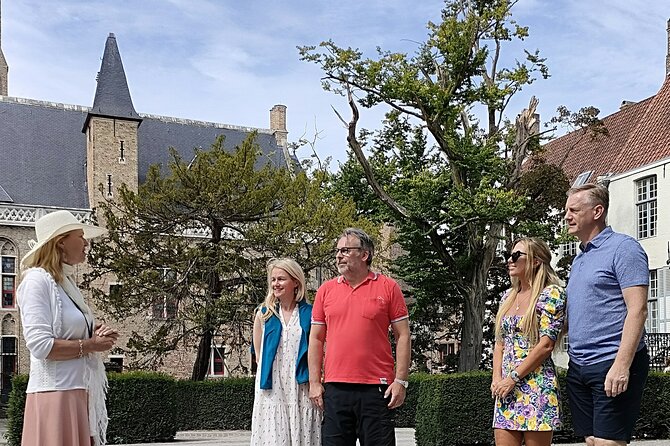
This is a private experience, so you’re not sharing the pace with a crowd. Your guide meets you at the hotel desk, and the tour runs in English, keeping the story clear and the timing realistic for a short stay. At about 2 hours, it’s designed to show you the key Bruges beats without forcing you into a full-day plan.
I like this length because Bruges rewards wandering, and you still get to keep your afternoon flexible. The tour also avoids the usual admin hassle: multiple sights have admissions handled, so you spend more time looking and less time queuing or figuring out which ticket is which.
The main trade-off is simply depth. You’ll get the essentials at each stop, but you won’t linger like you would on a museum-only afternoon. That’s fine if your goal is to see a focused highlights loop and then go back on your own for what grabs you most.
You can also read our reviews of more private tours in Bruges
Belfort and the carillon: your best “first impressions” of Bruges
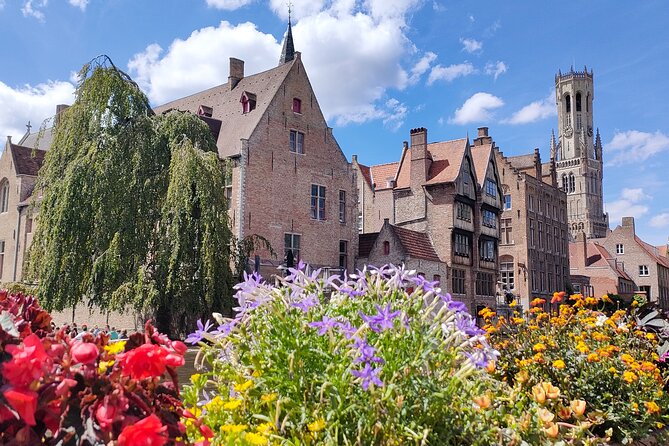
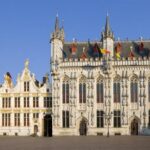
The Belfry of Bruges (Belfort) is the kind of place that instantly changes your mental map. It dates to the 13th century and rises to about 83 meters, protected as a World Heritage Site. And yes, you climb—366 stairs—because that’s where the magic is: a dramatic view over Bruges and the surrounding area.
What I find extra satisfying is the carillon detail. Every 15 minutes you can listen to the sound of the 47 bells. Even if bells aren’t normally your thing, it helps you “lock in” the city’s rhythm. It turns a one-time look from a viewpoint into a more memorable moment.
Practical note: the climb is the big physical commitment in the whole tour. The good news is you’re not doing it as part of a long, exhausting day, and your guide can help you plan your pace on the way up.
Basilica of the Holy Blood: Romanesque below, Neo-Gothic above
From the Belfort you shift into something more intimate and architectural. The Basilica of the Holy Blood is built with two chapels that feel like two different eras in one building.
In the lower chapel, you’re looking at Romanesque architecture with arched vaults. Inside, there’s also a bas-relief showing the Baptism of Christ. Then you move your attention upward to the relic of the Holy Blood, which is kept in the upper chapel. That upper space was redecorated in the 19th century in a Neo-Gothic style, so you get a clear contrast between the older structure and later redesign.
This stop is valuable because it teaches you how Bruges keeps layers. The city doesn’t only preserve old things; it also reinterprets them across centuries. If you like that idea, you’ll appreciate this chapel more than a quick “look and move on.”
The only consideration: the time you have here is limited, so focus on what you want to remember—architecture in the lower chapel, then the relic space and Neo-Gothic look upstairs.
Gruuthusemuseum: wealth, turrets, and why beer used to be spicy
The Gruuthusemuseum stop works well because it explains a local business model using objects and stories, not vague trivia. You’ll see the palace of the lords of Gruuthuse with its three turrets—an outward sign of the family’s wealth.
Here’s the Bruges detail that sticks: the family made a fortune through gruut, a spice mixture used to make beer. Later, in the 15th century, gruut was replaced by hops. The twist is that the Gruuthuse family could still levy taxes on every barrel of beer sold in the city. So even when the recipe changed, the money machine stayed in motion.
That’s the kind of story that makes a stop feel like more than sightseeing. You start noticing how economic power shows up in buildings. And once you understand the gruut-to-hops shift, the city’s love of beer culture feels less random and more like a long-running tradition.
The downside is the short visit. You’ll see the essentials and the key explanations, but this isn’t the place to spend a full museum afternoon.
De Halve Maan brewery: the smart plumbing that helped the city
Next you’re in beer country, but with a practical twist. De Halve Maan Brewery is famous for a system that surprises people at first glance: an underground pipeline that moves beer from the brewery to the bottling plant outside the city.
Why does that matter? It helped keep heavy trucks out of the city center. That’s a modern-sounding solution, but it has old-city logic: the tighter the streets, the more the system design matters. So even if you don’t do a full tasting here, the idea itself is worth your attention.
This stop also adds variety to the tour. After churches and palaces, you’re suddenly thinking about infrastructure. It’s a reminder that Bruges didn’t become Bruges by accident; it shaped how goods and people moved.
One thing to set expectations: based on the tour structure, you’re not here for a long brewery session. You’re here to understand the setup and connect it back to the city’s layout.

Ten Wijngaarde beguinage: a calm pocket inside the medieval city
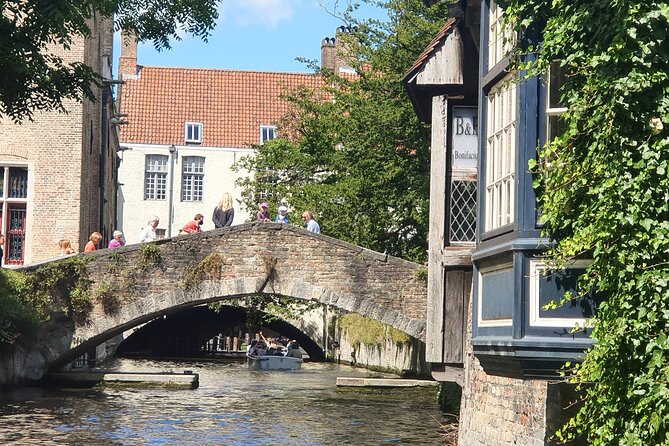
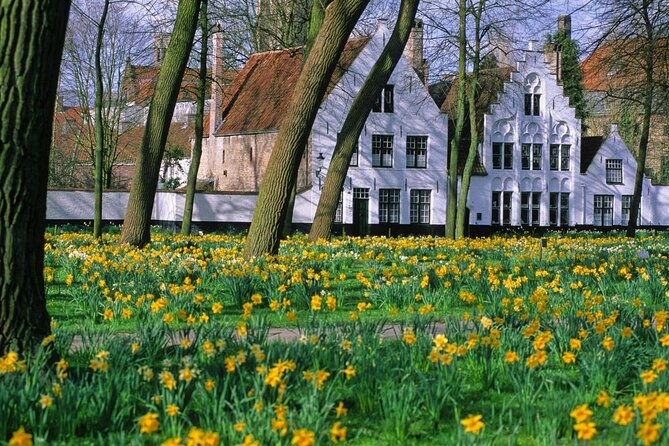
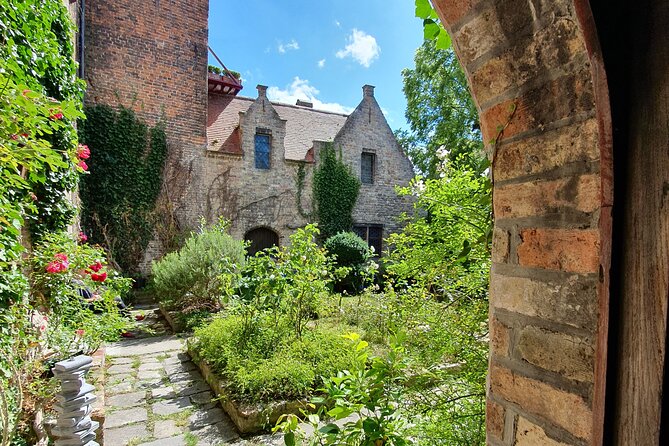
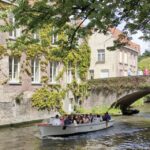
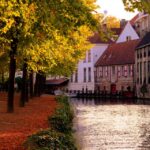
The Princely Beguinage Ten Wijngaarde is the pause you didn’t know you needed. It’s described as an oasis of silence surrounded by white houses, and even on a busy travel day it can feel like the tour volume drops.
This is a world heritage site, and the living aspect is part of what makes it real. Beguines were emancipated lay-women who lived devout and celibate lives. Today, the community is inhabited by five nuns of the Order of St. Benedict and single women.
That means you’re not only looking at an old place. You’re looking at an old social structure that still has a present-day role. I like that it doesn’t feel like a theme park. If you’re even slightly curious about how European religious life evolved outside traditional convent structures, this stop delivers.
Time here is also limited, so let it do its job: slow your pace, look at the quiet geometry of the houses, and absorb the atmosphere before moving on.
Onze-Lieve-Vrouwekerk: seeing Michelangelo’s Madonna in Carrara marble
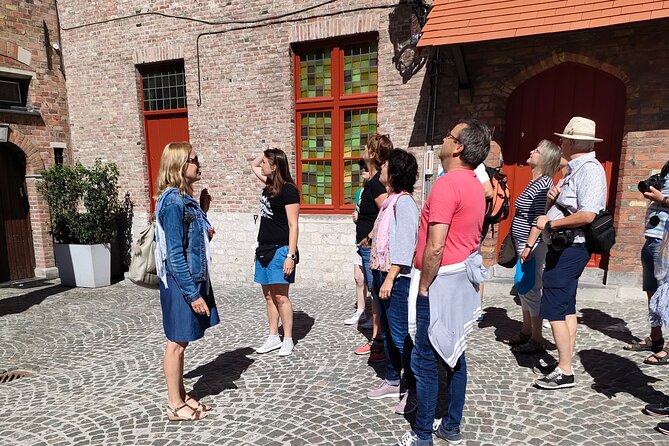
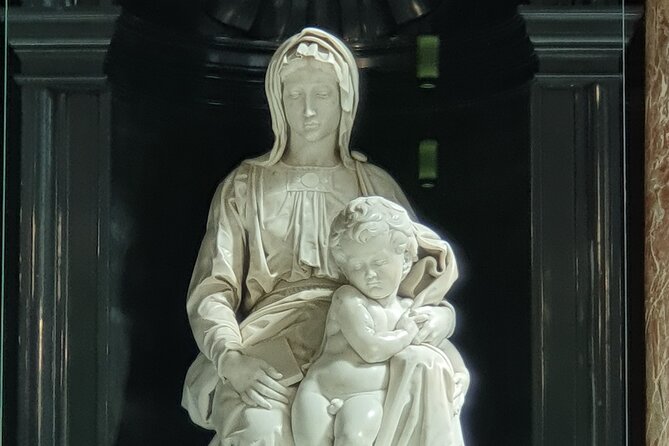
Now for the stop that turns this tour from a “nice overview” into a must-do: Onze-Lieve-Vrouwekerk, the Church of Our Lady. The church dominates Bruges’ skyline, and it’s framed here as the high point of stonemason’s art in the city.
Inside, one art treasure is the Carrara marble Madonna and Child created by Michelangelo. This is the Michelangelo connection, and it’s the reason many people book the whole route rather than just coming to the church on their own.
The practical advantage is that admission is included for this stop, so you can spend your energy on the experience itself. And because the tour moves in sequence, you arrive with context: you’ve already seen how Bruges mixes eras, stories, and styles. That makes the sculpture feel sharper and more grounded.
If you care about art, don’t rush your viewing time. A statue like this changes when you stop treating it like a checklist item.
Price and value: what $108.02 buys you (and what it doesn’t)
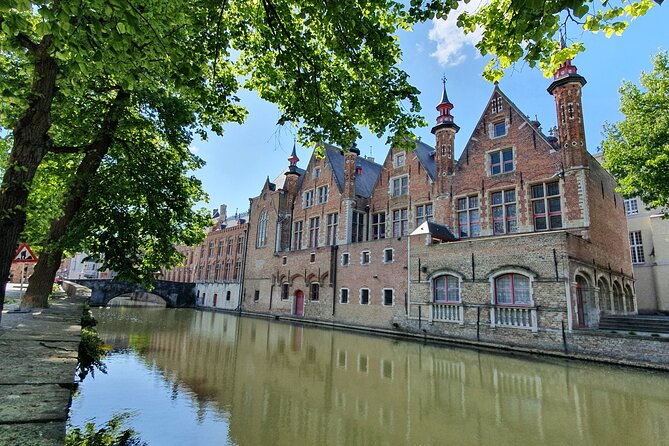
At $108.02 per person for about two hours, this tour is priced for people who want guidance plus time efficiency. You’re paying for more than walking between sights. You’re paying for someone to connect the dots quickly: why the Belfry matters, how chapels evolved, what Gruuthuse wealth was based on, and how the brewery’s underground pipeline fit into city life.
The value strengthens because multiple admissions are listed as free across the route, and the Madonna stop’s ticket is included. That reduces your on-the-ground friction. Instead of spending your mental energy on logistics, you’re spending it on landmarks.
What you should not expect at this price and time: a deep, hour-by-hour museum experience at each location. It’s a highlights format. If you want to read every plaque and soak in every gallery, you may want to use this tour as your opener, then go back later where you feel the strongest pull.
Pace, stairs, and one expectation to double-check
Two things can make or break the experience for you.
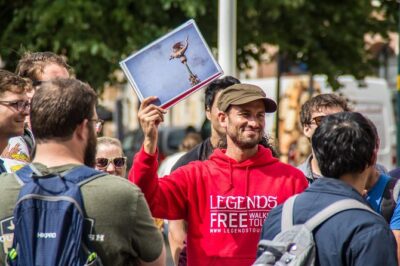
First is the pace. This is a private tour, which helps. In one example, guide Frank was described as engaging and as adjusting to the group’s walking needs, even walking slowly when needed. That’s exactly what you want in a compact itinerary.
Second is the Belfry climb. 366 stairs isn’t “maybe later” physically. If you know stairs exhaust you, talk with your guide early so you can plan around it.
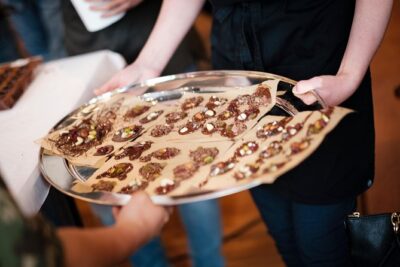
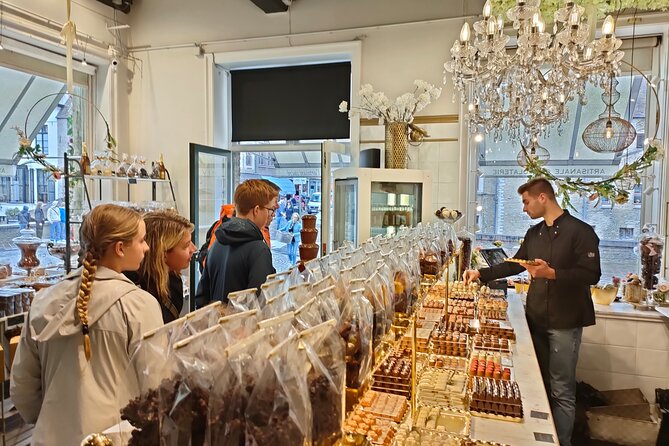
Lastly, there’s one small caution about expectations: the tour may not include a chocolate tasting even if that’s been mentioned in some contexts. If you’re counting on chocolate, confirm clearly before you go. This keeps you from arriving with hopes that the schedule can’t fulfill.
Should you book this Bruges Madonna and Michelangelo tour?
If you want a smart first visit to Bruges with a strong art anchor, I’d book it. The combination works: Belfort gives you immediate city scale, the Holy Blood teaches architectural layering, and Michelangelo’s Madonna gives you a true “I’m here” moment. Add in the beguinage hush and the brewery logistics, and you get a balanced snapshot that doesn’t feel one-note.
Book it especially if:
- you have a short window (about 2 hours) and want high impact
- you care about Michelangelo and want the admission handled
- you like explanations that connect buildings to local life
Skip it or pair it with extra time if:
- you’re looking for long museum-style stays at one or two sites
- you want a guaranteed chocolate tasting as part of the plan
- you strongly dislike stair climbs, since the Belfry involves 366 steps
If Bruges is your priority and you want the Madonna without the hassle, this is a solid way to start. Then you can roam the streets on your own with a better sense of what you’re looking at.
FAQ
How long is the tour?
It’s listed as about 2 hours.
Do you get hotel pickup?
Yes. Your qualified guide meets you at the hotel desk.
Is the tour private and in English?
Yes. It’s a private tour/activity with only your group, offered in English.
Are admissions included?
Admission tickets are listed as free for the Belfort, Basilica of the Holy Blood, Gruuthusemuseum, De Halve Maan Brewery, and Ten Wijngaarde Beguinage. The stop at Onze-Lieve-Vrouwekerk (including the Madonna) is marked as admission included.
What time does the tour start?
The start time is 10:00 am.
What’s the cancellation policy?
Free cancellation is available up to 24 hours in advance for a full refund. If you cancel less than 24 hours before the start time, the amount paid is not refunded. The tour can also be canceled if a minimum number of travelers isn’t met, in which case you’ll be offered a different date/experience or a full refund.