REVIEW · GHENT
Ghent Walking Tour with Audioguide on Your Smartphone
Book on Viator →Operated by TouringBee · Bookable on Viator
Ghent begs you to walk. This self-guided smartphone tour uses an audio app, an offline map, and landmark illustrations so you can wander at your own speed through classic Ghent sights without waiting on a group. I like that it supports your timing and attention: you can pause, replay, and even skip items you do not care about. The route starts at St Michael’s Bridge and ends right back where you began, so it feels like a loop instead of a one-way hike.
I also like the practical audio setup: you get 31 recordings in English, plus an app map that helps you stay oriented. And since there is no human guide, you are not stuck listening to a script when your feet are itching to move. One possible drawback is simple but important: you need your own smartphone and headphones, and the app has to download before you start.
In This Review
- Key highlights you’ll feel fast
- Why this smartphone audio tour fits Ghent so well
- Your 3-hour route: bridges, markets, castles, and church towers
- St Michael’s Bridge: the perfect frame for Ghent
- Grasbrug Bridge and the Leie: medieval mechanics and river views
- Old Meat Market Hall and Groentenmarkt: markets where stories still matter
- Gravensteen Castle: dungeons, battlements, and the big views
- Rabot Gatehouse: the medieval sentinel with a modern neighborhood
- Patershol and Vrijdagmarkt: cobblestones, guild squares, and church spires
- Graffiti Street (Werregarenstraat): street art in an old city
- St Bavo’s Cathedral, Ghent’s Belfry, and two more churches
- What’s included for $8.42 (and what costs extra)
- Should you book this Ghent audio walk?
Key highlights you’ll feel fast
- Offline map + GPS route so you can keep moving even without constant cell service
- 31 audio recordings covering the sights and the city’s story in English
- Landmark illustrations that help you recognize places at street level
- Small-scale experience with a max of 20 travelers listed for the activity
- Turn up your curiosity: you can skip stops or visit them in your own order as you go
Why this smartphone audio tour fits Ghent so well
Ghent rewards slow walking. The city center is full of canals, stone facades, and tight streets where a quick glance turns into a second look. A self-guided audio format works because it lets you match the story to what you are actually seeing right now, instead of hearing it half a block later.
You are also paying for more than narration. The package includes an app for iPhone and Android, an offline map with the route, and 1 year of access in your chosen language. That matters because it means you can reset your route on the fly (or revisit later) without paying again.
At $8.42 per person for around 3 hours, this is strong value if you are comfortable using your phone while walking. If you prefer a live guide to answer questions, or you hate managing audio and directions, you might feel more friction than payoff.
You can also read our reviews of more walking tours in Ghent



Your 3-hour route: bridges, markets, castles, and church towers
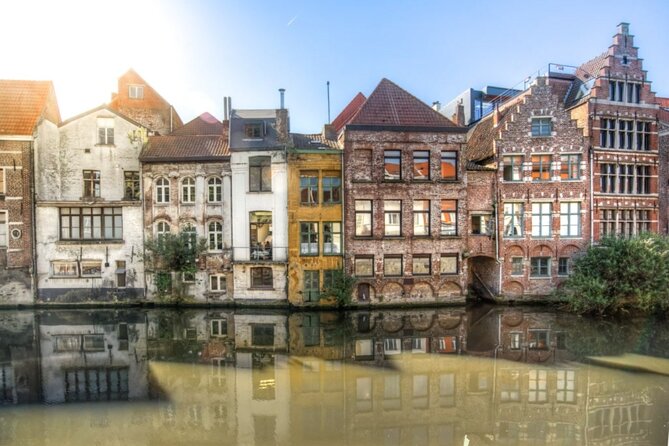
The walk is about 3 hours, with transfers of roughly 10 to 15 minutes between stops. That spacing is realistic for Ghent: you get enough time to move between highlights, but you are not stuck doing hour-long stretches with nothing to look at.
You start at St Michael’s Bridge (Sint-Michielsplein, 9000 Gent). From there, the route focuses on the Leie River area, the historic market core, and the medieval fortress viewpoints—then finishes back near the starting point. The app map guides you stop to stop, but you are not locked into a rigid pace. That flexibility shows up in the feedback too: people like being able to walk in their own order and skip what they do not want.
Practical tip: before you set off, make sure you have the audio app ready and that the tour is activated. If audio or downloads fail, you will lose time. One helpful detail from support-based feedback: if something does not download, contacting TouringBee at [email protected] is the right move.
St Michael’s Bridge: the perfect frame for Ghent
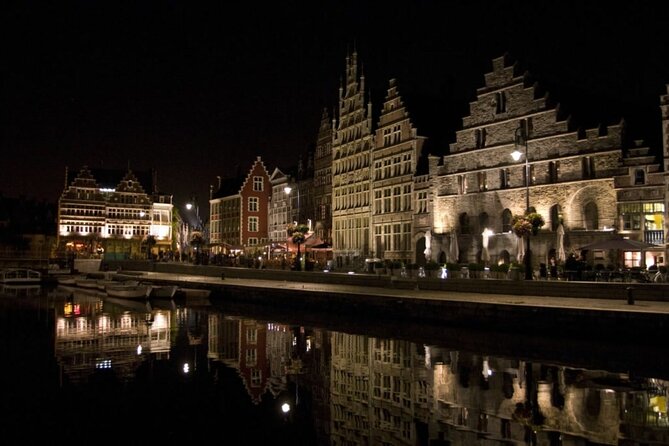
This is a strong start because St Michael’s Bridge is made for photos and for first impressions. You get a postcard view of the medieval waterfront, with the canal setting and key landmarks nearby. The audio here helps you connect what you see—castle silhouettes, church forms, and the city’s historic layout—so the rest of the route feels less random.
You’ll likely linger at this first viewpoint longer than you planned. That is not a problem. Early time spent here pays off later because you start recognizing buildings as you pass them.
Where it can fall flat: if you want your first 10 minutes to be mostly indoors or mostly quiet, a bridge viewpoint is still outdoors and still a public spot. Plan for normal foot traffic.
Grasbrug Bridge and the Leie: medieval mechanics and river views
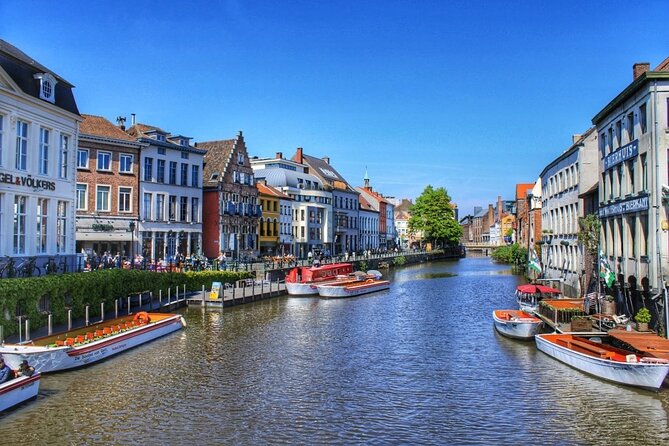
Next up is Grasbrug Bridge, a drawbridge crossing the Leie River and linking the Graslei and Korenlei embankments. The drawbridge angle is a good choice for an audio tour because it is one of those places where a little explanation changes everything. You are not just looking at scenery—you are seeing medieval engineering in action.
From here, you naturally move along the riverfront rhythm: look, listen, then walk. If you like architectural details, this leg is satisfying because you are surrounded by historic guild-house style facades along the water.
Practical consideration: bridges can be windy. If you hate that, bring a light layer even in mild weather.
Old Meat Market Hall and Groentenmarkt: markets where stories still matter
Ghent’s market area is where the city’s past shows up in daily life.
Old Meat Market Hall has medieval bones but modern energy. The audio points out the architecture, then transitions to what you can find there today: trendy food stalls and artisanal shops. Even if you do not plan to eat, the hall is worth stopping for because you can see the contrast—old structure, modern use—without needing a long museum visit.
Then comes Groentenmarkt, the historic vegetable market square. This is less about a single landmark and more about atmosphere: historic buildings around you, cafes nearby, and the feeling of a real neighborhood center. The audio helps you anchor the place in time so it does not feel like just another pretty square.
Possible drawback on this part of the route: market areas can be busy. If you want silence, choose your pacing. Use the app to time your pauses, and do not force long detours inside shops if crowds are thick.
You can also read our reviews of more tours and experiences in Ghent

Gravensteen Castle: dungeons, battlements, and the big views
Gravensteen Castle is the tour’s main “wow for history” stop, even if you treat it as a quick walk-through from the outside first. The audio focuses on what makes this medieval fortress special: dark dungeon areas, the battlements you can climb, and panoramic views from higher ground.
This is also where you need to think about entrances. Entrance fees and tickets are not included in the price, so if you want the full castle experience (dungeons and tower-like viewpoints), budget for tickets separately. Still, even a partial visit is useful because the audio sets you up to understand what you are seeing.
Who this stop suits best: anyone who likes medieval power displays, stone fortifications, and learning how cities defended themselves.
Rabot Gatehouse: the medieval sentinel with a modern neighborhood
After the castle, the route moves to Rabot, a medieval gatehouse. The audio frames it as a historical sentinel—once a toll gate, now a symbol of Ghent’s resilience. What I like about this stop is that it is not just “look at old stone.” It also helps you notice the surrounding neighborhood life, so the gatehouse feels connected to the present instead of frozen in time.
This is a great breather stop if you are getting museum-fatigue. You can spend a few minutes understanding the structure, then continue walking while it stays fresh in your mind.
Patershol and Vrijdagmarkt: cobblestones, guild squares, and church spires
Next you move into the neighborhoods and squares that make Ghent feel like a movie set—without pretending it is staged.
Patershol is the historic quarter with cobblestone lanes and colorful houses. The audio encourages you to slow down for details like the tucked-in squares and side garden pockets, plus the mix of boutiques and cozy places to eat. It’s a stop that works best when you let your feet wander a bit after you get the explanation.
Then you hit Vrijdagmarkt, a lively market square with a historic backdrop. The audio highlights what to notice around you: the Belfry and St. Nicholas’ Church in the same visual field, plus guild-house style buildings and cafes. This area is especially useful because it gives you multiple references points at once. You start mapping the city in your head.
Small note: because these squares are active, you might feel tempted to stop for a drink. That is fine. Just remember the tour is built for about 3 hours, and extra food time will stretch your day.
Graffiti Street (Werregarenstraat): street art in an old city
Werregarenstraat, commonly called Graffiti Street, brings a modern edge to the route. The audio treats it like an ever-changing gallery, with colorful murals by local and international street artists.
I like including this kind of stop on a historic walking tour because it reminds you Ghent is alive now, not only preserved. It also gives your eyes a break from church stone and castle grit.
Practical tip: street art locations can change over time. Use the audio stop as a prompt to look for the style and message, not only for a single famous piece.
St Bavo’s Cathedral, Ghent’s Belfry, and two more churches
This final stretch is the “vertical thinking” part of Ghent: big Gothic architecture and the towers that let you see the whole city.
At St. Bavo’s Cathedral, the audio focuses on its Gothic grandeur and the standout artwork—the Mystic Lamb altarpiece by the Van Eyck brothers. If you care about art, this is one of the most meaningful parts of the walk. If you do not, it is still worth stopping because the scale of the building changes how you perceive the streets around it.
Then you move to Ghent’s Belfry, a UNESCO-listed tower. The audio encourages you to look for the dragon weathervane and the carillon melodies, and it also notes the tower climb: 300 steps for panoramic views. Again, entrances are not included, so consider ticket costs if tower access is on your list.
Two churches round out the religious stops:
- St. Nicholas’ Church: the audio points out its intricate facade and the chance to step inside for medieval beauty.
- St Michael’s Church: the audio frames it as a calmer Gothic refuge, with stained glass, an altar, and a more peaceful feel than the busier streets.
Why this works as an audio tour: each stop gives you a slightly different angle—art, civic power, facade detail, and quiet interior atmosphere—without requiring you to learn everything at once.
What’s included for $8.42 (and what costs extra)
Let’s talk value in plain terms. You pay $8.42 per person and get:
- Mobile ticket
- Audio guide app for iPhone and Android
- Offline map with the route
- 31 audio recordings in English
- Illustrations to help you recognize landmarks
- 1 year access to the tour in your preferred language
What you do not get:
- Transportation
- A human guide
- Smartphone and headphones
- Food and drinks
- Entrance fees/tickets
That last point matters because some of the biggest “in” attractions here (like castle interiors and tower climbs) may require paid access. You can still enjoy a lot of the route without paying additional ticket fees, but if you want the full experiences inside places, budget for it.
Battery and downloads: for a smooth day, charge your phone. Keep brightness moderate. And, before you leave, verify that you can open the tour audio. If you hit trouble downloading, you have support via [email protected].
Also, the audio is available at the time you choose during checkout (with times listed as approximate). In other words, you are not locked into a strict guided start time, which is a nice feature for real-world travel.
Should you book this Ghent audio walk?
Book it if you want an affordable way to understand Ghent while you walk. This is especially good for:
- first-time Ghent visitors who want a simple route that hits the classics
- people who like setting their own pace and skipping what does not interest them
- travelers who can manage a smartphone app while walking
Skip or think twice if:
- you expect a live guide who answers questions on the spot
- you do not want to handle downloads, offline maps, and your own headphones
- you hate stepping into places where additional entrance tickets may apply
If you fall in the first group, this tour is a good deal. You get meaningful audio help, practical navigation, and a loop that connects medieval bridges, market squares, fortress viewpoints, and major churches into one coherent walking day.