REVIEW · LIEGE
e-Scavenger hunt Liège: Explore the city at your own pace
Book on Viator →Operated by Qula · Bookable on Viator
Smartphone-led Liège turns sightseeing into a game. This self-guided e-Scavenger hunt uses GPS to get you from one landmark to the next with question-and-search challenges that keep your eyes busy. I especially like the freedom to start, stop, or pause whenever you want, and I like that the route mixes big sights with smaller corners so you don’t feel stuck in one long walking line. One drawback: if you run into app issues or need to reschedule on short notice, support responsiveness may be inconsistent based on prior feedback.
You’ll “play” your way through central Liège with a simple setup: log into a free city game app, follow the prompts on your phone, and let the device guide you to each stop. It’s family-friendly in tone, and it’s designed to work for groups (up to 6 people) because everyone can follow along on their own phones.
Before you go, the biggest consideration is also the easiest to miss: you’ll need your own smartphone and mobile data. If you show up with a dead battery or no signal, the game part slows to a crawl.
In This Review
- Key things to know before you go
- Why this Liège e-Scavenger Hunt feels different from a tour
- Price and value: $36.93 per group (up to 6 people)
- What you actually need: mobile ticket, smartphone, and data
- The route in plain walking terms: 20+ stops you can pace yourself through
- Stop 1 to Stop 5: Place Saint-Lambert, City Hall, St. Paul’s, Opera, and St. Antoine
- Stop 6 to Stop 10: Curtius Museum, Citadelle slopes, St. Jacques, Montagne de Bueren, St. Bartholomew
- Stop 11 to Stop 16: Liège-Guillemins station, Brasserie C, Marche de la Batte, La Boverie, park time, and the Palais
- Stop 17 to Stop 21: Pont de Fragnée, Place du Marché, Georges Simenon, Le Carré, and the Notre-Dame church
- Stop 22 to Stop 23: St. Paul’s again, then Le Pot au Lait to finish
- Timing tips to make the 3 hours feel effortless
- How accessibility and group size play out in real life
- The mixed feedback angle: when self-guided can be harder
- Who should book this (and who might prefer a guided tour)
- Should you book the e-Scavenger hunt Liège?
- FAQ
- How long is the e-Scavenger hunt in Liège?
- How much does it cost?
- Is it a guided tour with a person?
- Where does the tour start?
- What do I need to participate?
- What if I want to start later or pause?
- How do I find the places if I’m walking around?
- Is it private for my group?
- Can I cancel for a full refund?
Key things to know before you go
- Self-guided pacing: you control when you start and how long you stay at each stop
- GPS navigation: the app helps you find squares, streets, and monuments
- A mix of landmark types: cathedrals, churches, a museum stop, a park area, and train-station surroundings
- Group-friendly price: pay per group (up to 6), not per person
- Built for accessibility needs: user-friendly for hearing impaired, and service animals are allowed
Why this Liège e-Scavenger Hunt feels different from a tour

This isn’t a sit-and-listen walking tour. It’s a city trail you play through. You move when you want, and the app gives you a reason to stop and look closely. That matters in a place like Liège, where famous landmarks can feel obvious from far away, but the details take time.
Here’s the rhythm: you reach a named spot, then you answer questions about what you’re seeing and complete small search tasks. The app format also nudges you to slow down at each location, which is where the fun tends to happen. Instead of “Did you get your photo?” it becomes “Can you spot what the game wants you to find?”
Two other things make the experience easier on your day. First, the tour is designed as family-friendly, so it’s not overly complicated. Second, it’s also described as a perfect choice for larger groups—because you can keep everyone together without needing one guide to herd people down narrow streets.
The possible downside is also tied to the same setup: if your group is expecting a traditional guide to handle timing, reroutes, or quick explanations, the app format won’t do that for you. You’ll be the one steering.
You can also read our reviews of more city tours in Liege



Price and value: $36.93 per group (up to 6 people)
At $36.93 per group for up to 6 people, this can work out very affordably if you fill the group slots. If you have the full six, you’re looking at about $6.15 per person for roughly 3 hours of GPS-guided gameplay.
That value comes from what you’re getting for the money: a ready-made route through central Liège, a smartphone-based “mission” layer (questions and search assignments), and a mobile ticket. It’s not just directions; it’s directions plus a reason to pay attention at each landmark.
If you’re coming as a solo traveler or a pair, it can still be a good deal if you genuinely like self-guided activities. But if you want a lot of human interaction or detailed storytelling in real time, you might feel like you’re paying for navigation plus a quiz, not for a guide.
What you actually need: mobile ticket, smartphone, and data
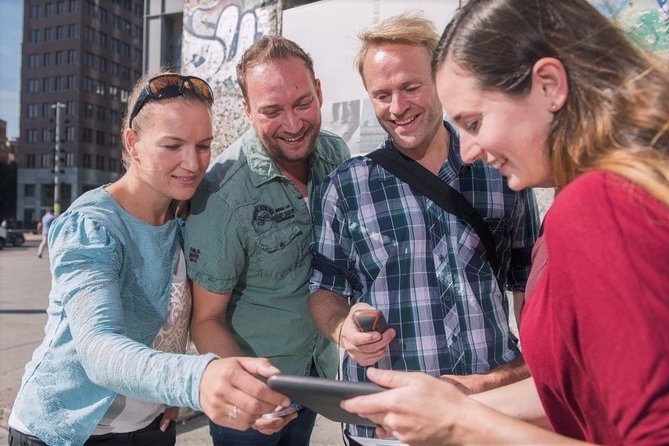
Here’s the practical setup. After booking, you’ll receive instructions for how to start the game. The experience is available anytime you choose during the day window (listed as 12:00 AM to 11:59 PM), so you’re not stuck at a specific tour departure.
You’ll need to use the free city game app on your smartphone, then follow the GPS prompts to reach each stop. Your ticket is delivered as a mobile ticket, so plan on having your phone ready to show it if the app requires it.
What’s not included is the big thing to plan for: smartphone and data. Bring a charger if you tend to use your phone heavily for navigation. Also, check that your mobile data plan works in Liège; otherwise, the GPS-driven game can become more trouble than it’s worth.
Finally, this is a private activity limited to your group, which is great if you don’t want to share a route with strangers.
The route in plain walking terms: 20+ stops you can pace yourself through

The game route runs from Place Saint-Paul (Pl. Saint-Paul, 4000 Liège, Belgium) and returns you back to the same starting point. With about 20–23 stops, you’re covering a broad slice of central Liège, not just one small neighborhood.
The pacing is the real secret. You can pause. You can hang out longer at a spot you like. And you don’t have to rush because there’s no set meeting time once you’ve started. That flexibility is especially helpful if you’re stopping for snacks or if your group moves at different speeds.
Below is what you’ll encounter, stop by stop, and what each area is likely to feel like during a game-style trail.
Stop 1 to Stop 5: Place Saint-Lambert, City Hall, St. Paul’s, Opera, and St. Antoine
You kick off at Place Saint-Lambert. This is a strong start because you’re in an open square area, which makes it easier to reset your bearings before the app starts pushing you through tighter streets.
Next up is Liège City Hall. In a self-guided hunt like this, city hall stops often work well because they’re easy to recognize, and they give the app something solid to base questions on. Take a moment before you move on—your best scores usually come when you’re willing to look up and not just walk past.
Then you reach St. Paul’s Cathedral. Since St. Paul’s also appears later on the route, the first visit works like an orientation anchor. You’ll get a chance to experience the cathedral area once early, then return again closer to the end.
After that comes Opera Royal de Wallonie-Liege. This kind of stop usually brings a shift in mood: from civic and religious spaces to a cultural landmark. If your group likes architecture and signage, this is a good place to slow down.
Finally, you’ll hit Eglise Saint-Antoine et Sainte-Catherine. Church stops are part of what gives this trail its “cover a lot of Liège quickly” feel. Just remember: religious buildings can have quiet zones and rules about behavior, so keep your phone use respectful.





Stop 6 to Stop 10: Curtius Museum, Citadelle slopes, St. Jacques, Montagne de Bueren, St. Bartholomew
At Musee Curtius (Curtius Museum), you’re entering a cultural stop that typically fits the game format well. Museums can be a nice payoff point because the app’s question-and-search tasks feel more logical when you’re in a place designed for information.
Next is Coteaux de la Citadelle. Even without special knowledge, this stop tends to feel like a change in terrain or neighborhood character. It’s a good point to check that your shoes are up to the day, because this is where many walking routes start asking a bit more of your legs.
You then reach Eglise St-Jacques. This adds another “look closely” moment. If your group enjoys comparing details across churches, this is where the trail starts to feel like a mini challenge rather than a checklist.
Then comes Montagne De Bueren. The name suggests a climb, and you should be ready for that effort level. If you’re traveling with kids, go into this section with the mindset that you may want shorter breaks so the game stays fun, not exhausting.
Stop 10 is Eglise St-Barthelemy (Church of St. Bartholomew). This is another religious stop that’s ideal for the app format: landmarks like this make it easier to find what the game wants you to spot, instead of relying on vague directions.
Stop 11 to Stop 16: Liège-Guillemins station, Brasserie C, Marche de la Batte, La Boverie, park time, and the Palais
You’ll move to Gare de Liege-Guillemins next. A train-station setting can be busy and noisy compared to squares and church exteriors. It can also be practical: if you need to grab water, use restroom facilities, or step out of the crowd for a minute, a station stop can make life easier.
After the station, there’s Brasserie C. Since the trail is only about 3 hours total, this kind of stop is often a natural moment to take a short snack or drink break—especially if you’re walking with kids or a mixed group.
Then you arrive at Marche de la Batte. Market-area stops tend to be visually stimulating, which helps a game like this. If you can time it near peak activity, it often makes the “search” parts more fun. If it’s quieter, it still works because you’re not relying on a crowd for anything to be visible.
Next up is La Boverie followed by Parc de la Boverie. This is where the trail’s pace can reset. Parks give you that moment of breathing space, plus the app tasks are usually easier when you have room to stop, read, and check details without blocking foot traffic.
Stop 16 is Palacio de Los Principes-Obispos. This adds a historical-flavored landmark to the later-middle portion of the route. It’s also a nice contrast after the park stops: you go from green space back into a more “look at a landmark façade” kind of challenge.
Stop 17 to Stop 21: Pont de Fragnée, Place du Marché, Georges Simenon, Le Carré, and the Notre-Dame church
You then cross into Pont de Fragnee. Bridge stops tend to be useful for navigation games because you get a clear visual structure to find and a natural route to follow afterward. It’s also a good pause point to take a quick group photo before moving on.
After the bridge, you reach La Place du Marche. This is another open, “center of action” style stop. Even if you’re not shopping, places like this give the game a lively backdrop, which can keep motivation up in the back half of the trail.
Next is the Statue de Georges Simenon. A statue stop can be surprisingly effective for a self-guided hunt because it’s a fixed point and easy to recognize. It also breaks up the pattern of churches and civic buildings so your eyes don’t get tired.
Then you arrive at Le Carre. This name suggests a distinct urban area, and it functions well as a game checkpoint. I like these mid-route “area” stops because they keep the trail from feeling like one endless line of single buildings.
Stop 21 is Eglise Notre-Dame-de-l’Immaculee-Conception. By now, you’ve seen multiple churches, so you’ll probably notice how different each one feels. This is also where you can slow down and do a careful comparison if your group likes that kind of challenge.
Stop 22 to Stop 23: St. Paul’s again, then Le Pot au Lait to finish
Stop 22 returns you to St. Paul’s Cathedral. A repeat stop can sound odd, but it often works in these games because it gives you a final anchor before the closing section. It’s like a second look, with a new “task mindset” rather than just passing through again.
Your final stop is Le Pot au Lait, and from there the activity ends back at the meeting point. This finish point is useful because it typically gives you an easy last moment to refuel or simply relax before walking back through the same area you started in.
Timing tips to make the 3 hours feel effortless
The tour is listed as about 3 hours, but self-guided means your time can stretch or shrink. Here’s how I’d manage it so it stays fun, not frantic.
- If you’re going at a busy time of day, expect some stops to take longer than you plan. Open squares and station areas can create extra foot traffic.
- Use the app pacing: if a stop feels like it’s taking too long, pause and move on. The game is more enjoyable when you don’t get stuck.
- For the hills or climb-like sections (like Montagne De Bueren and the Citadelle slopes area), build in shorter breaks. You’ll enjoy the rest of the route more if you don’t spend the entire trail “playing catch-up.”
If you’re traveling with kids or anyone who gets tired, plan to spend less time at each stop and treat it like a series of mini challenges. If you’re traveling with adults who like photos and details, slow down and let the GPS prompts be a reason to stop and look.
How accessibility and group size play out in real life

This activity is designed as private, limited to your group, with a max size of 6 people per group. That’s a good sweet spot: large enough that the game can be playful and collaborative, small enough that you don’t lose people in the flow.
It also notes it’s user-friendly for hearing impaired. Because you’re relying on a smartphone app rather than a live spoken guide, that setup can work nicely for people who prefer visual cues.
Service animals are allowed, and the start/end area is listed as near public transportation. If you’re combining this with other plans in Liège, it’s handy to know you’re not committing to a remote pickup location.
The mixed feedback angle: when self-guided can be harder

The overall rating is 3.8 from 16 reviews, with clear positives and at least one notable complaint. The most practical lesson from that negative side is about dependence on communication. If your schedule is fragile and you might need changes, don’t assume the organizer will instantly handle last-minute adjustments.
For a smoother day, treat this as a self-run activity. Test your phone before you start, bring a charging option, and plan a flexible window. That way, you’re not relying on external support to keep the day on track.
Who should book this (and who might prefer a guided tour)
This e-Scavenger hunt is a strong match if you want:
- a self-guided way to see central Liège without tight timing
- a route that mixes major landmarks with church and park stops
- a game format that keeps kids and adults engaged in the same walk
- a value-friendly activity when you can fill a group up to 6
It may be less ideal if you want:
- deep, spoken storytelling from a human guide at every stop
- a fully guided experience that automatically adapts to your schedule
- a low-dependency plan (because you need your phone and data)
Should you book the e-Scavenger hunt Liège?
I’d book it if you like city walks that feel like a challenge instead of a lecture. The combination of GPS navigation, a clear list of landmark stops, and the ability to pause and control your pace makes it easy to fit into a day in Liège.
Before you commit, do two quick checks. First, make sure your phone battery and data plan are ready for roughly 3 hours of active use. Second, if your group might need schedule changes, build in extra time so you can keep the game moving even if you can’t get outside help quickly.
If those boxes are checked, this is one of those rare city activities where you walk the sights and you also do something with your attention—so you leave with a better sense of Liège’s layout, not just photos.
FAQ
How long is the e-Scavenger hunt in Liège?
It takes about 3 hours.
How much does it cost?
It’s $36.93 per group, up to 6 people.
Is it a guided tour with a person?
No. It’s a self-guided city trail you play through using the smartphone app.
Where does the tour start?
It starts at Place Saint-Paul (Pl. Saint-Paul, 4000 Liège, Belgium).
What do I need to participate?
You’ll need your own smartphone and mobile data. A mobile ticket is used, and you log into the free city game app.
What if I want to start later or pause?
You can start at any time you choose and you can start, stop, or pause during the experience.
How do I find the places if I’m walking around?
The app uses GPS to help you find squares, streets, and monuments.
Is it private for my group?
Yes. Only your group participates.
Can I cancel for a full refund?
Yes. You can cancel up to 24 hours in advance for a full refund.