Bruges looks like a postcard, but why? This Spanish-language walking tour helps you read the city like a story, from canals and beguinage calm to a sweet finish at a certified chocolate shop. You’ll get a guided route with context, not just photos, plus a practical end point right near Markt.
I like the structure: a focused 2–2.5 hour walk that hits the main sights without dragging. I also love that the chocolate stop isn’t random—your guide shares tips on what makes artisan Belgian chocolate different from industrial candy.
The one real thing to watch is meeting and hearing. Arrive a bit early at Bargeplein (Katelijnparking), and if the group is large you may use radios with headphones (you can bring your own or buy some from the guide for a small fee).
In This Review
- Key Things That Make This Bruges Tour Worth It
- Spanish-Language Bruges: Better Than a Checklist
- Meeting at Bargeplein and Ending by Markt 20
- Minnewater: The Lake of “Common Waters”
- Ten Wijngaarde Beguinage: Medieval Tranquility (UNESCO)
- Walplein and Stoofstraat: Beer History and Medieval Houses
- Gruuthusemuseum and Saint John’s Hospital: Power and Care
- Huidenvettersplein to St Bonifacius Bridge: Guild Life and Legends
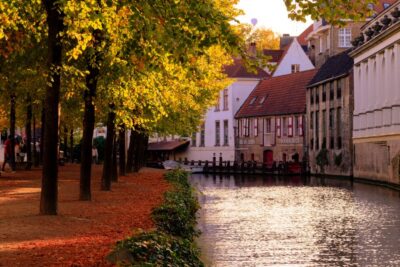
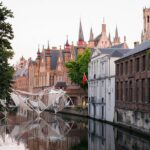
- Rozenhoedkaai (Quai du Rosaire): The Fairy-Tale Canal View
- Burg Square to Chocolalino: Finish With Certified Artisan Chocolate
- Price and Value: Does $22.51 Work Here?
- Who This Bruges Tour Fits Best
- Should You Book This Guided Tour of Bruges?
- FAQ
- Is this Bruges tour in Spanish?
- How long is the guided tour?
- What’s included in the price?
- Is there a chocolate stop during the tour?
- Where does the tour start and end?
- Do I need headphones for the tour?
- What sites will we see on the walk?
Key Things That Make This Bruges Tour Worth It
- Spanish-language guidance that keeps the story moving as you walk
- Minnewater + Ten Wijngaarde beguinage for quiet, historic contrast to the busier streets
- Beer, medieval housing, and power families explained in the exact places you see them
- Stone-and-stories stops like tanners’ guild square and Saint John’s Hospital area
- Bridge photo moments plus a canal-view finale at Rozenhoedkaai
- Certified chocolate tasting with guidance on how to tell handmade from industrial
Spanish-Language Bruges: Better Than a Checklist
Bruges is famous for looking timeless, but the details matter. This tour is set up for Spanish-speaking visitors, with a local professional guide who strings together what you’re seeing into one clear narrative. That’s where the value lives: you stop, look, and then you get the why behind the landmark, right at street level.
You also don’t just get “here’s a monument.” Your guide gives city and Belgium recommendations, which is helpful when you want dinner that’s actually in the area you’re walking through. And because the tour ends in the center, you’re not stuck far away from good options afterward.
If you prefer a relaxed pace—time for photos at key viewpoints, short explanations at most stops—this format fits well. The duration is around 2 hours, and you should plan closer to 2.5 hours in real life depending on group flow and how long you linger at photo spots.
You can also read our reviews of more guided tours in Bruges
Meeting at Bargeplein and Ending by Markt 20
The tour starts at Bargeplein (Katelijnparking) on Bargeweg (Brugge/Bruges). It’s a straightforward meeting point with nearby public transportation, which matters in a compact city where walking is often unavoidable.
You’ll end at Markt 20, right in the center. That finish is smart. You’re placed near one of Bruges’ most useful bases for the next steps: a meal, a drink, or chocolate shopping you can do at your own speed. It also reduces the “now what?” feeling that some tours leave you with.
Quick practical tip: if you’re traveling with a phone battery that runs low, charge it before the start. You’ll use a mobile ticket, and you’ll want easy access if anything needs verification. And if your group uses radios, you’ll be able to follow along better if you’re ready at the start.
Minnewater: The Lake of “Common Waters”
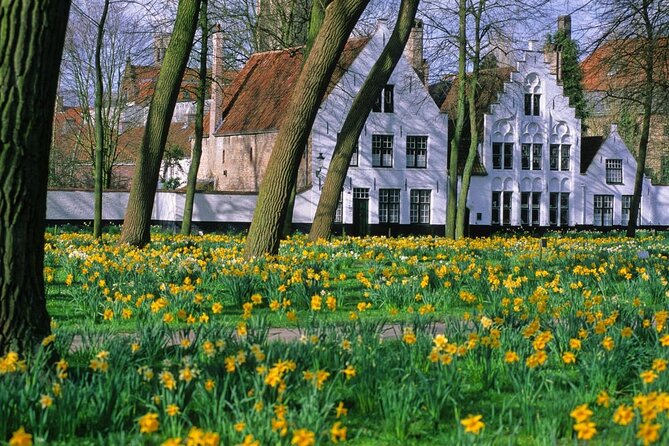
The tour kicks off at Minnewater, the lake area linked to the old port of Bruges. What I like about this stop is that it’s not just a pretty water view—it’s a name lesson and a civic lesson.
The Dutch meaning of Minnewater is explained in plain terms: minne connects to common/community waters (it can point to both shared and love-related meanings), and water is exactly that. In other words, this wasn’t some isolated scenic pond. It was tied closely to daily life and the city’s connection to the waterways.
Even in a short stop, Minnewater sets the tone for the rest of the walk. Bruges can feel romantic on the outside, but this is a reminder that it’s also about function—trade, movement, and how people lived alongside water.
Plan a moment here for a slower look. If the light is decent, you’ll get photos, but more importantly you’ll get context that makes the later canal viewpoints feel earned rather than repetitive.
Ten Wijngaarde Beguinage: Medieval Tranquility (UNESCO)
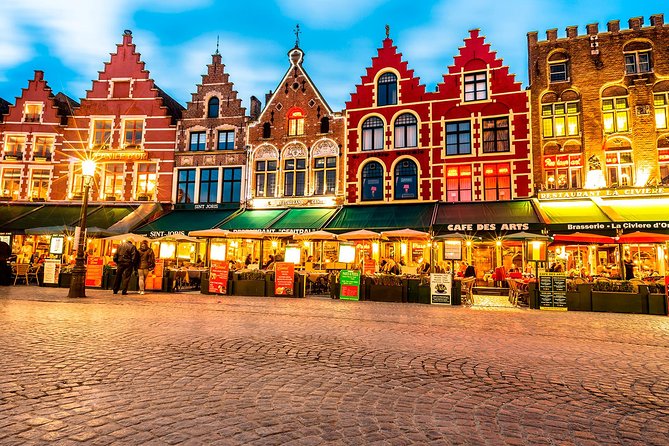
Next up is the Princely Beguinage Ten Wijngaarde. This is one of Bruges’ signature complexes, and it’s described as a Middle Ages setting with a calm, grounded feel.
Beguinages are fascinating because they show a side of medieval life that’s not only about castles, kings, or war. They’re tied to communities and everyday survival—structures built for a social and spiritual way of living. The tour also notes UNESCO recognition, which is a good signal that you’re not just visiting a nice courtyard. This is part of Bruges’ preserved heritage.
A short stop like this can still be powerful if you keep your eyes open. Notice how the space feels different from the surrounding streets—more quiet, more contained. When your guide explains it right there, the place stops being “a building you pass” and becomes “a system of life.”
If you’re the type who likes photos, you’ll find plenty of angles around the beguinage area. If you’re more interested in atmosphere than architecture, you’ll still get something: a small pause from the city’s motion before the walk turns more historical and urban again.
Walplein and Stoofstraat: Beer History and Medieval Houses
After the calm, the tour shifts into the city’s working details.
At Walplein, your guide explains the history of Bruges beer. This matters because it connects to how towns like Bruges functioned. Brewing and drinking weren’t separate from life—they were tied to local economies and routine. It’s also a reminder that “medieval” isn’t only churches and legends. Sometimes it’s the everyday products people depended on.
Then you move to Stoofstraat, where the focus is on spotting the original medieval houses. This is where a guided tour earns its keep. At street level, these buildings can blend together, especially in a photo-only approach. With a guide pointing things out—shapes, building clues, age markers—you start seeing Bruges the way locals and historians do.
The takeaway: you’ll walk away with better eyes. Even after the tour ends, you’ll notice details you would have missed at first glance.
Gruuthusemuseum and Saint John’s Hospital: Power and Care
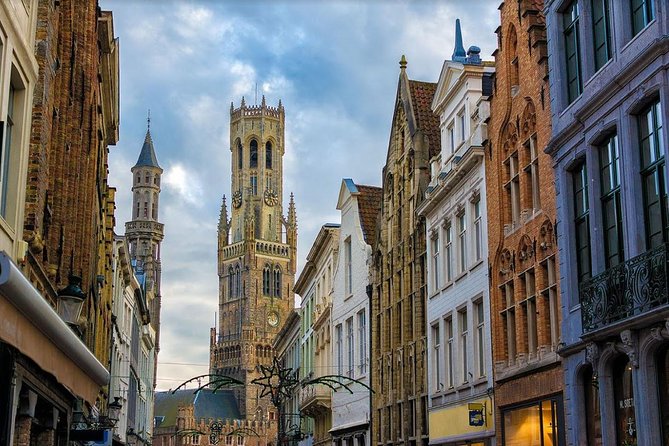
Two stops in a row help you understand Bruges from different angles: who had influence and how people were cared for.
In front of Gruuthusemuseum, the guide introduces the famous and powerful family connected to Bruges between the 17th and 18th centuries. This isn’t abstract. Being at the museum area makes the idea tangible. You’re basically standing where wealth and status left traces.
Then the tour heads to Saint John’s Hospital area (Old St. John Hospital). This stop is more than a viewpoint. Your guide explains how the medieval health system worked. It gives you a sense of what “care” meant before modern hospitals—and how a city organized support.
And then it connects onward to the church area: Onze-Lieve-Vrouwekerk (Church of Our Lady). From the outside, your guide points out curiosities of the white marble Virgin and Child sculpture attributed to Michelangelo, which is found inside the church.
Even if you don’t go in, this stop helps you understand why the church matters. Bruges isn’t only about exterior charm. It’s also about art, religious storytelling, and the way masterpieces live inside a cityscape.
Huidenvettersplein to St Bonifacius Bridge: Guild Life and Legends
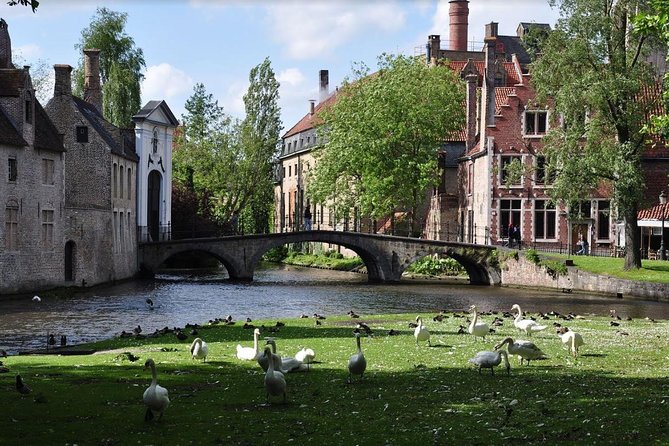
Next comes Huidenvettersplein, also known as Tanners’ Square. This area ties into old trade guilds, and your guide connects it to the medieval economic fabric of Bruges.
Guilds can sound like textbook stuff, but the value here is that you see the physical footprint of those institutions. Squares and streets like this were built for work, trade, and identity. So when you look around, you’re not only seeing stone—you’re seeing social organization.
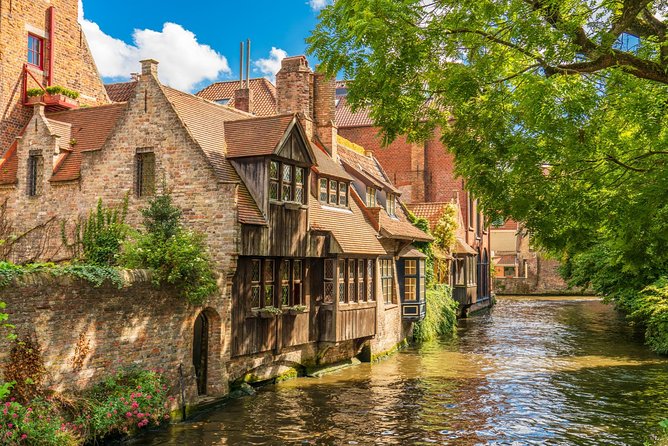
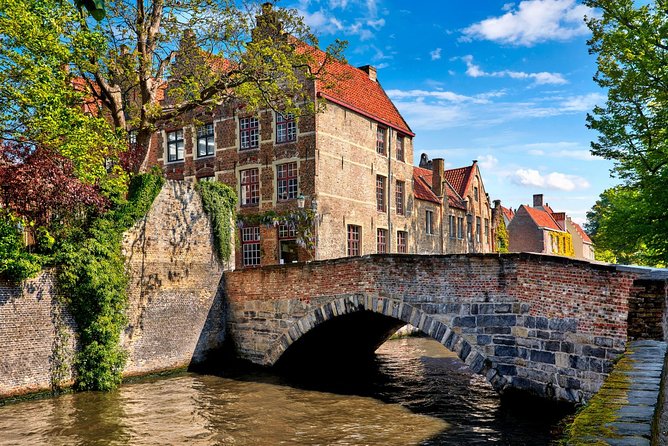
Then you reach St Bonifacius Bridge, one of Bruges’ most charming corners. The guide includes an interesting bridge legend and also builds in time for photos. Bridges are where Bruges becomes cinematic: water below, buildings reflected, and that postcard-skyline feeling.
A small tip: if you want the best photo angle, move slowly and try both sides—sometimes the angle feels totally different with a two-step shift. The guide’s timing helps you hit it when you have room to frame your shot.
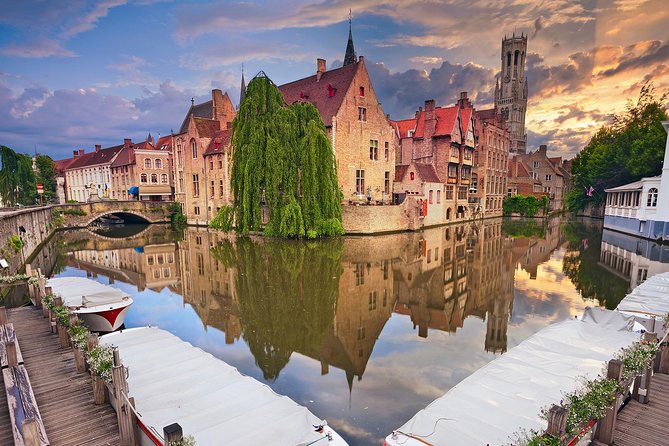
Rozenhoedkaai (Quai du Rosaire): The Fairy-Tale Canal View
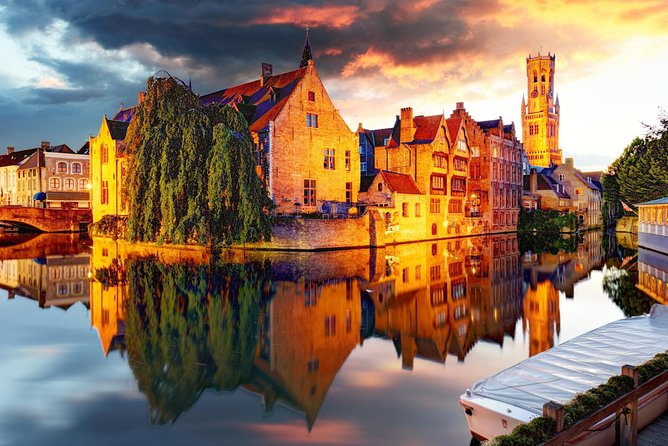
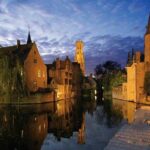
One of the most memorable parts of the walk is Quai du Rosaire / Rozenhoedkaai. Everything here looks like it belongs in a storybook, and the tour explicitly encourages you to come for the view in late afternoon or after dinner.
That time advice is practical. The light on canal water changes fast, and Bruges’ charm can tip from “pretty” to “wow” depending on the hour. If your schedule is tight, still try to catch whatever soft light exists when you arrive.
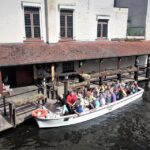
The guide also frames the area in terms of what you can do next. If you’re tempted by the idea of boat rides, this is where that urge makes sense—you’re already in the best part of the city for a canal walk and a view that feels made for it.
Even if you skip a boat, you’ll leave with a stronger memory of Bruges than if you only walked from square to square. This stop helps you feel the layout of the city as a network of waterways.
Burg Square to Chocolalino: Finish With Certified Artisan Chocolate
The route ends at Burg Square, the political center of Bruges, where architecture lovers can appreciate buildings across more than a thousand years of history. It’s a good transition point. After canals and guild-area details, Burg Square brings you back to civic power and long-term change.
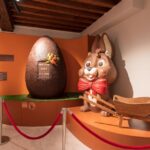
Then comes the best finish: Chocolalino, described as one of the few certified artisan chocolate shops. Here, you taste Belgian chocolates guided by your host. This isn’t just sampling sugar. Your guide also explains the famous Bruges chocolate and gives practical tips for distinguishing handmade from industrial chocolate.
That last part is especially useful for future shopping. Bruges has plenty of chocolate around every corner, and it’s easy to end up with the shiny mass-market stuff if you don’t know what to look for. Even a short lesson can help you make better choices once you’re back on your own.
And because you’re dropped near Markt 20, you can stay out afterward for a final stroll or dinner without needing to relocate across town.
Price and Value: Does $22.51 Work Here?
At $22.51 per person, this tour is built for value: you’re paying for a local professional guide and a tight walking loop that includes a chocolate tasting. For a city like Bruges, where time and orientation are everything, a guided format can save you the trial-and-error of trying to connect every sight yourself.
You’re also not paying for food or drinks, and that’s fine. It keeps the price lower, and your guide provides recommendations to help you spend your meal budget wisely instead of guessing. The tasting stop at the certified chocolate shop is a clear, included benefit—one you can’t replicate with casual window shopping.
Logistics can slightly affect your experience. If your group is large, radios may be used, and you might need headphones if you don’t have them. Still, most people find this helps keep the guide’s explanations audible, which is the whole point of a guided tour.
One more note: this tour is weather-dependent. If conditions are poor, you’ll be offered a different date or a refund. That’s fair, because the main value happens outdoors between stops.
Who This Bruges Tour Fits Best
This tour fits well if you:
- Prefer guided context over reading guidebooks while walking
- Speak Spanish and want the story told in your language
- Enjoy a mix of architecture, civic history, and everyday details like beer and guild life
- Want a structured route that ends near the best areas for food afterward
- Like a practical chocolate tasting with help spotting artisan quality
It might be less ideal if you want a long, in-depth museum experience or lots of time inside major churches. This is a walking-and-explaining tour. You’ll see a lot, but it’s not designed as a slow, inside-everything day.
Also, if you’re extremely sensitive to crowds or noise, keep in mind the tour can use radios for larger groups. That’s not a dealbreaker, but it does affect the vibe.
Should You Book This Guided Tour of Bruges?
I’d book this if you want to understand Bruges fast—especially in Spanish—and you like the idea of ending with a tasting at a certified artisan chocolate shop. For the price, you get more than movement from stop to stop. You get a guide who connects the dots: waterways, beguinage calm, medieval houses, guild work, civic power, and then chocolate you can evaluate with better instincts afterward.
Just do two things to make it smooth: arrive early at Bargeplein (Katelijnparking) and keep your headphones option in mind if your group is big. And if you’re traveling on a tight schedule, give yourself a buffer before the meeting time. One traveler once couldn’t find the local guide and the follow-up help felt confusing, so avoiding that simple avoidable mistake is worth it.
If you want a short day in Bruges that feels meaningful—without turning into a marathon—this is a solid choice.
FAQ
Is this Bruges tour in Spanish?
Yes. It’s a Spanish-language guided tour with a local professional guide.
How long is the guided tour?
It’s about 2 hours approximately, and the experience may run closer to about 2.5 hours depending on the group.
What’s included in the price?
Your ticket includes the Spanish guide and the guided tour, plus city and Belgium recommendations. Food and drink are not included.
Is there a chocolate stop during the tour?
Yes. The tour finishes at Chocolalino, a certified artisan chocolate shop, where you’ll taste Belgian artisan chocolates.
Where does the tour start and end?
The start is at Bargeplein (Katelijnparking), Bargeweg, 8000 Brugge. The end is at Markt 20, 8000 Brugge, in the city center.
Do I need headphones for the tour?
If the group is more than 24 people, radios with headphones may be used due to Bruges tourist regulations. You can use your own headphones or buy headphones for €1 from the guides.
What sites will we see on the walk?
You’ll pass by highlights including Minnewater, the Ten Wijngaarde beguinage, Walplein, Stoofstraat, Gruuthusemuseum, Saint John’s Hospital, Onze-Lieve-Vrouwekerk, Huidenvettersplein, St Bonifacius Bridge, Rozenhoedkaai, Burg Square, and the chocolate shop at Chocolalino.