REVIEW · BRUGES
Beyond Bruges – Travel Back to the Middle Ages
Book on Viator →Operated by Legends of Bruges Free & Private Tours · Bookable on Viator
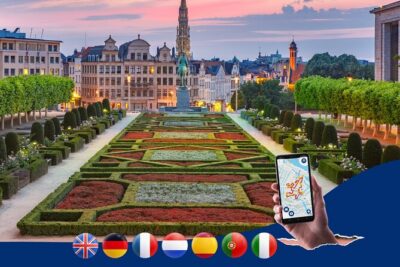
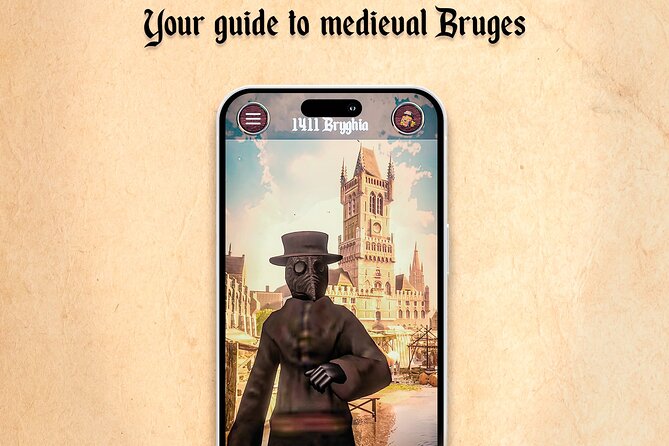
Bruges turns medieval on your phone. This self-guided experience uses 3D models and augmented reality to help you connect real monuments to the Golden Age story, whether you’re outside or previewing from home. I also like the practical layer of 360° images and historical descriptions that give you something to look for as you walk.
One possible drawback: it can feel a bit structured and prompt-heavy. If you want to stroll with zero questions and no mission mindset, the format may feel more like a guided scavenger hunt than a slow wandering day.
In This Review
- Key highlights you’ll feel right away
- Beyond Bruges with AR and 3D: what the experience really is
- Price and value: what $15.61 buys you
- How the self-guided setup works (comfort of your sofa included)
- Day 1 start: Historic Centre of Brugge to Markt
- Burg Square: the quick jump that pays off
- Onze-Lieve-Vrouwekerk: let the historical context guide your looking
- Apotheek Sint-Janshospitaal (Pharmacy Saint John’s Hospital): a medieval specialty stop
- Windmills of Bruges: step toward the out-of-center feeling
- Gruuthusemuseum and Jan Van Eyckplein: museum stop + a creative finale
- TimeQuest and the medieval photo: fun extras that can keep you engaged
- QR cashback (10%): the one perk you can actually use
- Who should book Beyond Bruges, and who should think twice
- Price and logistics quick check: what you need to know before you go
- Should you book it?
- FAQ
- What is Beyond Bruges: Travel Back to the Middle Ages?
- Where does the tour start?
- How long is the experience?
- How much does it cost?
- What features are included?
- Do I need a mobile ticket?
- Is cancellation possible?
- Is it suitable for people with service animals and public transport access?
Key highlights you’ll feel right away
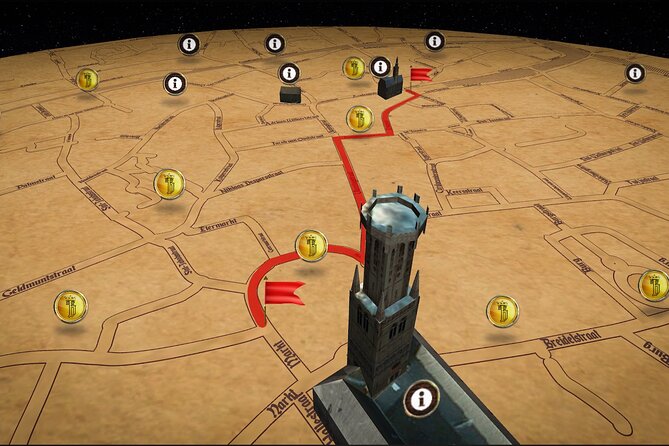
- AR + 3D models make key sights easier to visualize as you move through the center
- 360° views give you context even before you reach the real stone and brick
- TimeQuest quiz game adds a playful goal to your route, not just sightseeing
- QR cashback (10%) can turn the tour into a small dining and museum discount
- Medieval character photo gives you a shareable memory with theme
Beyond Bruges with AR and 3D: what the experience really is
Think of Beyond Bruges as a phone-based guide that tries to solve two common problems in old European cities: first, you may not know what you’re looking at; second, it’s easy to lose the thread when you’re hopping from square to square.
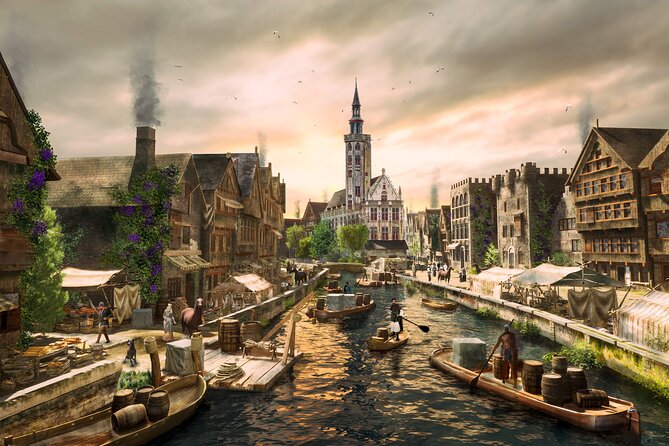
Here, the “thread” is medieval Bruges, told through 3D models and augmented reality. The practical value is that you’re not just reading a sign or guessing what a building used to be. The visuals are designed to help you place monuments in a timeline so your walk feels like a story you’re actively following.
There’s also a 360° layer—360-degree images paired with historical descriptions. Even if you’re standing in front of a landmark, those views help you orient: you can spot angles, features, and building relationships you might miss at street level.
And you get a game angle too. TimeQuest asks you to go on a mission to save the duke from the pest through a historical quiz game. That kind of goal can be great on a travel day when you don’t want to rely on willpower to stay focused.
You can also read our reviews of more tours and experiences in Bruges.

Price and value: what $15.61 buys you
At $15.61 per person, this is priced like an affordable “digital add-on” rather than a big-ticket guided excursion. The value hinges on how you travel.
If you like self-guided tours but want structure, this is a strong deal. You’re not paying for a bus, a live narrator, or a reserved entry fee; you’re paying for content and interactive elements that you can use over roughly 2 days. That matters because Bruges is compact, and you can realistically split the experience across two slower walks.
The mobile ticket format also helps. You’re not locked into one start time for a group tour. You can revisit moments, pause, and keep moving at your pace—within the limits of what the experience provides.
Still, pay attention to your personal style. The experience may feel more “guided” than “casual” because it leans on prompts, questions, and missions. If you love drifting, you may feel like you’re being nudged constantly.
How the self-guided setup works (comfort of your sofa included)
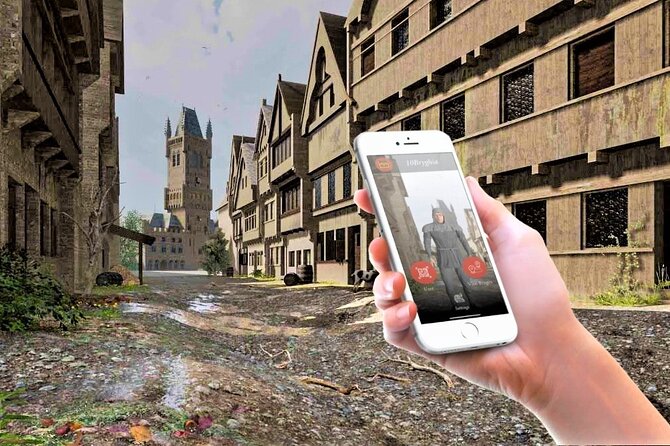
This is built for flexible use. The experience is designed so you can explore medieval Bruges in two modes:
- From your sofa: you can use the content with 360° images and historical descriptions before you ever step outside.
- On foot in the city: you can navigate using guided directions to major sights and lesser-known stops.
The practical advantage is that you can reduce “first-day guesswork.” If you preview the route concept at home, you arrive with an idea of what each stop is supposed to represent. That’s especially useful in Bruges, where streets look medieval, but your brain needs a few anchors.
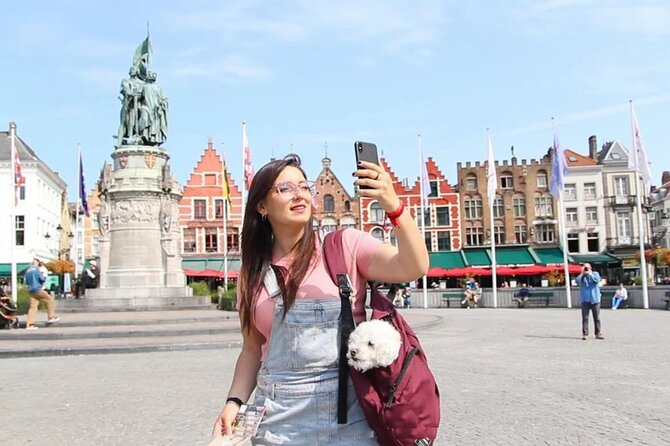
You start at Markt, 8000 Brugge (Market Square). The experience ends back at the meeting point, so you’re not stuck with an awkward “now what” moment at the edge of town.
There’s also a cap of up to 99 travelers, which sounds more group-like than you might expect from a mobile experience. In practice, the bigger factor for your day will be how much you interact with prompts on your phone rather than the group size.
Day 1 start: Historic Centre of Brugge to Markt
Your walk kicks off in the Historic Centre of Brugge, with Markt (Market Square) as the anchor start point. That choice makes sense. Bruges’ center is where your eyes naturally want to go first: open space, classic facades, and the sense that you’re in the right place.
This is a good first segment because the experience can set your mental map early. With historical descriptions and AR/3D visualization, you’re more likely to understand what you’re seeing rather than just admiring it.
At Markt, focus on using the phone content as an orientation tool. Instead of treating the square like a quick photo stop, treat it like your “legend.” When the app gives you visual context, try to match that context to real corners, towers, or building shapes around you.
If you’re traveling with kids or you enjoy structured routes, this early start can be a win. You’re building momentum with quick wins: you’re already in the center, so you spend less time walking to discover where to begin.
The one caution: if you dislike answering on-screen questions while walking, this start can feel like the experience asks for attention immediately.
Burg Square: the quick jump that pays off
Next up is Burg Square. In many cities, squares blur together. Here, you can make Burg Square a meaningful step because it connects your route to major medieval civic energy.
Use this segment to “zoom out” mentally. When you’re at Markt and then you move to Burg Square, you can feel the shift from one type of public space to another. The app’s historical descriptions help you keep those distinctions from turning into just another pretty open plaza.
Practical tip: don’t rush the move. Bruges is easy to walk fast in, but you’ll get more out of the content if you pause long enough to let the 360° image layer sink in. Even one longer stop here can prevent the rest of the day from feeling like you’re constantly catching up.


Onze-Lieve-Vrouwekerk: let the historical context guide your looking
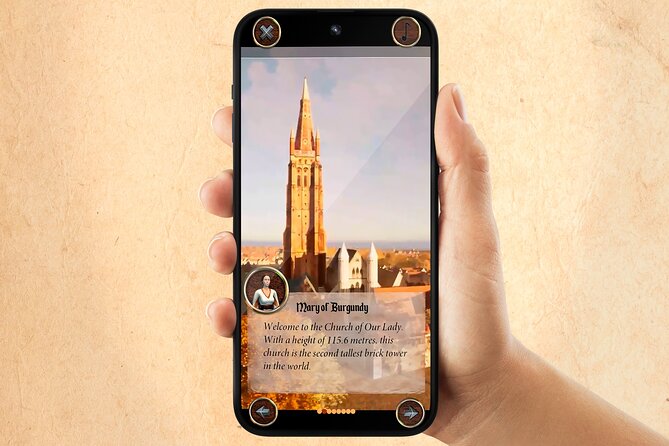
The route includes Onze-Lieve-Vrouwekerk (Church of Our Lady). Churches can be tricky on a self-guided day: you may know it’s important, but not what to focus on besides the obvious exterior.
That’s where this experience’s description-and-visual approach helps. You’re not just standing there hoping you’ll recognize details. You’ll have historical context and visual aids that steer your attention toward what matters.
This is a solid stop if you like architecture, religious art, or simply understanding why a place is a landmark. It’s also one of the moments where you’ll likely appreciate the 3D/AR component more than at street-level squares, because religious buildings have layers of story behind them.
If you’re short on patience for phone prompts, take a compromise approach: pick one or two pieces of info from the phone content, then enjoy the rest of the time without constant interaction.
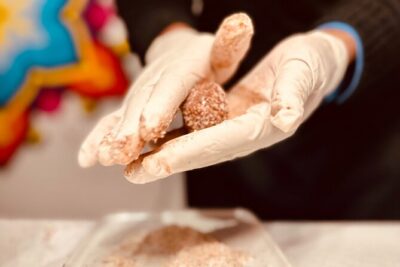
Apotheek Sint-Janshospitaal (Pharmacy Saint John’s Hospital): a medieval specialty stop
One of the more distinctive stops is Apotheek Sint-Janshospitaal (Pharmacy Saint John’s Hospital). A pharmacy stop is not what you usually expect on a “medieval Bruges” route, and that’s exactly why it’s worth your attention.
Even with limited details provided by the experience itself, the structure matters: you get historical descriptions tied to an actual named location. That turns the stop from a random building into a story checkpoint.
Use it as a break from the “square and cathedral rhythm.” If your feet need a breather, this is a good place to slow down, read, and recalibrate your brain. Medieval Bruges can feel repetitive if you’re only collecting facades. A specialty stop adds variety.
If you’re traveling with someone who likes science, medicine, or everyday history, this can be the favorite stop of the day.
Windmills of Bruges: step toward the out-of-center feeling
Next come the Windmills of Bruges. Windmills change the mood. They feel less like a postcard “center highlight” and more like a working landscape tied to water, wind, and food production.
The benefit here from a guided digital format is that you’re not just looking at a landmark—you’re seeing it as part of a broader functioning medieval system. When the experience provides historical context, you’re less likely to treat the windmills as a single photo moment.
Practical advice: go slower than you think. Windmills tend to reward a patient approach because viewpoints and angles shift as you walk around. If the experience includes visual aids, you’ll get more from them when you allow yourself time to change perspective.
Gruuthusemuseum and Jan Van Eyckplein: museum stop + a creative finale
The route continues to Gruuthusemuseum and then Jan Van Eyckplein.
Museums are where a digital guide can help the most, even if you don’t spend hours inside. The experience can give you a reason to notice what you’re seeing, not just a reminder that a building is important. If you’re the kind of person who tends to skim museum labels, having pre-loaded context can make the museum stop feel less like a chore.
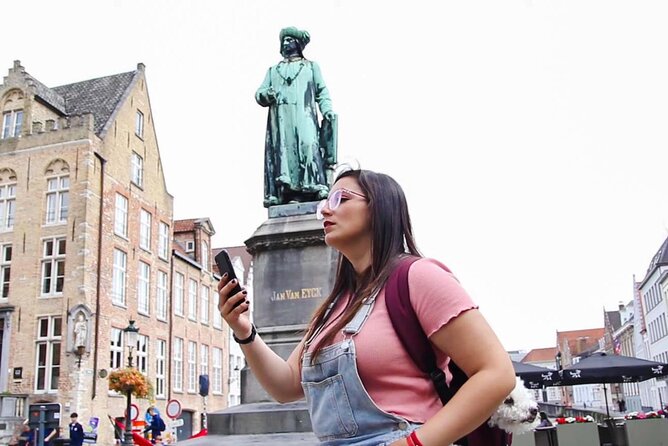
Then you finish at Jan Van Eyckplein—a practical closing point because it sits naturally with the creative identity of Bruges. Even if you don’t know who Jan van Eyck is yet, the route’s last stretch is designed to land you back in the flow of the city’s landmark network.
And because the experience ends back at the meeting point (Market Square), you’re not left planning a separate ending. You can wrap up the day with an easy return to where you started.
TimeQuest and the medieval photo: fun extras that can keep you engaged
The experience isn’t only about monuments. It adds interactive layers that can make the day feel lighter.
- TimeQuest quiz game: You go on a mission to save the duke from the pest. This is the kind of structure that helps you stay attentive when you might otherwise drift. It also gives you something to do at moments when you’re waiting for a sight to “click.”
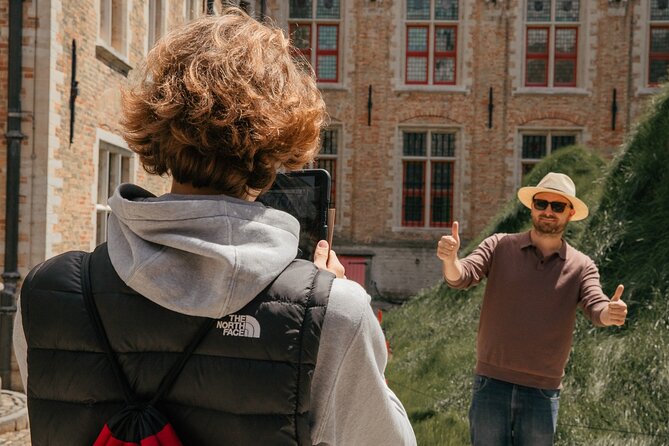
- Medieval character photo: You can take a picture with medieval characters and share it on your socials. If you care about travel content, this is a ready-made memory moment.
The key is balance. If you enjoy games, quizzes, and themed media, these extras can turn Bruges into a day you’ll remember vividly. If you don’t, you can still use the experience as a sight guide and treat the game and photo as optional.
QR cashback (10%): the one perk you can actually use
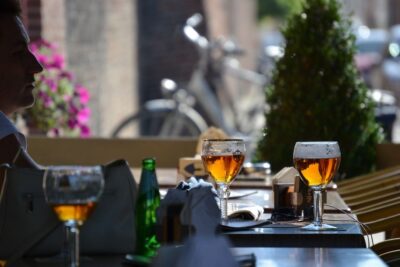
You’ll also get a QR code that gives 10% cashback in local bars, restaurants and museums. That’s a real value add because it can offset part of what you pay for the experience.
Two practical thoughts:
- Keep the QR accessible on your phone so you’re not scrambling mid-meal.
- Plan at least one small stop—snack, drink, or museum visit—during your 2-day window so the cashback isn’t just a theoretical perk.
The experience doesn’t list which specific venues are included in the info provided here, so treat it as “participating places” rather than assuming every spot in Bruges will accept it.
Who should book Beyond Bruges, and who should think twice
This works best for you if:
- You like self-guided tours but still want structure
- You enjoy phone-based visuals like AR and 3D models
- You want a route that mixes big monuments with a few less obvious stops
- You’re open to a themed experience with a quiz game and a medieval photo
Think twice if:
- You prefer wandering with no prompts. One clear caution is that the experience can feel too distracting and question-heavy for people who want a simple stroll.
- You get annoyed by constant check-ins on a device while walking.
If you’re traveling with family, the structured, mission-based format can be a better match than a traditional audio guide. And since service animals are allowed and it’s near public transportation, you can plan your day without too many mobility headaches.
Price and logistics quick check: what you need to know before you go
- Price: $15.61 per person
- Duration: about 2 days
- Ticket type: mobile ticket
- Start/End: starts at Markt (Market Square) and ends back there
- Size cap: up to 99 travelers
- Confirmation: you’ll receive confirmation at booking time
- Change/cancel: it’s non-refundable and cannot be changed
Should you book it?
I’d book Beyond Bruges if you want medieval Bruges with a plan you can control. The AR/3D angle plus the 360° context can turn “pretty streets” into “I understand what I’m seeing.” And the combination of monuments, quiz mission, and QR cashback gives you more than one reason to keep your phone handy.
But if your travel style is slow and wandering-first, don’t assume this will feel effortless. The experience may feel like it asks for too much attention while you’re walking. If that’s your vibe, consider using only the portions you want and skipping the more game-like parts.
FAQ
What is Beyond Bruges: Travel Back to the Middle Ages?
It’s a self-guided mobile ticket experience in Bruges that uses 3D models and augmented reality, plus 360° images and historical descriptions, to help you explore medieval sights.
Where does the tour start?
It starts at Markt, 8000 Brugge, Belgium (Market Square).
How long is the experience?
The duration is listed as 2 days (approx.).
How much does it cost?
The price is $15.61 per person.
What features are included?
All features of Beyond Bruges are included, including AR/3D content, 360° images and historical descriptions, guided directions, a QR code with 10% cashback, a quiz game called TimeQuest, and a medieval character photo.
Do I need a mobile ticket?
Yes. The experience uses a mobile ticket.
Is cancellation possible?
This experience is non-refundable and cannot be changed for any reason.
Is it suitable for people with service animals and public transport access?
Service animals are allowed, and it’s listed as near public transportation. Most people can participate.