REVIEW · FLANDERS
e-Scavenger hunt Hasselt: Explore the city at your own pace
Book on Viator →Operated by Qula · Bookable on Viator
A game plan for Hasselt. I like how this self-guided city trail turns sightseeing into quick tasks and story moments. Two things I’d happily plan around: the flexible start time (you don’t wait for a guide) and the mix of Hasselt highlights like the Gin Museum, the Virga Jesse basilica statue, and Japanese Garden time. One drawback to consider is that you’ll be relying on your own phone—and if you choose the wrong translation setup, the experience can feel clunky.
This is built for small teams (max six) and works like an e-scavenger hunt with a mobile app. You get the app game and a city trail, but you’ll need your own smartphone and data to run it. If you’re traveling as a couple, the price can feel a bit heavy compared with hiring a human guide—though it gets much easier when you fill a bigger team.
In This Review
- Key Points That Make This Hunt Work
- A Hasselt City Trail That Fits Your Walking Mood
- Meeting Point, Timing, and What You Need to Actually Play
- How the e-Scavenger Hunt Guides You Without Being a Real Guide
- Gin Museum Start: A Tangible, Local Way to Kick Off
- Virga Jesse Basilica: When a 14th-Century Statue Pulls You In
- St. Quintinus Cathedral: A City Center Anchor
- Modemuseum Hasselt in the Oud Gasthuis Building
- Plopsa Indoor Hasselt: Theme Park Energy Next to Sports Venues
- Stadskantoor and Grote Markt: Short Walk, Big Sense of Place
- Old Beguinage Clue and the Virga Jessecollege Area
- Japanese Garden: When the Hunt Slows Down for Real Quiet
- Herkenrode: 600 Years of Women and a Chronological Trail
- Father Valentinus Paquay and Minderbroederskerk: A Chapel That Draws Crowds
- Stadsmus: Famous Inhabitants and a Citizen With a Strange Schedule
- Dusart and the Congo Connection: One Person, One Global Turn
- Price and Logistics: When It’s a Bargain (and When It Isn’t)
- Should You Book the e-Scavenger Hunt in Hasselt?
- FAQ
- Where does the e-Scavenger hunt start and end?
- How long does the experience take?
- What’s the cost and the group size limit?
- Is the hunt available in English?
- Do I need a smartphone and data?
- Can I start at any time during the day?
- Is there free cancellation?
- Is it accessible and are service animals allowed?
Key Points That Make This Hunt Work

- Team-friendly pricing: one group booking covers up to 6 people
- Phone-led trail: you follow tasks across major Hasselt sights using map/GPS guidance
- Real local stops: Gin Museum, Virga Jesse, St. Quintinus Cathedral, Herkenrode, Japanese Garden
- Flexible timing: active all day (you start when you want)
- Designed for sound sensitivity: listed as user-friendly for hearing impaired
- Works as a game, not a lecture: expect short questions and fun facts, not a long guided narrative
A Hasselt City Trail That Fits Your Walking Mood
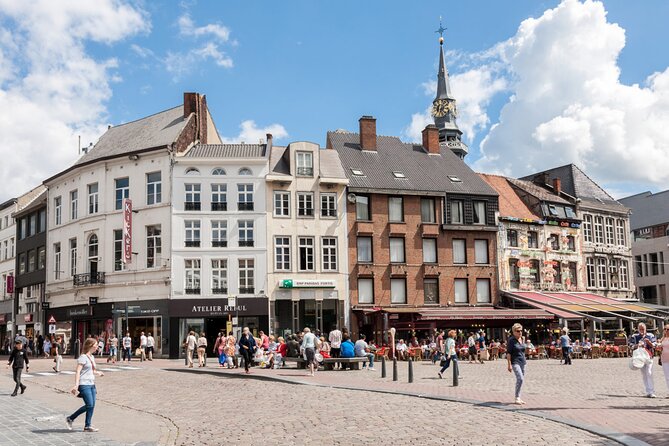
Hasselt is a good city for a self-guided adventure. The center is compact enough that you can move from one famous spot to the next without planning your whole day around transport. This e-Scavenger hunt matches that rhythm: you’re not stuck with a start time that eats your day, and you’re not stuck with a guide steering the pace.
What I like best is the format. You aren’t just walking past buildings and hoping you remember what you read later. Instead, your phone pushes you forward with tasks—small prompts that encourage you to look closer. That makes it easier to enjoy the details without turning the day into a nonstop history lecture.
The other key value is team size. Up to six people can play together, so you can bring friends (or family) and keep it lively. It’s a much better fit for a group than for a solo traveler trying to pay for a whole event.
You can also read our reviews of more city tours in Flanders

Meeting Point, Timing, and What You Need to Actually Play
The hunt starts at Diesterstraat 1, 3500 Hasselt and ends back at the same meeting point. It’s listed as available every day, from 12:00 AM to 11:59 PM, which is a fancy way of saying you can pick a start time that matches your energy level.
You should budget about 2 to 4 hours. That range is realistic because the app-driven tasks can slow you down when you want to read, look, and double-check clues. If you tend to rush, you’ll likely land nearer the shorter end.
Here’s the practical bit you can’t skip: the smartphone and data are not included. So charge your phone fully, consider a data plan or roaming option, and keep a backup power option if you’re the kind of person who documents everything.
Also note: it’s offered in English, and the app uses a mobile ticket format. If you’re traveling with someone who prefers another language, double-check your translation settings on your phone. One useful tip: automatic translation can cause weird double-translated text in some cases. If you want things to feel clean, turn off automatic translation before you start and let the app handle the language it offers.
How the e-Scavenger Hunt Guides You Without Being a Real Guide

This isn’t an audio tour. It’s closer to a city game. You’ll open the app, follow the trail, and answer questions or complete tasks tied to specific stops.
One practical advantage: the navigation supports both map and GPS options. That matters in real life. You can switch modes depending on how clear the street layout feels to you. In a compact center like Hasselt, that helps you keep momentum without needing to constantly check a paper map.
It also means the tour has a built-in “pace control.” With a guided tour, you’re always waiting for the next group photo. With this hunt, you can pause longer at a stop if the place grabs you, or speed through if it doesn’t. That’s ideal when you’re traveling with mixed interests—one person wants details, another just wants to keep moving.
The one caution: the whole thing is designed to be a game. So if you’re expecting a guided lecture with long explanations at each site, you might feel like the questions are too short. The format works best when you see the stops as prompts to explore, not as the full story you get from a professional guide.
Gin Museum Start: A Tangible, Local Way to Kick Off
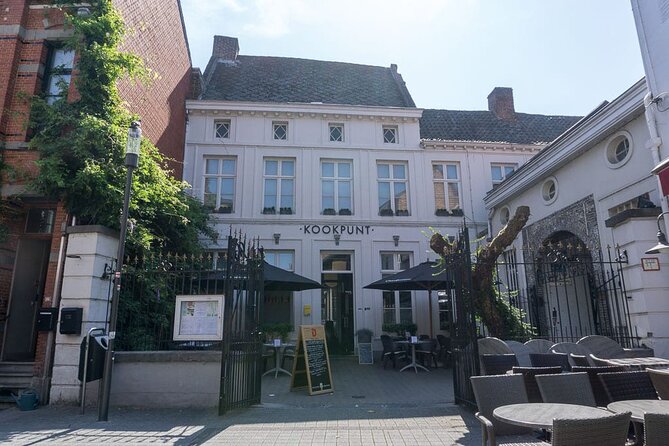
The first stop is the Gin Museum, and it’s a strong opener for two reasons. First, it anchors the hunt in something very Hasselt and very sensory. Second, the tone of the visit is about more than facts—it’s presented as an experience that connects mind and body, which is exactly the kind of thing that makes a self-guided hunt feel more real.
How you’ll experience it during the hunt: expect to spend enough time to find what the app asks you to notice, then move on. The Gin Museum is a smart starting point because you’re primed for a theme—local craft and local identity—before the route shifts into churches, cathedrals, and gardens.
If you’re the type who likes to read more than answer, plan a bit of extra time here. A good museum stop can turn a 2-hour hunt into a deeper half-day, in a good way.
Virga Jesse Basilica: When a 14th-Century Statue Pulls You In
Next up is a church built in the 18th century, now known as a basilica. Inside, you’ll encounter the statue of Mary of Jesse (Virga Jesse) from the 14th century.
This is one of those Hasselt pairings that makes the city interesting: newer architecture holding older devotional history. The contrast helps you understand why certain religious sites feel layered rather than “one era only.”
During the hunt, you’ll likely use your phone to locate and connect the statue and basilica to the story clues. Even if you don’t read every line, the hunt format nudges you to look up and take the time to spot what you’re meant to find. That’s the quiet magic of a well-designed self-guided format.

St. Quintinus Cathedral: A City Center Anchor
From there, the route points to St. Quintinus Cathedral in the heart of Hasselt. You’ll learn that it’s dedicated to Quintinus, and that it became a cathedral when the Diocese of Hasselt was founded in 1967.
This stop is valuable because it turns a simple landmark visit into a mini timeline. You’re not just standing in front of a church—you’re tying it to how Hasselt’s civic-religious role changed in the 20th century.
If you like places that work as both architecture and story, this is a good one to slow down for. Look around the interior if you can, then use the hunt to keep your attention on the specific details you’d otherwise miss.
Modemuseum Hasselt in the Oud Gasthuis Building
The hunt includes Modemuseum Hasselt, housed in the Oud Gasthuis, a seventeenth-century building.
Even if fashion museums aren’t your top interest, the location is worth the stop. Museums in older structures have a way of making the building part of the exhibit. In this case, the setting helps you appreciate the city’s continuity—Hasselt didn’t only build churches and squares; it built institutional spaces that can still function today.
The likely reality during the hunt: you’ll use the museum stop to answer questions and move through at your own speed. If the exhibit galleries are open and you want extra reading, bring time. If not, treat it as a quick-but-meaningful checkpoint that still pays off for architecture lovers.
Plopsa Indoor Hasselt: Theme Park Energy Next to Sports Venues

Then the route heads toward Plopsa Indoor Hasselt, described as Belgium’s first partially covered theme park in Hasselt. It’s located next to the Ethias Arena and Grenslandhallen.
This is a fun contrast stop. You go from cathedral and museum calm to a more modern, family-friendly zone. For some groups, that shift is a relief. For others, it can feel like a detour—so I’d frame this as a “read the room” stop.
If you’re traveling with kids, this is likely a highlight. If you’re traveling as adults who prefer quiet history, you’ll still get a sense of how Hasselt organizes entertainment and event space in the same central area.
Stadskantoor and Grote Markt: Short Walk, Big Sense of Place
Hasselt’s town hall, Stadskantoor, opened in 2018 and replaced the Old Town Hall. Nearby, you’ll reach Grote Markt, the main square, where the city center feels compact enough that it’s easy to keep your bearings.
This pair is useful because it gives you both civic architecture and the street-life context around it. Grote Markt is partly surrounded by restaurants, hotels, and shops, so it also becomes a natural place to take a breather and refuel.
During a hunt, these open spaces matter. You’ll often slow down more at squares because it’s easier to read signage and visually confirm where you are. Use this moment to grab a drink or snack if you need a mid-route reset.
Old Beguinage Clue and the Virga Jessecollege Area
The route includes a stop tied to the oldest beguinage, mentioned as early as 1245, located outside Hasselt’s ramparts. It was destroyed during the Iconoclasm, and the area is referenced around Virga Jessecollege (Guffenslaan).
This is the kind of stop that makes self-guided tours work well: the city doesn’t just show you buildings—it gives you threads. The beguinage clue is one of those threads, hinting at a social and religious community that once existed and was later erased.
In practice, don’t expect a dramatic “here it is” monument moment unless one is present. Instead, think of it as a prompt to notice what the city looks like today and imagine what once sat there. That imagination piece is why short question games can still lead to real understanding.
Japanese Garden: When the Hunt Slows Down for Real Quiet
The route includes the Japanese Garden, described as the largest of its kind in Europe and the place to fully experience Japanese culture.
Whether or not you care about Japanese gardens specifically, this is one of the route’s best breaks. Gardens are where you can switch gears: stop moving for a minute, let the day cool down, and reset your attention for the rest of the hunt.
In a 2 to 4 hour experience, this can become your “pause stop.” If you’re the group member who always wants to keep going, try not to rush past. The garden is exactly the kind of location where a few extra minutes makes the whole hunt feel more satisfying.
Herkenrode: 600 Years of Women and a Chronological Trail
Another major historical stop is the abbey via a chronological trail of 600 years of women on Herkenrode.
This is where the route feels like it could become a full story if you have time. The chronological structure helps you track change over centuries without getting lost. Even if your answers only take a few minutes, the context is there to support longer reading if you want it.
For best results, plan for this as one of your “read and look” stops rather than a quick checkpoint. If your phone asks you to connect earlier clues to later ones, you’ll want that context in mind.
Father Valentinus Paquay and Minderbroederskerk: A Chapel That Draws Crowds
The hunt includes the burial chapel and museum of Father Valentinus Paquay in Minderbroederskerk. The information notes that it attracts thousands of visitors each year.
This is another stop that can go two ways. If you’re curious about why people keep returning, it’s a great place to slow down and let the story take shape. If you’re tired, it still works because the hunt format helps you focus on what you need to find without needing to read everything.
Either way, it’s a memorable Hasselt stop because it’s not just an “important building.” It’s linked to a person whose story is still pulling in crowds.
Stadsmus: Famous Inhabitants and a Citizen With a Strange Schedule
The route wraps in part around Stadsmus, where you discover Hasselt’s streets with its famous inhabitants—and even mention of a mysterious citizen who sees the light of day once every seven years.
This kind of story is perfect for an e-Scavenger hunt. It gives you something strange enough to remember, but grounded enough to keep you paying attention. Even if you don’t go deep into the details, the hunt’s job is to make you notice.
Expect this section to feel more like a playful city biography than a standard museum stroll. It’s the kind of stop that makes the hunt worth doing even if you don’t love quizzes.
Dusart and the Congo Connection: One Person, One Global Turn
The hunt also references Dusart, including that he went to the Royal Military School in Brussels, became a lieutenant at 19, and left for Congo in 1890, then private property of King Leopold II.
This is heavier material than some of the other stops, and it matters that the route includes it. Cities are made by individuals and systems, not only by pretty squares and gardens. Having this thread in the hunt means you don’t leave Hasselt feeling like it was only “churches and museums.”
During the hunt, you’ll likely handle it as a question-based checkpoint. If the topic interests you, treat it as your cue to read a bit more on your own while you’re there. If you’d rather keep it light today, answer the app and move on. Either approach fits the format.
Price and Logistics: When It’s a Bargain (and When It Isn’t)
The price is $37.21 per group for up to 6 people, with a tour length of about 2 to 4 hours.
Let’s do the math in plain terms:
- If you fill the group (6 people), it’s about $6.20 per person.
- If you’re only two, it’s about $18.60 per person.
That changes the feel a lot. For a friend group, it’s strong value because your cost per head drops fast. For couples, it can feel like you’re paying a premium for a self-guided format instead of a human guide’s conversation and deeper pacing.
You should also remember what’s included: the app game and the city trail. What isn’t included is your phone and data. So you’re paying for the experience design, not for equipment.
If you’re trying to decide between this and a guided city tour, I’d frame it like this: pick this when you want freedom and playful learning. Pick a guide when you want a long spoken narrative and real-time questions.
Should You Book the e-Scavenger Hunt in Hasselt?
Book it if:
- you want flexible timing and don’t want to wait for a group schedule
- you like learning via tasks and short clues
- you’re traveling with 3 to 6 people and can split the cost
- you’re happy to explore at your own pace through Hasselt’s center
Skip it or think twice if:
- you expect a traditional guided tour with long explanations
- you’re a couple traveling with no one else to share the group price
- you know you’ll struggle with phone navigation or want a no-screen experience
My best advice: plan your start time for when you’re alert, bring a charged phone, and keep translation settings simple. If you do that, this hunt is a practical way to see a lot of Hasselt without feeling rushed.
FAQ
Where does the e-Scavenger hunt start and end?
It starts at Diesterstraat 1, 3500 Hasselt, Belgium and ends back at the meeting point.
How long does the experience take?
It lasts about 2 to 4 hours.
What’s the cost and the group size limit?
It costs $37.21 per group (up to 6 people).
Is the hunt available in English?
Yes, it’s offered in English.
Do I need a smartphone and data?
Yes. The smartphone and data are not included, even though you play using a mobile app.
Can I start at any time during the day?
The opening hours are listed as Monday to Sunday from 12:00 AM to 11:59 PM, so you can start when you wish within that window.
Is there free cancellation?
Yes, you can cancel for a full refund up to 24 hours in advance of the experience start time.
Is it accessible and are service animals allowed?
Service animals are allowed, and it’s listed as user-friendly for hearing impaired. It’s also near public transportation.